

The Longhorns freshmen class of 2025-26 did not announce itself with a stack of box-score lines. It did something quieter, and in some ways more revealing. It showed how Sean Miller and his staff valued patience, roster age, frontcourt depth, and the hard truth that Texas basketball in the SEC is no place for rushed development.
As a coach, I always watch the freshmen first in warmups, then again when they are not in the game. Are they engaged? Are they learning coverages? Are they carrying themselves like players who know their time is coming? That is where this Texas group became interesting. Declan Duru Jr., John Clark, and Lewis Obiorah arrived as three true freshmen, yet only Duru saw the floor in 2025-26. Clark did not appear in game action. Obiorah redshirted and did not appear either.
That kind of season can frustrate a fan base that wants to see new names right away. But in Texas basketball, where the high school, AAU, junior college, transfer, and international player routes all meet in Austin, usage tells a coaching story. The freshmen were not simply buried. They were part of a staff decision about timing.
What The Longhorns freshmen class Revealed
Longhorns freshmen class And Role Clarity
The first lesson was simple: Texas chose role clarity over experimentation. Duru appeared in 12 games as a freshman, averaged about 1.3 points, 1.2 rebounds, 0.4 steals, and 0.1 blocks, then entered the transfer portal in April 2026, as On3 reported. His role was small, and his SEC and postseason usage tapered enough that his departure felt less like a shock and more like a sign of how hard it was for a young forward to break through that rotation.
Clark and Obiorah became the deeper coaching study. Texas had veteran and transfer frontcourt pieces available, including Matas Vokietaitis and Lassina Traore. The staff did not force young bigs into minutes just to prove a recruiting point. That matters. A rushed freshman frontcourt player can pick up fouls, lose confidence, and spend more time surviving than learning.
That is why the Longhorns freshmen class reads less like a missed opportunity and more like a mirror. It reflected a roster built to win with older bodies while protecting younger ones from a role that did not fit yet.
International Size Changed The Practice Gym
The 2025-26 roster also carried a Texas first: four international players in one season. Duru represented Germany, Obiorah England, Traore Ivory Coast, and Vokietaitis Lithuania. For an Austin program with statewide pressure and SEC demands, that matters beyond trivia. It changes practice language, spacing habits, physical standards, and how coaches teach details.
Obiorah brought a development profile that fit that idea. Before joining Texas, he had played for Great Britain in U20 EuroBasket and averaged about 5.6 points, 6.1 rebounds, and 1.7 blocks per game. That is not a promise of college production, but it is a clue about why a staff might protect a year of eligibility. Shot-blocking timing and rebounding instincts often need weight-room work, defensive language, and repetition against college pace before they become dependable on game night.
Redshirt Choices And Coaching Patience
Sean Miller’s Long View On John Clark
John Clark’s case gave the clearest window into Miller’s thinking. Early in the 2025-26 season, Miller spoke about Clark as a “terrific player” with the potential to become a starter and all-conference player, while also weighing the value of not “burning an entire year of eligibility,” according to Sports Illustrated reported. That is a coach telling you he sees more than the next substitution.
Texas fans know how impatient Austin can be. This is a city that can celebrate player development on Monday and demand a shorter rotation by Saturday. Yet Miller’s treatment of Clark suggested a staff willing to take heat now for a better chance later. That is old-school coaching dressed in modern roster management.
There is also a community angle here. The University of Texas carries the hopes of young players across the state, from Houston gyms to Dallas-area prep powers to Austin-area family sections. When freshmen sit, people ask whether they are falling behind. A coach has to explain, teach, and keep belief alive. Redshirting only works if the player still feels valued every day in practice.
What Redshirting Says To Texas Recruits
Redshirting Clark and Obiorah sent a message to future recruits: Texas would not guarantee instant minutes simply because a player had a strong pedigree. That can cut both ways. Some prospects want fast exposure. Others, and their families, may see real value in a program that can say, “We will not use a year just to use it.”
For a state basketball culture that has always prized toughness, that patience is worth discussing. Texas high school stars often arrive with full gyms behind them and a long trail of expectations. College basketball asks them to accept a different clock. The 2025-26 freshmen had to live on that clock.
Transfers, Tournament Minutes, And Austin Expectations
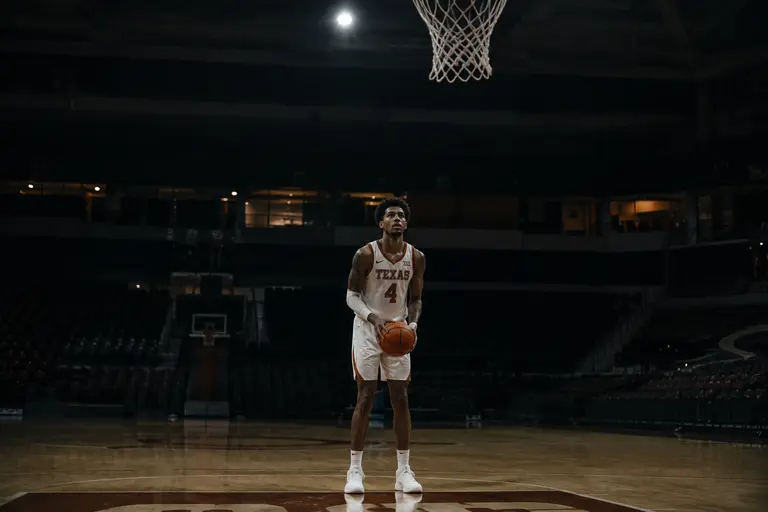
Experienced Players Carried The March Load
The 2026 NCAA Tournament run, which ended with a Sweet 16 loss to Purdue, came largely through experienced roster pieces. The freshmen had little or no role in the biggest games. That does not erase their season. It defines it. Texas was built around transfer and upperclassman reliability, especially in the frontcourt, where defensive coverages and rebounding assignments often decide March possessions.
The lesson for coaches is familiar. You can believe in freshmen and still trust older players when the season tightens. A staff is judged on winning possessions, not spreading minutes evenly. In that sense, Texas acted like a program trying to win now while keeping a development shelf stocked for later.
The Longhorns freshmen class also told a roster-planning story for 2026-27. With limited freshman production in 2025-26 and departures after the season, the staff had to lean into transfers and incoming talent such as Austin Goosby. That tie between one class’s limited minutes and the next roster build is exactly why our Texas Longhorns 2026-27 preview matters for readers tracking how Miller’s rotation could take shape.
The Bench Told Its Own Story
Before the 2026 offseason movement, the young depth picture included redshirt freshmen Clark and Obiorah, Duru’s brief bench role, and Anthon McDermott, a redshirt freshman who averaged about 0.9 points across seven appearances. None of that screams instant impact. It does show a bench that was more about future options than present answers.
That is not a bad thing if the staff develops players honestly. It becomes a problem only if the program keeps recruiting young frontcourt pieces without giving them a clear path. The responsibility falls on the coaches: define the path, keep the player invested, and make the practice reps meaningful enough that a redshirt year feels like growth rather than pause.
Why The Longhorns freshmen class Still Matters In Texas
The Longhorns freshmen class did not change Texas basketball through nightly production. It changed the conversation around how Texas should build. Should Austin chase older portal pieces every spring? Should it protect developmental freshmen? Can it do both without losing the locker room?
Those questions reach beyond one roster. They touch the way Texas basketball communities understand college development. In our state, a freshman’s value is often measured too quickly because we have all seen young players dominate early in high school gyms. College basketball is different. Bodies are older. Schemes are tighter. Mistakes are punished faster.
For Miller, the 2025-26 freshman group became a coaching statement. Duru’s limited role and portal move showed the cost of a crowded rotation. Clark’s held season showed belief in a longer arc. Obiorah’s redshirt showed how international size can be treated as an investment rather than a quick fix.
That is the reflection worth keeping in Austin. A freshman class can matter even when it barely scores. It can reveal a coach’s priorities, a roster’s pressure points, and a program’s patience. For Texas, the real measure will be whether those protected seasons lead to better habits, stronger bodies, and clearer roles when the next whistle blows inside Moody Center.