

Houston Cougars predictions for 2026-27 were never just a poll question. As of November 2, 2026, they were a coaching question, a player-development question, and a Houston civic-pride question. Around this city, a good Cougars year does not stay inside the arena or the stadium. It touches Third Ward foot traffic, alumni weekends, youth gyms, family calendars, and the way Texas basketball people talk about standards.
The easy read is to start with rankings. The better read is to start with the men holding the practice whistle. Kelvin Sampson set the basketball bar so high that a No. 10 preseason profile felt less like surprise and more like a demand. Willie Fritz entered his third Houston football season with a staff built on continuity, which gave the campus another reason to believe the Cougars were not chasing a quick spark.
For a Texas basketball audience, the basketball story leads. Still, the football piece matters because Houston’s Big 12 identity is now judged across the whole athletic department. When both major programs carry real expectations, local fans feel it before the first whistle.
Why Houston Cougars Predictions Start On The Bench
Coaches do not score the points, but they decide what kind of shots are worth taking. They do not make the tackles, but they decide whether a program has enough discipline to survive a November game. That is why Houston Cougars predictions began with the bench, not the banner.
Kelvin Sampson’s Standard In Basketball
Sampson entered his 13th season leading Houston men’s basketball in 2026-27. The program had secured at least 30 wins in each of the previous five seasons and had made at least seven straight trips to the Sweet 16, according to The Washington Post. That is not preseason noise. That is an established working culture.
Houston basketball under Sampson has usually been built from the floorboards up: rebounding, positioning, physical guards, defensive habits, and a refusal to let one missed shot become two bad possessions. In Texas terms, it is closer to a refinery than a fireworks show. Every part has a job, and the whole thing only works when the pressure is constant.
That made the 2026-27 forecast interesting. Houston carried national respect while also facing roster change. Losing key backcourt production is not a small detail for a program that asks guards to defend, initiate contact, protect possessions, and set the emotional temperature. The preseason belief in Houston was really a belief that Sampson’s system would teach new pieces how to compete the Houston way.
Willie Fritz And The Football Parallel
Fritz entered his third season as Houston’s football coach in 2026, and the staff structure around him stayed steady: offensive coordinator Slade Nagle, defensive coordinator Austin Armstrong, and special teams coordinator Chris Couch all returned for second seasons, as noted by Underdog Dynasty. That kind of continuity matters in the Big 12, where week-to-week preparation can expose loose foundations fast.
For Houston fans, Fritz’s staff stability offered a different kind of preseason comfort than a transfer headline. It suggested the Cougars were not resetting language, meeting-room habits, and sideline roles all at once. That matters for players, but it also matters for the city. Fans buy into teams faster when they can recognize the plan from one season to the next.
Basketball Standard Raises The Basketball Forecast
Houston’s basketball expectations were not built on a soft schedule story or a few warm-up wins. They came from proof. The Cougars had already made themselves a national measuring stick, especially for programs that claim to value toughness but do not always enjoy playing against it.
Houston Cougars Predictions In Basketball Terms
Houston Cougars predictions in basketball terms were shaped by one hard truth: the standard did not leave just because familiar guards did. The 2026-27 group had to replace production and decision-making, but the program’s identity stayed in place. That is the hidden advantage of a long-tenured coach. A young player may be new to the rotation, but he is not new to the rulebook inside the gym.
Joseph Tugler’s return gave Houston a defensive anchor for that transition, while Dedan Thomas Jr.’s arrival from LSU gave the backcourt another high-usage piece to fold into Sampson’s demands. Those names mattered, but the larger question was whether they could carry the daily edge that turned Houston into a national constant.
Across Texas basketball circles, that is the part worth watching. Houston has become a program other coaches study, not only because it wins, but because it wins with repeatable habits. The Cougars make effort look organized. They turn loose balls into structure. They turn missed shots into offensive rebounding chances. That is not glamour. That is coaching.
Why Player Development Beats Star Counting
The temptation in preseason talk is to count stars, transfers, and returning points. Houston’s model asks for a deeper read. Can a newcomer defend the second side of the floor? Can a guard take contact without speeding up? Can a forward screen with force, then recover into spacing without wasting a step?
Those details are why Sampson’s program keeps local credibility. Houston families who have watched AAU games, high school playoffs, and college practices know the difference between talent and winning habits. Talent gets noticed. Habits survive March. For more on how Houston’s recruiting pull has shifted the state conversation, our look at the Houston recruiting class connects that roster story to the wider Texas hoops map.
Football Context And Campus Pressure
The football side did not replace the basketball headline, but it sharpened the campus-wide stakes. Houston was no longer asking fans to care about one strong program while waiting on the other to catch up. The 2026 football preseason conversation gave the athletic department a broader platform.
Staff Continuity Creates A Cleaner Read
Continuity does not guarantee wins. It does make preseason judgment cleaner. With Fritz in year three and his main coordinators back for year two, Houston had fewer excuses tied to terminology or staff transition. That does not mean the Cougars were guaranteed to meet every outside projection. It means the evaluation could fairly turn toward execution.
Quarterback Conner Weigman’s return, after a 2025 season with 25 touchdown passes and 9 interceptions, gave the offensive forecast a real center. Amare Thomas returning at receiver and true freshman Keisean Henderson being viewed as a possible short-yardage and goal-line contributor gave the offense more defined talking points. In football language, Houston had enough pieces for analysts to expect progress. In Houston language, fans wanted proof that Saturdays could carry the same hard edge they had seen for years on the basketball floor.
Why Football Expectations Affect Basketball Energy
Basketball purists may not want to admit it, but football expectations can help a basketball building. When fall Saturdays bring alumni back to campus, winter games inherit some of that energy. When the football staff gives fans a reason to stay engaged, basketball benefits from a campus mood that already feels invested.
That is why Houston Cougars predictions carried more weight than a single preseason list. They helped frame how the university was being discussed in Big 12 rooms, Houston barber shops, booster gatherings, and youth gyms. A confident football season can widen the audience. A strong basketball season can reward it.
What Houston Businesses And Families Felt
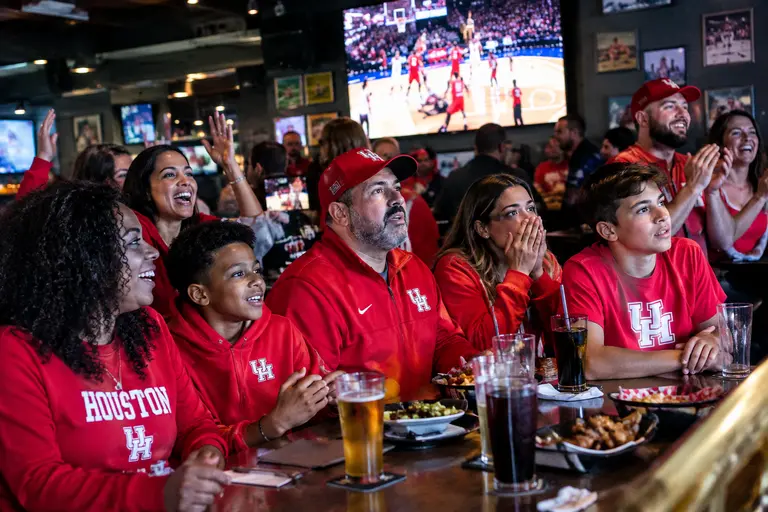
The local sports economy does not need inflated claims to matter. Around Houston, a serious Cougars season changes planning. Restaurants near campus think about staffing on home dates. Families weigh ticket nights against school schedules. Youth coaches use UH games as teaching clips. Alumni groups build weekends around kickoff windows and arena nights.
Third Ward Pride And Practical Impact
Third Ward has always given Houston athletics a setting with personality. The Cougars are not playing in a neutral space. They play in a part of the city where college sports, neighborhood identity, student life, and small-business traffic meet. When expectations rise, the area feels more attention.
That does not mean every business sees the same benefit or every family can afford every game. A community-focused reading has to say both things. High expectations can bring pride, but they can also remind a city to keep access in mind. Houston basketball is strongest when kids from across the area can see the standard up close, not just through highlights.
Youth Gyms Hear The Message
The strongest coaching figures influence more than their own rosters. Sampson’s teams give Houston high school coaches a living clinic in rebounding angles, help defense, and guard toughness. Fritz’s program, when steady, gives football families a similar lesson in program patience. The point is not that young athletes copy every scheme. The point is that they see what organized work looks like.
That is where Houston Cougars predictions become bigger than forecasts. They become a mirror for local athletes. A middle school guard in Alief, a forward in Pearland, or a coach in Aldine can look at UH and see how high the daily standard has to be. That is the real community value: expectations turn into examples.
What Houston Cougars Predictions Mean For Coaches
The fairest read on 2026-27 is that Houston’s expectations were earned, but not automatic. Sampson’s basketball program had enough history to demand national respect, yet roster change forced the staff to teach all over again. Fritz’s football program had enough continuity to invite serious belief, yet the Big 12 never rewards preseason confidence by itself.
For coaches, that is the job. Turn outside noise into internal routine. Turn returning players into standards keepers. Turn newcomers into dependable teammates before the biggest games arrive. In Houston, the best teams have always carried a certain city toughness: not polished for show, not soft under pressure, and not interested in excuses.
Houston Cougars predictions mattered because they told us what the public expected. The coaching story told us why those expectations existed. In 2026-27, the Cougars were judged less by hype than by trust: trust in Sampson’s gym, trust in Fritz’s staff continuity, and trust that Houston sports fans know the difference between a preseason label and a program built to last.