
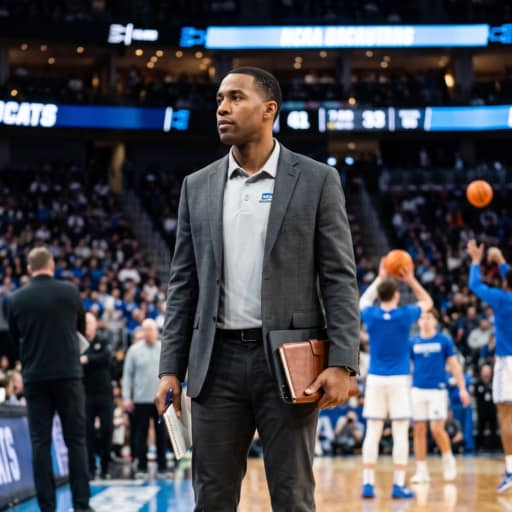
Lipan Basketball has become one of the clearest Texas case studies in what happens when coaching, school pride, and player ownership all point in the same direction. As of the end of the 2025–26 season, the Lipan boys stood at 38-1, competed in UIL Class 2A Division II, and were led by head coach Brent Gaylor, according to the UIL state team page. That record tells you the team was elite. It does not tell you why the program has held together.
The deeper lesson is local. Lipan did not build a championship identity from one hot shooting week or one special senior class. The program’s public record points to something harder to copy: long-term coaching language, grade-school expectations, family buy-in, and a gym culture where younger players already know the standard before they reach varsity. In Texas high school basketball, that is how a town’s name starts to mean something before the ball is even tipped.
Why Lipan Basketball Carries Past The Scoreboard
Small-school basketball in Texas has a different pulse. The roster is not just a roster. It is a set of cousins, classmates, neighbors, and siblings who have grown up around the same gyms and the same expectations. That matters in Lipan because the boys’ success has not sat apart from the school. It has helped define how the community sees itself.
Through 21 years, Brent Gaylor’s career record was listed at 613 wins and 141 losses, with five state championships, seven state title-game appearances, eight regional championships, and 11 regional tournament appearances. The same program profile also stated that Lipan was the winningest Texas boys program over the past 11 years, and that Gaylor’s teams had gone 128-2 in district play and 56-6 in the playoffs as of 2026 on the Gaylor interview page.
Those numbers matter because they show repeatability. A title can happen when talent and timing meet. A decade-plus of district control and playoff success points to habits that survived roster turnover. That is the coaching lesson worth carrying to other Texas gyms: culture cannot be a slogan on the wall if it disappears when the leading scorer graduates.
Tradition Becomes A Daily Standard
The research on Lipan points to a program that honors past players and coaches, with the message that each team plays for those who came before. That idea fits the best Texas programs I have studied. The banner is not just decoration. It is a teaching tool. It tells a freshman that the uniform has weight. It tells a senior that leadership is borrowed, then handed down.
That kind of tradition can be dangerous if it turns into pressure without support. Lipan’s run suggests something more useful: tradition as direction. Players know what the standard is, but they also know they are part of it. In coaching terms, that is the sweet spot. A coach can demand more from a player when the player believes the demand is connected to a shared identity, not just a whistle and a bench seat.
Coaching Standards Behind The State Run
Championship programs are often praised for their schemes, but Lipan’s lesson starts before the play call. The reported themes around Gaylor’s program include attitude, work ethic, mental toughness, and learning from close games or defeats. That sounds simple until you try to live it from November through March with teenagers, families, travel, schoolwork, and the emotional swing of big games.
The boys’ titles in 2023, 2024, and 2026, as listed in the research, gave Lipan a rare run of confirmed success. Yet the coaching value is not only in winning those final games. It is in how a program keeps the next group from acting like the trophy case will win the next possession. The best staffs in Texas know that yesterday’s banner can either sharpen a team or soften it.
Lipan Basketball Starts With Ownership
Lipan Basketball offers a sharp lesson in player ownership. The research notes that long-term core players had traveled together since grade school, and that freshmen who started on varsity helped build chemistry and accountability. That detail says a lot. When younger players are trusted with real varsity minutes, they are not just gaining experience. They are being asked to carry the program’s habits in public.
Ownership changes the tone of a locker room. Coaches still set the expectations, but the players begin to protect them. A missed box-out, a lazy closeout, or a poor response to adversity becomes a team issue, not only a coaching correction. In a small school, that peer standard can be powerful because players see each other all day. The gym culture follows them into hallways, classrooms, and family conversations.
Close Games Become A Teaching Tool
The 2022–23 championship game, played on March 11, 2023, was noted in the research as a 50-46 Lipan win over LaRue LaPoynor after Lipan had built a 17-point first-half lead. That kind of game tests a program’s emotional training. A team can have the better scouting report and still lose its grip when momentum turns. A team can have talent and still panic when a lead shrinks.
For coaches, the teaching point is plain: mental toughness has to be practiced before it is needed. Late-game poise is built in ordinary practices, in film sessions, in how a coach reacts after a bad possession, and in whether players are taught to value the next play more than the last mistake. Lipan’s championship record gives Texas coaches a useful reminder that the most important reps are not always the prettiest ones.
Community Identity Built In Grade School
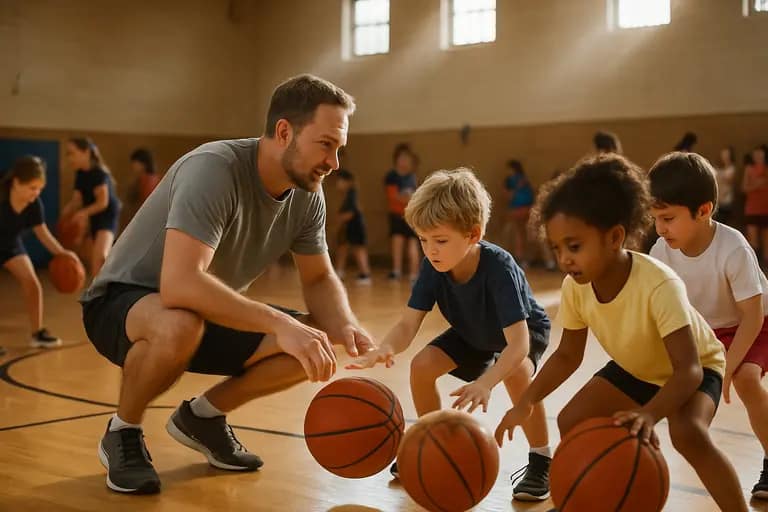
The research notes that students in Lipan grow up dreaming of wearing the Lipan uniform, and that fourth- and sixth-graders understand that playing at state is part of the program’s path. That is not a normal expectation in every town. It is a sign that the varsity program has reached down into the imagination of younger students.
When a fourth-grader already knows the varsity goal, the youth pipeline is more than skill instruction. It becomes identity formation. Younger players are not just learning to dribble with their weak hand. They are learning what the jersey means. They are learning that effort, patience, and team-first habits are part of belonging.
That is why Lipan’s story connects with broader Texas basketball conversations about school pride and town turnout. State tournament runs give communities a shared calendar and a shared language, the same force we have seen across stories about UIL state championships and local pride. In towns like Lipan, the team can become a weekly roll call of who the community is and what it values.
Boys And Girls Programs Share The Standard
The girls’ program adds another layer to the identity story. The research lists Lipan girls state titles in 2016, 2021, 2023, and 2026, and notes that boys and girls teams both won state titles in March 2023, making Lipan the first Texas high school in 16 years to win both boys’ and girls’ basketball championships in the same season. That kind of shared success is rare, and it changes the feeling inside a school.
It also keeps the story from being only about one coach or one roster. Coach Amber Branson’s girls program was credited in the research with long-term commitment, including her 400th career win on December 1, 2022, during her 16th season. Put the boys’ and girls’ results side by side, and Lipan looks less like a single-team surge and more like a schoolwide basketball standard.
That matters for young athletes. Boys see girls winning. Girls see boys winning. Younger students see that basketball excellence is not assigned to one hallway or one graduating class. It belongs to the school, and that shared ownership can lift both programs.
What Lipan Basketball Teaches Texas Coaches
Lipan Basketball should make coaches across Texas ask a harder question than, “What offense do they run?” The better question is, “What do their players believe they are part of?” Programs do not reach repeated title games on belief alone, but belief gives skill work a purpose. It gives conditioning a reason. It gives film study a heartbeat.
The Lipan model also warns against shortcuts. A coach cannot fake continuity. A school cannot announce tradition into existence. Parents, teachers, administrators, and former players have to keep showing up in ways that make the standard feel steady. That is less glamorous than a buzzer-beater, but it is where title habits are built.
The Lesson For Small Schools
For Texas small schools, the lesson is not that every town can copy Lipan’s win totals. That would ignore how hard championships are to earn. The lesson is that a town can build clear expectations from the lower grades up, give players real ownership, honor former teams, and let boys’ and girls’ programs feed the same school pride.
Lipan Basketball reminds us why Texas high school hoops still matters so deeply. A championship team gives a town something to cheer. A championship culture gives a town something to teach. In Lipan, the scoreboard has been impressive, but the greater coaching story is how a school turned winning into a shared responsibility.