
Texas Freshmen Guards are now part of one of the most important early coaching stories around Texas men’s basketball. After junior guard Mikey Lewis suffered a right foot injury in practice, the Longhorns’ staff had to adjust before the 2026-27 season had even opened. For families, high school coaches, and young players across the state, this is not just a roster note. It is a live example of how a college program teaches freshmen to grow faster without asking them to skip steps.
Why Texas Freshmen Guards Matter After The Injury
On September 30, 2026, reporting out of Austin said Lewis fractured the fifth metatarsal in his right foot during practice, needed surgery, and was expected to miss an extended period, though the injury was not expected to end his season reported the injury. That timing matters because Lewis was one of the experienced backcourt pieces on a roster built with five transfers and six freshmen.
For a coach, losing a guard before the games begin changes practice. Ball-handling reps get redistributed. Defensive matchups change. Late-clock work becomes more crowded with young players. The staff can still teach the same standards, but the teaching pace has to tighten.
Texas Freshmen Guards And The First Rotation Test
The names at the center of the shift are Austin Goosby, Bo Ogden, and Joe Sterling. Reporting after the injury said those three freshmen guards were being called on for larger backcourt roles, with Goosby, a McDonald’s All-American, viewed as a potential starter alongside freshman Isaiah Johnson reported the freshman role shift. Sterling was described as a strong shooter, while Ogden drew attention for athletic ability, defense, and rebounding.
That mix gives the staff different tools, but tools are not the same as trust. A freshman guard can have size, shot-making, and burst and still need daily work on spacing, clock awareness, and defensive angles. The teaching challenge is to keep each player’s role simple enough to execute while broad enough to help the team survive real game pressure.
Why The Timing Tests Coaching Patience
As a youth coach, I see the lesson clearly: injuries often expose which habits were taught before the pressure arrived. If a young guard has been trained to enter the ball cleanly, sprint to the corner, talk on defense, and rebound from the weak side, he has a path to help even when his shot is not falling. If he was only trained to score, the jump gets harder.
For Texas, this is where Sean Miller’s staff has to balance urgency with development. A freshman who is handed minutes too loosely can build bad habits. A freshman who is over-controlled may stop playing with confidence. The middle ground is clear language: defend your matchup, take open shots, value the ball, and run the team’s actions with pace.
The Coaching Response Inside A New Rotation
Miller has said he expects Goosby, Sterling, and Ogden to factor into the rotation and framed Lewis’s absence as an opportunity for the younger players to take on the challenge, according to the same Yahoo Sports report. That is the coaching message every freshman needs to hear, but it has to be backed by structure.
The best freshman development plans are not built around speeches. They are built around repeatable practice blocks. Coaches can create short windows where a guard has to make the same read again and again: attack the closeout, hit the roller, throw ahead in transition, or pull the ball out when numbers are not there. That kind of repetition lowers the emotional temperature when the arena gets loud.
Teaching Guards To Win Possessions
Young guards often measure their value by points. College staffs usually measure them by possessions. Did the guard get the offense organized? Did he fight over the screen? Did he box out even if a forward grabbed the rebound? Did he know the foul count? Those are the plays that earn minutes in a crowded rotation.
For Texas Freshmen Guards, the next step is likely not about becoming finished players overnight. It is about stacking dependable possessions. Goosby may have the highest outside profile because of his All-American label, but labels do not defend a ball screen. Sterling’s shooting can stretch a defense, but he still has to guard. Ogden’s athletic traits can help on the glass, but he still has to make the next pass on time.
- Keep reads clean: freshmen guards should know the first and second option before the ball is inbounded.
- Defend without fouling: early minutes can disappear fast if reach-ins replace footwork.
- Rebound from guard spots: long rebounds often decide transition chances.
- Accept simple shots: a clean catch-and-shoot three can be better than a difficult late-clock attempt.
How Freshman Minutes Shape Texas Basketball Families
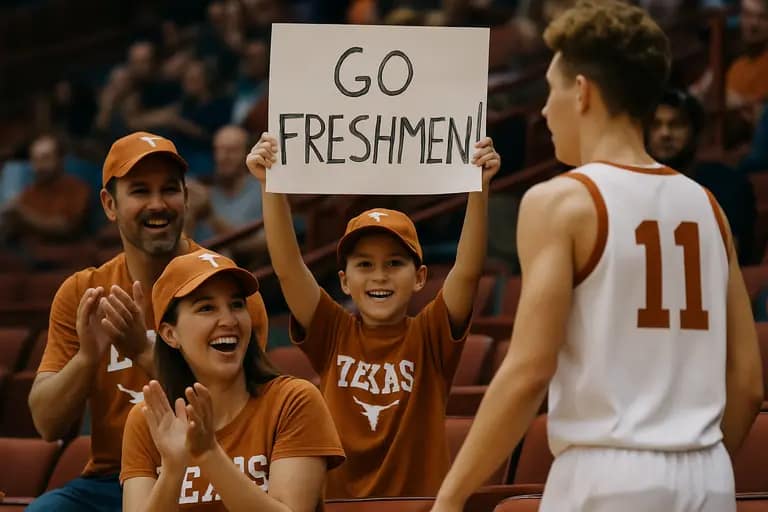
There is a community layer to this story that matters in Texas. Freshman minutes at a program like Texas are watched by high school coaches, grassroots trainers, and parents who are trying to understand what college readiness really means. The answer is rarely one skill. It is a blend of toughness, maturity, and how fast a player accepts coaching.
That is why this moment connects to the broader player pipeline around Austin, Dallas, Houston, San Antonio, and smaller basketball towns across the state. Every family wants to know what separates a talented freshman from a trusted freshman. The answer shows up in practice habits long before a box score. Our earlier look at Sean Miller guards also framed guard development as a pace-and-trust issue, and this injury response gives that idea a sharper test.
The Lesson For High School Coaches
High school coaches can use this situation without pretending their teams are the Longhorns. The principle travels. If your best ball handler misses time, do not ask the next guard to become someone else. Give him two or three things he can do well, then hold him to those standards every day.
For youth programs, the same rule applies. Build secondary ball handlers before injuries force the issue. Let wings initiate offense in practice. Ask shooters to defend the best guard for two-minute stretches. Teach rebound responsibilities to everyone. Those habits create depth before depth is needed.
What Texas Freshmen Guards Mean For Austin Development
The Lewis injury is a setback, but it also gives Austin a clear teaching case. Texas Freshmen Guards are not being asked to replace a veteran voice with one player. They are being asked to grow as a group, inside a staff plan that now has less margin for delay.
For Texas basketball people, that is the part worth watching as the calendar moves toward the season. The scoreboard will tell one story. The better coaching story will be found in substitution patterns, defensive trust, and whether young guards learn to value the quiet plays that help a team function. If Goosby, Sterling, and Ogden handle those details, the Longhorns will not just be patching a hole. They will be building guards with habits that last beyond one injury stretch.