

The John Hirst coach story at Reagan High is not just about a San Antonio basketball man beating back a diagnosis. It is about what happens when a coach’s private fight becomes a public lesson for players, parents, assistants, and a school community that has spent years measuring winter nights by Rattlers basketball.
On September 3, 2026, Hirst completed his final radiation treatment for prostate cancer at UT MD Anderson and rang the bell with family, medical staff, and Reagan community members around him, according to a KSAT report. That kind of moment lands differently in Texas high school sports. Coaches here are not only whistle-blowers and play-callers. They are morning greeters, film-room teachers, bus-ride steady hands, and, on hard days, examples of how to stand up after fear has had its say.
Hirst’s public message after treatment was direct. He encouraged other men to get PSA tests and spoke about early detection. He also gave Reagan people a phrase that sounded like him getting one foot back on the hardwood: “Time to get back to work. Strike ’em.” For a program built on year-after-year standards, those words mattered.
Why The John Hirst Coach Story Hit San Antonio
John Hirst Coach Standard At Reagan
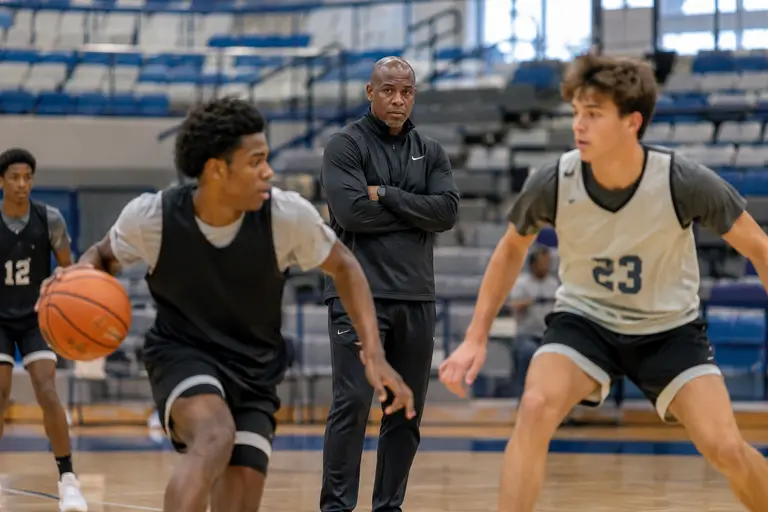
San Antonio basketball respects staying power. A coach can win a big playoff game and still be forgotten if the program does not hold together. Hirst has held Reagan together for a long stretch. He has been Reagan High School’s head boys basketball coach since 2010, and entering the 2025-2026 season he had a Reagan record of 322 wins and 149 losses, with a 527-264 mark across 24 years as a head coach, according to his Rattler Sports coaching bio.
The same bio credits Reagan, under Hirst from 2010 through 2025, with 7 district championships and playoff qualification in 13 of 15 seasons. Those are not one-hot-class numbers. They speak to repeatable habits: guard play developed over time, assistant coaches working from the same page, and players learning that a Tuesday practice in December can matter as much as a Friday crowd in February.
The John Hirst coach record is impressive on paper, but the local meaning is bigger than the count. In North East ISD, Reagan basketball has become part of the school’s athletic identity. Students know the gym. Families know the late drives home. Younger players in feeder patterns know there is a standard waiting for them if they earn a varsity uniform.
A Reagan Moment Beyond The Scoreboard
Cancer changed the frame. It moved the story away from district races and into something every family understands: waiting rooms, treatment dates, fear, prayer, and relief. When a coach known for preparing teenagers for pressure faces his own pressure in public, the lesson is not staged. It is lived.
That is why Hirst ringing the bell carried weight. The sound was personal, but it echoed through a school community. Players who had heard him demand toughness saw a version of toughness that did not involve a charge taken or a loose ball won. Parents saw a coach asking men to pay attention to their health. Staff members saw a colleague finish a hard stretch and still point back toward work.
A Cancer Milestone With A Sideline Message
The Bell, The Family, The Program
There is a danger in making sports language too big around illness. A cancer treatment milestone is not a state semifinal. Radiation is not a fourth-quarter press. Hirst’s achievement on September 3, 2026, deserves respect without turning medicine into a scoreboard.
Still, coaches speak through the lives they live. Hirst’s bell-ringing moment showed his players that leadership does not vanish when the body is under strain. It can become quieter, more honest, and more useful. In a gym, teenage athletes often hear about discipline. In this case, they could see discipline in appointments kept, treatment completed, and a coach returning his mind toward his team.
That is a different sort of scouting report. It teaches young players that adulthood will ask for courage away from the crowd. It teaches them that family and community are not side notes to a sports life. They are often the very people who help a coach or player make it back through the door.
A PSA Message Without Chest-Thumping
Hirst’s public push for PSA testing also gave the story a community health angle, but the power came from its plainness. He did not need a slogan. He had his own experience. In Texas coaching circles, that kind of message can travel fast because coaches talk to coaches, fathers talk to sons, and former players still listen when an old coach says something matters.
For any John Hirst coach discussion, that part should not get lost behind win totals. A coach who uses his platform to nudge men toward early detection is serving the community beyond the box score. He is saying that being present for your family, your players, and your work starts with paying attention before a crisis gets louder.
Reagan Basketball Built On Daily Standards
The Record Entering 2025-2026
Reagan’s basketball success under Hirst did not arrive by accident. Entering the 2025-2026 season, his 322-149 record at Reagan reflected 15 years of program building. His 527-264 career record over 24 years as a head coach placed the Reagan chapter inside a longer coaching life, one shaped by repeated winters, changing rosters, and the constant need to teach the game to a new group of teenagers.
Seven district championships from 2010 through 2025 tell one part of the story. Playoff trips in 13 of those 15 seasons tell another. District championships require high-end nights. Playoff regularity requires fewer bad weeks. A program has to handle injuries, graduation, cold shooting, tough road gyms, and the emotional swings that come with high school athletes growing up in real time.
That is where Hirst’s comeback connects with the basketball side. Reagan players were not only welcoming back a coach. They were seeing the same habits that built the program show up in his health fight: steadiness, trust in a process, and a refusal to let a hard stretch define the whole season of life.
How Football Work Fits The Basketball Gym
Hirst’s Reagan work has not been limited to basketball. He is also listed as an assistant football coach at Reagan. In Texas, that detail matters. Multi-sport coaching helps knit a campus together. It lets athletes see the same adult in different competitive settings, and it reminds a school that athletic culture is shared across locker rooms.
Basketball coaches who work around football often understand physical confidence, weight-room buy-in, and the value of role players. Football coaches who spend time near basketball understand spacing, quick decisions, and momentum. For Reagan, Hirst’s presence in both spaces points to a coach rooted in the school, not just in one season on the calendar.
- For players: his comeback modeled persistence without pretending hard things are easy.
- For families: it connected basketball success with concern for the person behind the whistle.
- For Reagan: it reinforced the value of long-term coaches who know the campus and community.
- For San Antonio hoops: it added a human chapter to one of the area’s steady programs.
What The John Hirst Coach Comeback Means For Reagan
Why Players Remember This
Players often remember less than adults think they will. They may forget a halftime adjustment or the exact wording of a timeout speech. They do not forget how a coach carried himself during a hard season of life. The John Hirst coach comeback gave Reagan players a lesson that will last after the uniforms are turned in.
In Texas basketball, we talk a lot about legacy. Sometimes that word gets too polished. Real legacy is plainer. It is the former player who schedules a checkup because his coach spoke up. It is the sophomore who learns that toughness includes asking for help. It is the parent who sees a coach not as a sideline figure, but as a person held up by family, medicine, and community.
Hirst’s record, district titles, and playoff consistency give the basketball program its public shape. His September 3, 2026 treatment milestone gave that shape a deeper human meaning. Reagan’s gym will still be judged by wins, defense, late-game execution, and postseason results. That is fair. This is Texas, and the scoreboard still counts.
But the John Hirst coach comeback reminds San Antonio that the best coaching stories are not always written in trophies. Sometimes they are heard in a bell, carried by a family, and brought back into a gym where teenagers are still learning how to compete, how to care, and how to keep working.