Tarleton roster changes were not just names moving on and off a depth chart. They became the local sports story around the Texans’ full-sports entry into the United Athletic Conference on July 1, 2026, a move that tied football urgency, basketball rebuilding and coaching trust into the same campus-wide moment.
That matters in Texas because roster building is never only a staff-room exercise. It reaches practice gyms, weight rooms, family travel plans, booster lunches, high school recruiting conversations and the week-to-week confidence of a fan base that wants to see Tarleton State carry its identity into a new conference setting. The coaching figures around this reset did not inherit a quiet handoff. They inherited pressure, fresh players and a sharper public lens.
Tarleton Roster Changes And The UAC Handoff
The all-sports UAC move gave every roster decision a bigger frame. Tarleton State’s football program had already been playing under a bright FCS spotlight, but the July 1, 2026 department-wide shift made the changes feel less like isolated team business and more like a shared athletic department reset.
Tarleton Roster Changes Under A New Deadline
The football side carried the loudest personnel churn. By August 2026, Tarleton State had lost 47 seniors from its 2025 roster, including record-setting quarterback Victor Gabalis, while leaning on what Dave Campbell’s Texas Football described as the FCS’s top-ranked 2026 recruiting class, with transfers and freshmen expected to take on meaningful work Tarleton 2026 preview. That is not a small tweak. That is a program asking new voices to grow up quickly under coaches who already knew the building.
The heart of Tarleton roster changes sat in that tension: the Texans had to replace experience without replacing their standards. Coaches could not simply hand a playbook to newcomers and hope the UAC chapter would write itself. They had to teach tempo, meeting habits, special teams details, locker-room order and game-week rhythm to players who were still learning what Tarleton football felt like from the inside.
What July 1 Changed For The Whole Department
The July 1, 2026 UAC entry was listed in the research notes as a full-sports move tied to the Western Athletic Conference rebrand into an all-sports version of the UAC. That timing matters for basketball as much as football. A league label changes how families read schedules, how high school coaches describe opportunities, and how local supporters measure progress across the department.
For a community program, the first season after a conference shift can feel like a town meeting held through games. Every roster spot becomes part of a larger question: who represents us now? In that sense, freshmen and transfers were not just filling openings. They were being asked to carry a new conference badge before many had built long memories in purple and white.
Coaching Figures Carry The Roster Reset
Roster turnover becomes far less frightening when the staff has defined voices. Tarleton State’s 2026 football story leaned heavily on that idea, with Todd Whitten’s long head-coaching tenure in the background and key coordinators charged with turning change into weekly function.
Chris Ross Brings A Verified Production Record
On January 3, 2026, Tarleton State named Chris Ross its offensive coordinator after his run at Stephen F. Austin, where the research notes show he served in 2024-25 as offensive coordinator and, in the last season, assistant head coach. Under Ross, SFA ranked seventh in FCS scoring at 35.5 points per game, 15th in pass offense at 252.3 yards per game and 21st in total offense at 411.0 yards per game, according to Tarleton’s announcement Ross offensive coordinator hire.
Those numbers did not guarantee a smooth handoff in 2026. They did, however, give Tarleton a coordinator with recent proof of FCS production. For a team replacing a record-setting quarterback and so many seniors, that mattered. Offensive installation can become messy when new players arrive from different systems. Ross’s task was to make the Texans fast without making them careless, aggressive without losing the small details that keep drives alive.
Tyrone Nix Gives The Defense A Known Voice
Tyrone Nix gave the opposite side of the ball a measure of continuity. The research notes list him as entering his fifth season as defensive coordinator in 2026 and his third as assistant head coach after a July 26, 2024 promotion. His 2025 defense produced 39 takeaways, the most by any FCS team since 2017, and led FCS in turnover margin at plus-2.14. The same 2025 unit ranked fourth nationally in third-down conversion defense at .310, sixth in red-zone defense at .714 and ninth in scoring defense at 18.6 points allowed per game.
That kind of defensive résumé gives a young roster a language to trust. If an offense is breaking in new timing, a defense with a clear identity can protect the team’s early footing. Nix’s group had already shown it could win hidden-possession battles. In a season shaped by new faces, that message travels: take the ball away, get off the field, defend the red zone, and let the roster grow into itself.
Basketball Reset Mirrors The Football Lesson
The basketball angle is just as direct. The research notes list March 13, 2026 as the date Tarleton State named Eric Haut, previously an assistant at Utah State, as men’s basketball head coach, replacing Billy Gillispie. By April 13, 2026, Haut had built out a staff with Bo Gray joining previously announced assistants Jean Prioleau, Jake Williams and Tre Cobbs.
Eric Haut’s Staff Becomes Part Of The UAC Story
For basketball people, staff construction is roster construction by another name. Assistants shape scouting, workouts, recruiting calls, player retention and the tone of daily practice. Haut’s first staff became part of the Texans’ UAC entry because the men’s basketball program was not just changing a sideline voice. It was building a new set of relationships around a new league setting.
That is why the football turnover offers a useful campus lesson. In both sports, the question was not simply who arrived. It was who could teach the arrivals fast enough for the league move to feel like a competitive step rather than a waiting period. Our deeper look at the Tarleton State roster reset tracks how Haut’s older, transfer-heavy build fit that same moment.
Why Coaches Matter When Rosters Get Older Or Younger
Tarleton roster changes also show why coaching continuity and coaching clarity are not the same thing. Football had continuity with Whitten and Nix, then added Ross to direct an offense facing major player turnover. Basketball had a new head coach and a new staff, but the same need for clarity. Players at different ages and from different programs still need one shared standard.
In Texas basketball, that standard often shows up in ordinary hours: early lifts, half-court defensive shell work, film corrections, shooting groups and the quiet conversations after practice. The public sees the portal headline or the recruiting ranking. The local sports community sees whether the new player stays after to rebound for a teammate, whether he knows where to be on a baseline out-of-bounds set, whether he talks on defense when the gym is half full in November.
Community Stakes Behind The UAC Debut
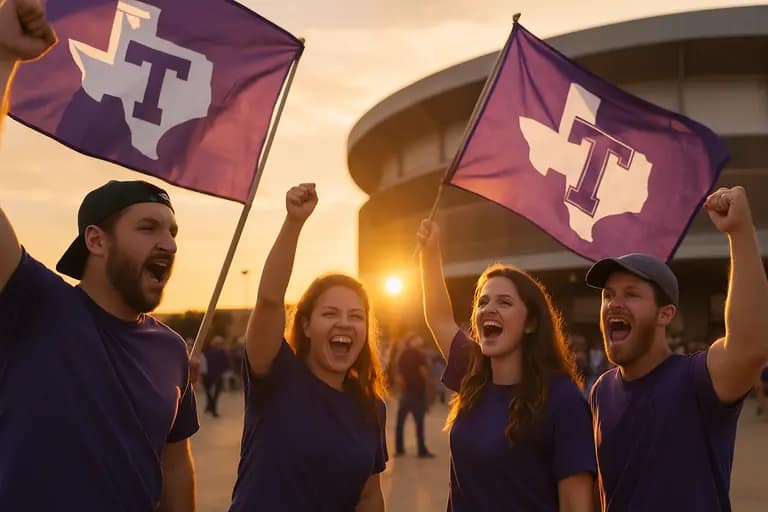
The local sports economy around a college program is built on trust and rhythm. When a roster turns over, that rhythm gets tested. Families who plan weekends around games want to learn names. Youth players want to recognize faces. Local sponsors and longtime supporters want signs that a new conference identity still feels connected to the same school they backed before July 1, 2026.
The Fan Base Had To Learn New Names Fast
A roster with heavy senior losses forces fans to do homework. The first month is not only about wins and losses; it is about recognition. Which freshman handles pressure? Which transfer becomes a locker-room connector? Which assistant coach is trusted with a position group? These questions matter because college sports at this level still run on face-to-face loyalty.
That is where Tarleton roster changes became a community story. The Texans were not asking fans to follow an abstract rebuild. They were asking them to attach new meaning to new people while the conference label changed across the athletic department.
Development Became The Shared Currency
Development is the cleanest bridge between coaches, athletes and community. Ross had to develop offensive timing. Nix had to keep a takeaway-minded defense sharp. Haut and his staff had to build basketball habits that could hold up in UAC play. None of that is instant, and none of it belongs only to the coaches. It shows up in crowd patience, booster confidence and the way local young athletes talk about Tarleton as a place where players can get better.
What Tarleton Roster Changes Mean For The Local Community
The lasting meaning of Tarleton roster changes is not found in one signing class or one staff announcement. It is found in how the Texans used new people to protect a local identity during a conference shift that had already arrived by July 1, 2026. Football faced the blunt math of 47 departed seniors. Basketball moved into Eric Haut’s first build. Across both, coaches carried the burden of making change feel organized.
For the Tarleton State community, that is the real measure. A UAC debut is more than a patch on a schedule graphic. It is a test of whether a program can welcome freshmen, transfers and new assistants without losing the habits that made supporters care in the first place. In Texas, we remember teams through people. If these new additions become trusted names, the roster reset will read less like a break from the past and more like the next chapter the community helped steady.