

UIL Championship Venues have never been just addresses on a playoff bracket. In Texas, a state title site becomes part of the season story before the buses roll, before the band loads up, and before a grandmother in a school sweatshirt decides how far she can travel to see one more game. Football gives us the clearest recent venue trail, but every basketball family in this state understands the same tug: big-stage dreams, long drives, family budgets, and the pride of seeing a hometown name announced under bright lights.
How UIL Championship Venues Became Town Stories
The modern football title path has centered heavily on Arlington. Since 2010, the UIL has held the researched football state championship games for Classes 5A, 4A, and 3A at AT&T Stadium, with the exception of 2015, when scheduling conflicts moved the event to Houston Arlington venue report. That kind of consistency matters. Families learn hotel routes. School districts learn travel routines. Booster clubs learn how much food, fuel, and fan support it takes to move a town across Texas.
AT&T Stadium opened in May 2009, originally as Cowboys Stadium, and the research notes list its seating capacity as more than 105,000. In recent years, it has hosted a dozen title games over four days. That scale changes the feel of a championship week. A small school that may pack its home stands on Friday night suddenly walks into a pro-sized building, and the community sees itself reflected on a stage far bigger than the county line.
UIL Championship Venues In The Arlington Era
The Arlington era has given Texas a familiar December rhythm. Teams from the Panhandle, East Texas, the Valley, Central Texas, and the Gulf Coast can all picture the same tunnel, the same massive seating bowl, the same family photo stop after the trophy presentation. That familiarity builds tradition, but it also starts conversations about fairness and access.
The research points to a title gap since 2011 in conferences 4A Division I and above: DFW-area schools won 31 titles, Houston-area teams won 16, and Austin-area teams won 8. That figure has fueled debate about whether a regular Arlington location creates a practical edge for North Texas programs. The question is not just about the field. It is about bus legs, fan turnout, sleeping in familiar beds, and how much a community has to spend before kickoff.
What The 2015 Houston Detour Showed
The lone break in that run came in December 2015, when 12 UIL Football State Championship games were played at NRG Stadium in Houston from Dec. 17-19, 2015 Houston move report. That week gave the state a rare comparison point. It showed how a different major dome could host the biggest stage, while also revealing how deeply habits, geography, and community planning affect attendance.
The research notes show attendance dropped from about 250,652 fans across three days in Arlington in 2014 to 156,413 across the same three-day window at NRG Stadium in 2015. They also note the UIL paid about $495,000 in usage fees for NRG Stadium in 2015, compared with about $150,000 for four days at AT&T Stadium in 2014. Those numbers tell a plain story. Venue choice can lift a host city, but it can also test the budget math for the organization running the event and the families trying to be there.
Travel, Pride, And The Cost Of A State Stage
Ask any coach who has taken a team deep into the playoffs: the week is about more than practice. It is meal planning, class time, hotel rules, treatment schedules, pep rallies, and parents trying to trade shifts at work. That is why UIL Championship Venues carry so much weight. The venue shapes the emotional memory, but it also shapes who can afford to be in the stands.
Small Town Miles And Big Stadium Moments
The research notes include community concerns from coaches and smaller school representatives, including towns with populations under 500, who have said trips to major venues such as AT&T Stadium can add cost and distance burdens. That is easy to understand in basketball terms, too. A March tournament run can pull whole families onto the road, and a December football run does the same in a colder, tighter school-calendar window.
Still, nobody should miss the pride on the other side of that burden. For a small town, playing in a giant stadium can feel like the whole community has been invited into the state conversation. The local diner talks defense. Elementary students wear jerseys to school. Former players come home. The venue becomes part of the town’s sports memory, whether the team wins by one point or walks off hurting after a hard loss.
The Attendance Lesson Texas Could Not Ignore
The 2014-to-2015 attendance shift matters because it reminds us that Texas is huge, and fan movement is never automatic. A championship site can be magnificent and still be hard for many families. A central or familiar site can help some towns and burden others. A rotation can spread the honor, but it can also create new costs, new vendor plans, and new travel problems.
That is the tension at the heart of state-title planning. Arlington offers a proven football stage, and Houston showed it could host the event during the 2015 detour. San Antonio has also been part of the football venue story: the Alamodome hosted the 5A Division I and II football state championship games on Dec. 19, 2009, and had hosted those finals in 2006 and 2007. Each city carries a different fan map, and each map changes who fills the lower bowl.
What Venue Choice Teaches Texas Basketball Communities
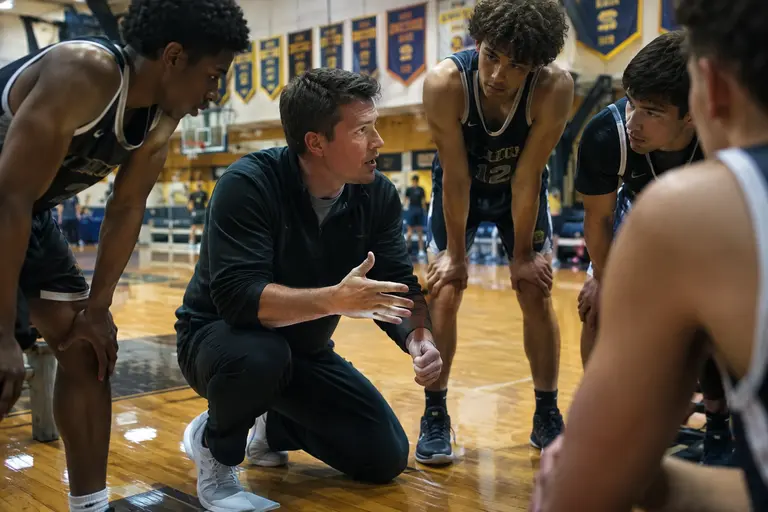
For our basketball crowd, the football venue debate feels familiar because the UIL postseason is never just about one sport. Families who chase hoops brackets understand how sites shape turnout, scouting attention, and school pride. Our earlier piece on UIL venues and title-game memory made the same point from a basketball lens: where a title is played affects how a community remembers it.
Basketball Families Know The Same Pull
Basketball has its own rhythms: regional sites, semifinal plans, packed gyms, and the final climb to a state stage. The gym may be smaller than a football stadium, but the family math is just as real. Who can leave work? Who can pay for a room? Which younger siblings are missing class? Which grandparents can handle the drive?
That is why football’s recent venue record is useful for basketball communities. It gives us a larger case study in how centralization can create tradition while raising access questions. The same booster who sells barbecue plates for a football trip may be raising money for basketball warmups three months later. In Texas school sports, the sports may change, but the community workers are often the same people.
Why Neutral Site Memory Matters
A neutral site is supposed to offer a fair stage, but memory is never neutral. If a town has been to Arlington before, the return trip feels different. If a school has never played in a building that large, the first few minutes can feel like stepping into another world. Coaches talk about poise. Players talk about sightlines and noise. Parents talk about the moment they saw their kid run out in front of thousands.
As of the research notes, the 2026 UIL football state championships were scheduled for Dec. 16-19, 2026, again at AT&T Stadium in Arlington. Because today is Oct. 25, 2026, that date remained ahead on the calendar, not a completed event. That matters for accuracy, but it also matters for families already building plans around exams, work, travel, and holiday budgets.
Why UIL Championship Venues Still Shape Texas Towns
UIL Championship Venues remain powerful because they turn a school team into a traveling hometown. The stadium or dome is only the frame. The picture is the caravan, the pep band, the assistant coach with a clipboard, the parent carrying extra socks, and the young player watching from the stands while imagining a future run.
The best venue debate is not Arlington against Houston or San Antonio against any other city. It is a Texas question: how do we honor elite competition while keeping the door open for the communities that built these games? The answer has to respect cost, distance, attendance, player experience, and the pride that pours out of small towns and big suburbs alike.
That is why this subject keeps stirring conversation across Texas basketball and football circles. A championship venue is where the scoreboard becomes public memory. Get the site right, and a title week can feel like a shared civic celebration. Get it wrong, and too many families experience the biggest game of their lives from too far away. The UIL’s venue choices will keep shaping how Texas towns travel, gather, and tell their sports stories long after the final whistle or buzzer.