
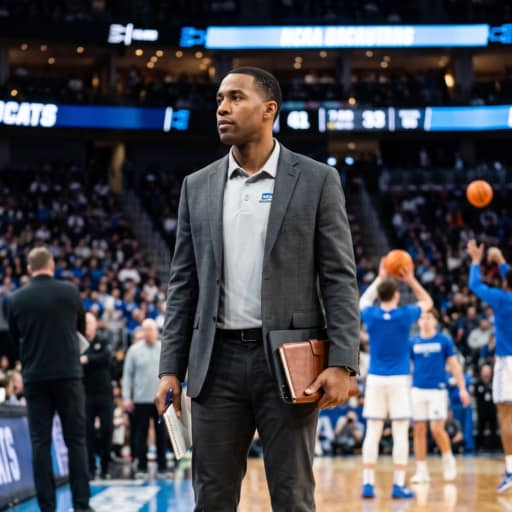
UIL Venues have always told us something bigger than where a trophy was handed out. They tell us who had access, how far families had to drive, what kind of stage high school athletes deserved, and how Texas communities chose to remember their best teams.
As a basketball coach and Texas sports historian, I always start with the building. A gym or stadium is not just concrete. It changes the temperature of a game. It changes how a coach manages nerves, how a player hears the crowd, and how a small town carries itself when it reaches the state stage.
The UIL championship story crosses sports, but basketball people should care deeply about the football venue timeline. Football often forced the largest questions first: neutral sites, crowd size, travel burden, regional pride, and whether one site could serve a state this big. Basketball later faced its own version of that question when the state tournaments moved from Austin to San Antonio in 2015.
How UIL Venues Shaped State Championship Identity
UIL Venues And The First Football Stage
The earliest UIL championship setting was modest by modern standards, but it set the pattern. The first UIL football state championship, for the 1920 season, was played on January 8, 1921, at Clark Field on the University of Texas campus in Austin, with attendance of about 3,000, according to UIL football history. That number matters because it reminds us that the state championship began as a gathering, not a mega-event.
Think about what that meant in Texas basketball terms. A crowd of 3,000 can still shake a gym. It can still rattle free throws. It can still give a teenager a memory that follows him or her for life. Early state title settings did not need giant video boards to feel important. They needed a fair court, a credible host, and enough room for a community to show up.
Over time, the state outgrew that smaller model. The UIL championship site had to become a public square for towns separated by hours of highway. Venue choice became a statement about what Texas high school sports were becoming: not just school events, but statewide civic gatherings.
Neutral Sites And The Meaning Of Shared Ground
The mid-century pattern of using different neutral locations reflected a practical Texas truth. No single city could claim every story. Fort Worth, Houston, Irving, Austin, and later San Antonio all became part of the title-game memory bank across different UIL sports.
That movement mattered for competitive trust. Coaches want their players to believe the floor, field, lights, locker rooms, and travel demands are not tilted against them. Families want to feel that the championship belongs to every region, not only the largest metro area. The venue can either strengthen that trust or strain it.
For basketball, this is personal. A Panhandle team, a Rio Grande Valley team, a Houston-area team, and an East Texas team do not experience a state tournament trip the same way. A site that feels reasonable to one region can feel like a two-day family commitment to another. That is why venue history is not a side story. It sits close to the heart of access.
Basketball Moves And The Alamodome Lesson
Austin Tradition Meets San Antonio Scale
Texas basketball carried a long Austin association before the state tournaments moved to San Antonio in 2015. The research record notes that UIL boys and girls basketball state tournaments had been tied to Austin venues, including Gregory Gym and then the Frank Erwin Center beginning in 1978. The 2015 move took the girls tournament to the Alamodome on March 5-7 and the boys tournament there on March 12-14, with hotel and venue cost and availability issues in Austin cited as reasons.
That shift changed more than lodging plans. It changed the feel of the state tournament. The Alamodome gave the championships a different civic setting, one connected to downtown San Antonio, convention traffic, family travel, and a building built for major events. For more on why that building still matters in the UIL conversation, our staff has written about the Alamodome venue debate and what it means for basketball families.
Coaches felt the change, too. A state semifinal in a large dome asks players to control depth perception, crowd noise, and the long pauses that come with major-event operations. That is part of player development. A guard who has spent months in a tight district gym suddenly has to shoot in a building with space behind the basket and a different sound after the ball hits the floor.
Why Basketball UIL Venues Affect Player Development
Basketball UIL Venues shape preparation. Smart staffs do not wait until warmups to address the setting. They talk about sightlines, communication, bench energy, and emotional control. They remind players that the rim is still 10 feet high, but they also respect that the room feels different.
For communities, the building becomes part of the season story. Parents remember where they parked, where they ate after the semifinal, and where grandparents sat. Younger players come home with a target in their minds. That is how a venue feeds a program. It gives the next class a picture of what the work is for.
The Austin-to-San Antonio basketball move also showed that tradition has to share space with logistics. A site may carry decades of memory, but if hotel access, facility availability, and event operations no longer fit the championship, the UIL has to weigh sentiment against service to schools. That is not cold administration. It is stewardship.
Football Crowds, Domes, And Regional Fairness
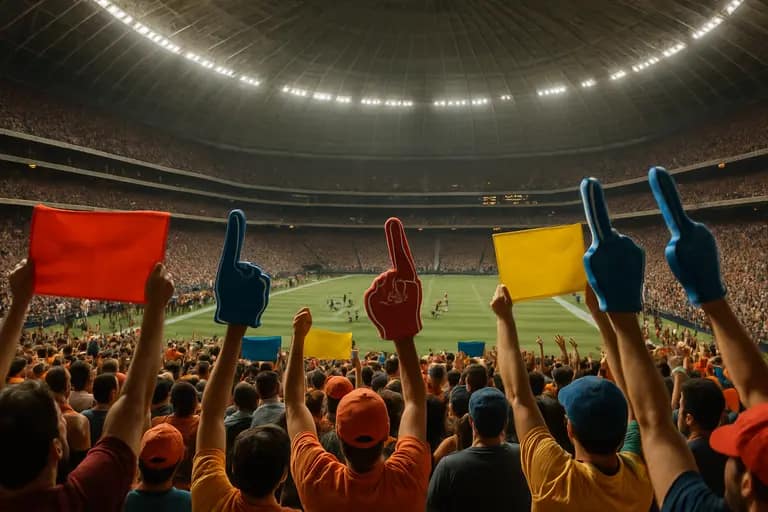
When Texas Stadium Became A Measuring Stick
The most striking crowd marker in the research comes from December 17, 1977, when Texas Stadium in Irving hosted the UIL 4A state championship and 49,953 people watched Plano defeat Port Neches-Groves, a figure also listed in UIL football history. That attendance total still carries weight because it showed what Texas high school championships could become when the matchup, venue, and community pull all met at once.
Basketball coaches understand that energy even if the scale is different. A big crowd can make a teenager feel 10 feet tall or make the ball feel heavy. The best programs train for both. They do not just run sets; they train poise.
The Astrodome also sits in this venue story. The research record notes that the 1994 UIL 4A state championship was played at Houston’s Astrodome, where Stephenville defeated La Marque 32-17 in front of roughly 21,000. That example matters because Houston offered another dome-era answer to the same question: where can Texas gather for a title game?
The AT&T Stadium Era And Attendance Pressure
By December 17-20, 2025, the football championships at AT&T Stadium in Arlington had become a massive statewide operation. Across 12 championship games, attendance was 191,185, up from 159,560 the previous year, according to Sports Illustrated’s Texas high school report. Those totals show why large, professional venues remain attractive to championship organizers.
Still, size is not the only standard. Regional fairness matters. Families in the Valley, El Paso, the Panhandle, East Texas, and the Coastal Bend all measure a championship trip in fuel, hotel nights, meals, missed work, and grandparents who may or may not be able to travel. A full building is powerful, but a fair path to that building is part of the UIL promise.
That is where football and basketball speak to each other. Football may draw the larger crowds, but basketball carries the same family math. Venue choice decides whether the state tournament feels reachable or distant. For a school that has waited generations to qualify, that difference is not small.
What UIL Venues Mean For Texas Communities
The Building Becomes Part Of The Memory
UIL Venues become shorthand for eras. Clark Field tells us about the beginning. Texas Stadium tells us about crowd ambition. The Astrodome tells us about dome-era spectacle. AT&T Stadium tells us about scale and event production. The Alamodome tells basketball people about adaptation, city partnership, and a state tournament that had to find a workable home.
For players, the venue can mark the moment they understood the size of Texas sports. For coaches, it tests whether daily habits hold under brighter lights. For towns, it becomes part of local identity. People may forget the exact score years later, but they remember walking into the building and seeing their school colors in a place that felt bigger than home.
A Coach’s View Of The Next Venue Debate
The lesson is not that one city should own the championship stage forever. The lesson is that the UIL has always had to balance memory, money, access, capacity, and competitive trust. That balance will keep shaping state events because Texas keeps growing, travel costs keep mattering, and families keep asking whether the championship experience serves every corner of the state.
As a basketball man, I want the venue to honor the work done in small gyms from November through March. I want players to feel the weight of the stage without feeling swallowed by it. I want families from every region to believe the trip is hard but worth it. Most of all, I want the building to serve the kids, not the other way around.
That is the legacy of UIL Venues. They are not just addresses on a bracket. They are the rooms and stadiums where Texas decides how much it values school sports, community pride, and the young athletes who carry a town’s name across the state.