

Texas freshman guards became one of the clearest storylines in Austin after Mikey Lewis fractured the fifth metatarsal in his right foot during practice on or around September 30, 2026. Surgery was required, and reporting said Lewis would miss an extended period, though the injury was not expected to end his season; the same report noted that Lewis averaged 13.9 points, 2.7 rebounds, and 2.1 assists per game at Saint Mary’s in 2025-26 before transferring to Texas Sports Illustrated report.
That is the kind of October news that changes practice gyms before it changes box scores. Texas did not just lose a guard for a stretch. It lost a proven college scorer and ball-handler at the point of the calendar when rotations, defensive calls, and late-clock habits start getting built. For a staff trying to blend transfers with first-year players, the timing matters.
The public reporting available as of October 8, 2026 is strongest around the Longhorns’ backcourt, so that is where the cleanest evaluation starts. The wider Texas college basketball lesson is familiar from courts in Austin, College Station, Houston, Lubbock, Waco, and across the state: freshman growth is rarely smooth, and injuries can force that growth before a player’s body, reads, and confidence are fully ready.
Why Texas Freshman Guards Are Under Pressure
Texas Freshman Guards And The Lewis Absence
The immediate basketball issue is usage. Freshmen guards Austin Goosby, Bo Ogden, and Joe Sterling were identified as players pushed into larger backcourt responsibilities during non-conference play after the Lewis injury Yahoo Sports report. That does not guarantee any single player becomes a full-time answer. It does mean every practice possession carries more weight.
There is a difference between earning minutes and inheriting them early because a veteran guard is unavailable. The first path lets a freshman build trust in controlled bursts: defend for three possessions, make the simple pass, run the lane, sit down, learn, repeat. The second path can ask for all of that while also handling pressure, organizing spacing, and finishing defensive possessions with a rebound.
That is why the Texas freshman guards conversation should not be framed as panic. It should be framed as development under a brighter light. Goosby’s McDonald’s All-American status gives Texas a high-upside option, but high school acclaim does not remove the adjustment to college physicality. Ogden and Sterling now face the same climb: learn terminology, process scouting reports, and make decisions against older players who punish loose dribbles and late rotations.
The Difference Between Talent And Timing
Freshman guards often arrive with skill. Timing is the harder part. College defenders close space quicker. Help arrives sooner. A pass that looked open in a summer run can become a deflection in a real game. A freshman who is used to being the best athlete on the floor may need several weeks to understand when to attack, when to reverse the ball, and when to accept a quiet possession.
For Texas, the staff’s challenge is not simply finding points. It is protecting the shape of the team while the young guards grow. That means pairing ball-handlers carefully, choosing lineup combinations that do not overload one freshman with every read, and using practice time to repeat the same actions until the game starts to slow down.
The Injury Timeline Texas Can Trust
What The Foot Injury Changed
Lewis’ injury created a roster-depth question because his prior production came with college experience. The reported 13.9 points per game at Saint Mary’s in 2025-26 represented more than scoring. It represented possessions that Texas could reasonably expect to run through a guard who had already played at the Division I level. Losing that for an extended period shifts burden toward younger guards and toward every veteran who can steady a possession.
Foot injuries also carry a practical coaching effect: teams rarely get perfect timeline clarity right away. Public reporting said the injury was not expected to be season-ending, but “extended period” still leaves Texas with planning uncertainty. The staff has to prepare as if freshmen will need real minutes while leaving room for Lewis’ return when medically cleared. That is a hard balance, because a team cannot pause development until a starter or rotation guard comes back.
This is where local basketball culture understands the grind better than any national talking point. In Texas gyms, from small school fieldhouses to college practice courts, the answer is usually reps. Not glamour. Not slogans. Reps. Ball pressure drills, shell defense, transition decisions, late-clock spacing, and film sessions where a young guard sees why a possession broke down.
Recovery Timelines And Roster Chemistry
The human side matters, too. Injured players are still part of the locker room. Lewis’ voice, preparation, and film work can still shape teammates, even while he is not available for full action. For freshmen, having an older guard explain reads from the sideline can matter. It keeps the injured player tied to the group and gives younger players a bridge between coaching instruction and player-level communication.
The risk for the Texas freshman guards is not only mistakes. It is mental fatigue. A young guard asked to learn fast can start measuring himself by every turnover. Good programs prevent that spiral by defining progress clearly: better stance, cleaner outlet decisions, stronger weak-side positioning, and fewer empty possessions. Those markers keep development honest without turning every error into a crisis.
Freshman Minutes Are A Community Story
From Local Gyms To College Pace
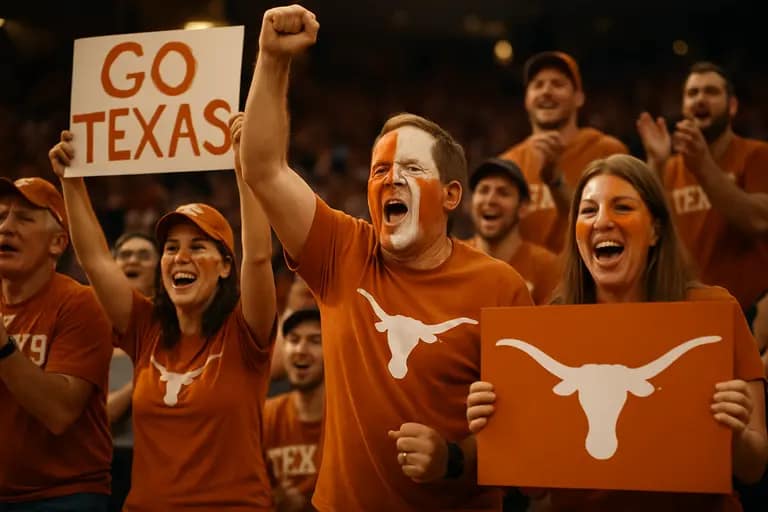
Texas college basketball is tied to the communities that feed it. Families, high school coaches, trainers, and youth programs all share in the moment when a freshman steps onto a college floor. When injuries push those freshmen forward, the story reaches beyond the university. It becomes part of how the state talks about preparation, patience, and the gap between potential and readiness.
That is why coverage of Texas freshman guards needs care. These players are not finished products, and they should not be treated that way. A freshman guard may look ready on one possession and rushed on the next. That is not failure. That is the transition. College basketball exposes habits quickly, but it can also sharpen them if the player gets steady teaching and a clear role.
For readers who want a deeper player-development angle tied to this same Longhorns backcourt, our related piece on freshman guard roles at Texas tracks how the added minutes could shape the group.
How Coaches Can Keep The Floor Stable
The cleanest adjustment is often the simplest one. Coaches can reduce the number of reads a freshman must make on a given possession. They can use more defined entries, let a veteran initiate offense, or build early touches through movement rather than isolation. On defense, they can protect a young guard from constant cross-matches by keeping assignments clear and communication loud.
None of that removes accountability. It just makes accountability teachable. A freshman can handle being corrected if he knows exactly what the staff wants. “Be better” is vague. “Get over the screen, stay attached, and force the ball toward help” gives a player a job. That kind of language turns pressure into learning.
- Short-term need: cover minutes, protect the ball, and keep defensive structure intact.
- Medium-term need: help young guards gain trust without asking them to carry every late-clock possession.
- Long-term need: bring Lewis back into a rotation that has grown rather than stalled.
What The Texas Freshman Guards Test Means
Patience Is Part Of Player Development
The Texas freshman guards test is really a patience test for everyone around the program. Coaches need patience while teaching. Teammates need patience while timing improves. Fans need patience because freshman mistakes are often the cost of building a player who can help in March and beyond.
As of October 8, 2026, the facts point to a clear challenge: Lewis suffered a significant foot injury, Texas expected to be without him for an extended period, and Goosby, Ogden, and Sterling were pushed toward larger responsibilities. The next step is not a prediction. It is a developmental question. Can Texas turn forced minutes into useful growth without asking too much too soon?
That answer will come through practice habits, lineup choices, and health updates rather than hype. For a basketball state that values toughness but also knows the value of teaching, this is the kind of moment that can reveal a program’s daily standards. If the young guards learn through the pressure and Lewis returns when ready, Texas could come out of this stretch with a deeper backcourt than it had before the injury.