

The Heart of Texas Fall Tournament Series sits in that practical corner of Texas basketball where development, family budgets, and gym time all meet. Operated by the Texas Basketball Alliance in fall 2026, the series was built as a Saturday-only run with three dates: September 19, October 10, and October 24. Teams are guaranteed three games in one day per date, and the listed entry cost is $585 per team for nine games across the series, according to the TXBA event page.
As of September 30, 2026, the first date has already passed. That matters. This is not a preview of a blank slate. It is a read on a fall circuit already in motion, with October 10 and October 24 still on the calendar. The structure gives coaches a clean test: take what happened on September 19, fix the details in practice, then bring the team back two more times without giving up an entire weekend.
That kind of rhythm has value in Texas. Fall basketball can be crowded with football Fridays, school demands, family travel, and club team logistics. A Saturday-only format does not solve every problem, but it gives parents and coaches a firm outline. In a state where the drive from one gym to another can become part of the season story, predictability is not a small thing.
Heart of Texas Format And Fall Schedule
The Calendar Texas Coaches Can Actually Use
The official schedule lists three Saturdays: September 19, October 10, and October 24, 2026. The September date gave teams the first live checkpoint. The two October dates offered a short return window, which is often where coaching shows up most clearly. A team can clean up transition defense, late-clock spacing, inbound execution, or rebounding assignments, then see the same fall pressure return quickly.
For the Heart of Texas series, the three-game guarantee is the core basketball value. One game can lie to a coach. Two games can still be shaped by one hot shooter or one cold start. Three games in a single day give a better read on stamina, bench roles, foul management, and how young players respond after a loss. That is not glamour. That is the work.
| Series Detail | Verified 2026 Information | Why It Matters Locally |
|---|---|---|
| Operating Group | Texas Basketball Alliance | Connects the event to a Texas-based basketball organizer |
| Dates | September 19, October 10, October 24 | Creates three fall checkpoints for teams |
| Format | Saturday-only | Helps families limit hotel nights and extra travel time |
| Games | Three games in one day per date | Gives coaches enough possessions to evaluate growth |
| Entry Cost | $585 per team for nine games | Lets programs plan a full-series budget in advance |
AM And PM Waves
The AM and PM wave setup also matters. It gives tournament staff a way to group games into clearer windows and gives families a better chance to plan around work, siblings, and travel. The research provided does not list exact tip times or venue assignments, so any claim beyond the AM and PM wave format would be guesswork. What can be said is that wave scheduling is a useful tool in youth basketball because long idle gaps can drain a young team before the second or third game.
Saturday Structure For Player Development
Heart of Texas Age Divisions And Tiers
The series offers divisions for boys and girls from 2nd grade through high school. That range is wide, and it says something about the Texas youth pipeline. A second grader learning how to find a teammate in space and a varsity-age guard trying to sharpen decision-making both need real games, but they do not need the same kind of matchup. TXBA lists tiered competition, such as gold and silver or an equivalent structure, to serve both elite and developmental levels.
That is where Heart of Texas has its best basketball argument. Tiering can keep a young team from being swallowed by a mismatch, and it can keep a stronger team from coasting through a weekend without pressure. Coaches in this state know the danger on both sides. Blowouts can hide bad habits for the winning team and crush confidence for the losing team. Better fits create better film, better teaching, and better postgame conversations in the parking lot.
Three Games Without A Full Weekend Cost
Three games in one day also test roster honesty. If a coach only trusts six players, the third game usually exposes it. If a bench player has been practicing well, a compact game day gives that player a real chance to earn minutes. For younger athletes, that may be the first step from being a practice player to being someone the team counts on under pressure.
This structure fits the season of development more than the season of trophies. Awards are part of the event, and the series includes certified officials and post-play awards, per TXBA. Still, the larger value is in repeated reps. A player learns how officials call contact. A coach learns which lineups can survive a run. Parents see whether a team is growing from one Saturday to the next.
Family Access And Local Sports Economy
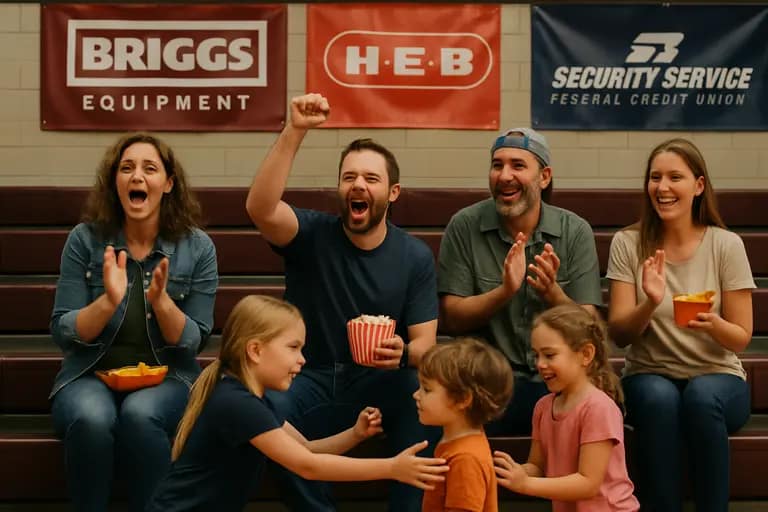
Gate Prices And Gym-Day Budgets
TXBA states that the series offers the “lowest gate prices around for families and fans,” and the official page also lists certified officials, awards, AM and PM waves, and boys and girls divisions from 2nd grade through high school on the official TXBA site. The phrase about gate prices is important, but the exact gate amount is not included in the research supplied here. So the responsible read is simple: TXBA is positioning family access as part of the event, while the precise gate figure should be checked before each date.
Family access is not a side issue in youth basketball. A fall tournament can carry costs beyond the entry fee: gas, meals, admission, snacks, and sometimes a hotel if a team travels far enough. Saturday-only play can keep some of those costs down. It can also help local restaurants and nearby shops see game-day traffic without asking families to stretch a tournament over two or three days.
Austin-Based Organization, Texas-Wide Reach
The organizer is based out of Austin, with an administrative contact address in Austin. The research does not provide confirmed venue names, attendance totals, team counts, or player statistics, so those should not be invented. What is clear is that the event belongs to the Texas grassroots basketball calendar, and it speaks to a familiar need: more meaningful fall reps without turning every weekend into a marathon.
For readers tracking the broader TXBA fall picture, our earlier fall series report looked at how Saturday-only scheduling can support local hoops families. The same theme applies here. The local sports economy is not only about big arenas. It is also the steady flow of families through gyms, gas stations, food counters, and team group chats on a Saturday morning.
- For coaches: the series offers repeated evaluation points across three dates.
- For players: it creates game-speed reps against tiered competition.
- For families: the Saturday-only setup can reduce travel strain.
- For communities: gym traffic can support small, local spending around game day.
What Heart of Texas Means After September 19
After the September 19 date, the series had already moved from plan to proof. The next test, as of September 30, was how teams used the break before October 10. Good fall basketball is not just about who wins a pool or takes home an award. It is about whether a team can turn one Saturday of film into sharper habits the next time out.
If the Heart of Texas Fall Tournament Series keeps its value, it will be because it stays useful to the people closest to the game: the coach trying to build a rotation, the parent trying to manage a budget, the young guard learning pace, and the local community that treats youth basketball as more than a weekend activity. That is where Texas hoops keeps renewing itself, one gym, one bracket, and one Saturday at a time.