
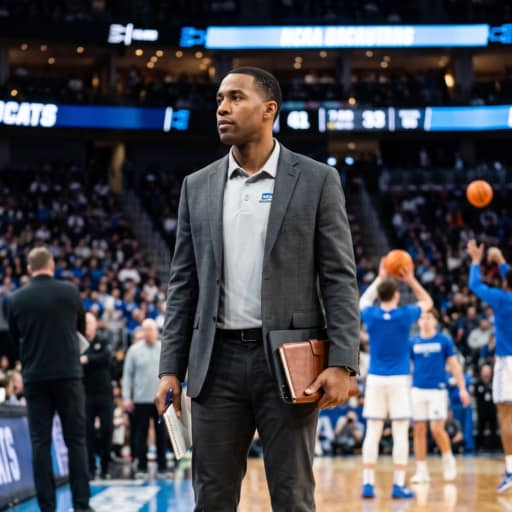
Marcus Spears Jr arrived in the Texas basketball story a year earlier than originally expected, and that matters far beyond one roster spot. On July 9, 2026, he reclassified from the Class of 2027 to the Class of 2026 and committed to the University of Texas, choosing the Longhorns over programs including Arizona, LSU, and Kentucky CBS Sports reported.
As a coach, I read that move first through the practice gym. A young forward who had been tracking as the No. 1 player in the 2027 class did not just change paperwork. He changed the daily standard inside a college program before the 2026-27 season even tipped. As a Texas basketball historian, I read it through place: a Plano player from Dynamic Prep staying in-state and entering one of the state’s flagship programs while his name still carried national heat.
This is not a promise of wins. No honest coach should speak that way before possessions are played, roles are earned, and college scouting reports hit back. It is, instead, a clear recruiting and development moment. Texas gained elite size, production, and experience earlier than planned, and the state basketball community gained another case study in how fast the road from local prep gyms to major college minutes can move.
Why Marcus Spears Jr Moved Early
The Date That Shifted The Timeline
The key date was July 9, 2026. That was when Spears moved from the 2027 class into the 2026 class and pledged to Texas. The next day, July 10, 2026, Texas added him through an Athletic Scholarship Agreement and announced that he would join the Longhorns for the 2026-27 season.
That sequence is important because reclassification is not just a headline. It compresses preparation time. A player gives up another year of high school competition and steps into older bodies, heavier scouting, longer film sessions, and more demanding defensive rules. For a forward listed at 6-9 and 210 pounds, the question becomes less about whether the frame is promising and more about how quickly the habits match the physical tools.
Spears had the résumé to make that conversation serious. Before the move, he was regarded as the No. 1 national recruit in the Class of 2027 by several major recruiting services. After joining the 2026 class, he still rated near the top: No. 4 nationally by ESPN, No. 7 by Rivals Industry, and No. 8 by 247Sports. That kind of ranking shift says something coaches understand well. Even after moving up a year, the player still carried top-tier standing.
What Immediate Eligibility Really Means
By reclassifying, Spears became immediately eligible to compete for Texas in 2026-27. That eligibility gave the Longhorns a new frontcourt piece earlier than the original calendar suggested. Still, the NBA timeline did not move at the same speed. Per NBA age requirements, he was not eligible for the NBA Draft until 2028 Sports Illustrated reported.
That detail shapes the basketball meaning of the move. Texas was not simply borrowing a player for a quick stop before the draft. Based on that eligibility note, the program had a wider development window than some might assume. For coaches, that window matters. It allows a staff to teach college defensive positioning, strength-room routine, spacing reads, screening angles, and late-clock decision-making without treating every week like a farewell tour.
The Texas Player Development Fit
Production Before The Jump
Marcus Spears Jr did not just shorten his path to Austin; he brought numbers that had already been tested in strong settings. During his junior season at Dynamic Prep, he averaged 15.1 points, 7.6 rebounds, and 2.4 blocks per game. That team finished 39-5 and reached the semifinals at Chipotle Nationals.
Those numbers tell a coach two things. First, Spears affected the game without needing every possession to be built around him. The blocks and rebounds point to activity around the rim, timing, and a willingness to play through contact. Second, his scoring came inside a winning team structure. That matters because college staffs value prospects who have already played meaningful games where one bad defensive rotation can swing a season.
His spring 2026 Nike EYBL production added another layer. Spears averaged 20.9 points and 8.7 rebounds per game and was the only player that season to rank in the top 10 in both scoring and rebounding. That combination is not cosmetic. Scoring draws attention, but rebounding travels. On nights when shots do not fall, a forward who can win possessions on the glass still helps his team.
International Reps And Older Pressure
The international piece should not be skipped. At the 2025 FIBA U16 Men’s AmeriCup, held June 2-8, 2025 in Juárez, Mexico, Spears started all six games. He averaged 14.0 points, 6.5 rebounds, 2.0 steals, and 1.8 blocks per game and was named to the All-Star Five.
International youth tournaments ask different questions. Spacing feels different. Officiating can feel different. Opponents may come from systems with different tempos and shot profiles. A teenager who starts every game in that setting gains a kind of basketball language that cannot be copied in an empty gym.
For Texas, Marcus Spears Jr gives the staff a forward with prep production, circuit production, and international experience. That does not guarantee a role. It gives coaches a stronger starting point for teaching. The best staffs do not just collect talent; they shape it into habits that survive February road games, scouting pressure, and the physical wear of college basketball.
The Recruiting Signal Across Texas

Marcus Spears Jr And The Local Pipeline
For Plano and Dynamic Prep, this move carried local meaning. Texas has always been a state where basketball identity is built school by school, gym by gym, family by family. When a highly ranked in-state player chooses the Longhorns after considering national options, young players notice. Parents notice. High school and grassroots coaches notice.
The lesson is not that every elite player must stay in Texas. Recruiting is personal, and each athlete’s choice belongs to that athlete and family. The lesson is that Texas programs can still make a powerful case to Texas players. The state does not have to be only a place where talent is discovered before leaving. It can be a place where talent is developed, celebrated, and challenged at the college level.
That is where this story meets community pride. Plano players can point to a current example from their own area. Dynamic Prep can point to a player who moved through its program into a major college setting. Texas fans can see the Longhorns competing for the kind of recruit that shapes national conversations.
A Recruiting Win With Coaching Demands
There is a responsibility that comes with a player like this. The more famous the prospect, the louder the outside noise. A coaching staff has to protect daily growth from public expectation. That means defining role, demanding defense, building strength safely, and keeping the player tied to team standards rather than recruiting reputation.
I have always believed Texas basketball is at its best when the community respects work more than ranking graphics. Rankings create attention. Practice creates trust. If Spears is going to make the most of the earlier jump, the small pieces will matter: early help-side calls, box-outs after switches, sprinting into screens, and learning which shots college defenses are willing to concede.
Those are not glamorous details, but they are the details that separate a good prospect from a winning player. Texas did not just add a name. It added a teaching project with rare tools and a serious head start.
What Marcus Spears Jr Means For Texas Hoops
The true measure of Marcus Spears Jr joining Texas a year early will not be found in one press release or one recruiting ranking. It will come in how the move affects roster depth, player development, and the connection between the Longhorns and the state’s prep basketball base.
On September 17, 2026, the facts were already clear enough to frame the significance. He had reclassified on July 9, committed to Texas that same day, joined a year earlier than expected, and carried production from Dynamic Prep, Nike EYBL play, and international competition. He was immediately eligible for the 2026-27 college season, while his NBA Draft timeline remained set for 2028.
For Texas basketball people, that is the heart of it. A Plano forward with national standing chose to grow in Austin sooner than planned. The Longhorns gained talent. The state gained a local recruiting story worth tracking with patience. And every young player watching from a Texas gym got another reminder that the path can move fast, but the work still has to meet the moment.