
Building a winning team isn’t just about picking talented players. It’s about creating a common language that turns a group into a single unit. This language is the base of your strategy. Without it, your team will struggle to work together.
Before you start designing your playbook, you need a clear mission. This is where the kick-off meeting is key. It’s not just about getting everyone together. It’s about sharing a common goal.
Imagine the difference between a smooth huddle and a chaotic mess. The words you use define your team’s identity on the field. If your players use the same terms for different things, it can lead to disaster.
To create this environment, start with clarity and purpose. The right words can make your team work like a well-oiled machine. In this section, we’ll show you how to build this foundation. We’ll make sure every player knows not just the play, but the reason behind it.
Select Captains Leadership Council and Standards Card
Choosing captains is about leadership, not who’s most popular. The right captains can make your team better or worse. It’s a big decision. A good leadership council can change the team’s vibe, making it better.
Good leaders are key to a team’s success. To pick effective captains, use activities that teach leadership skills. The “Leadership Envelopes” game is one example. It helps players understand values like accountability and communication.
The “My Favourite Manager” session is another great activity. Players share their best and worst leaders. This helps create a team that truly lives its values.
The standards card is also important. It’s often ignored, but it should be a key part of the team. Captains should follow the standards and show others how it’s done.
Build Depth Role Clarity Freshman to Varsity Pipeline and JV Integration
Depth in a sports team isn’t just about numbers; it’s about clarity and connection. When we talk about building a team, we often forget about the details. It’s key for every player, from the freshman to the varsity, to know their role. This isn’t just about filling spots; it’s about creating a team that works together.
Imagine a team where every sophomore on the junior varsity knows their part in the varsity game. Too many teams ignore the pipeline from freshman to varsity. I suggest creating a “role clarity” document that shows how players can move up.
Studies from MIT show that small groups work best. Yet, we have 90 players and wonder why the bottom third struggles. Junior varsity players should be seen as apprentices, not just extras. Pairing a freshman with a varsity player can help them learn and grow.
This approach is not just kind; it’s smart. You want players who are ready to step up when needed. The pipeline is essential for success, not a luxury.
For more insights on building effective teams, check out the latest updates at this link.
Practice Architecture Constraints Competitive Scoring Recovery Windows
Practice design is more than just drills. It’s a strategic plan for winning. The secret to success is constraints. These aren’t just about having fewer resources. They are challenges that make players think creatively.
For example, the Marshmallow Challenge uses spaghetti and tape to test teamwork. In football, limiting the offense to three formations can improve their skills. It’s all about making the most of what you have.
Competitive scoring adds a fun twist to drills. Imagine every drill is a mini-game, with points at stake. This makes players compete hard, not just go through the motions.
Here’s how to make it work:
- Set clear goals for each drill.
- Give points for doing well.
- Penalties for mistakes keep everyone alert.
Recovery windows are also key. You can’t just exhaust players and expect them to perform well. Use heart rate data or common sense to plan intense periods when they’re fresh. Let them rest during low-intensity drills.
This balance keeps players energized all week. The goal is to make practice exciting, like a Netflix show. Players should always be eager for more, not checking their watches. By following these principles, you’ll improve performance and create a culture of growth.
Special Teams BLOB SLOB Press Breaks Endgames and ATO Library
Special teams are key in football, showing what a team values most. They’re not just extras; they show the culture standards of your football program. If your punt team looks like a circus and your field-goal protection is weak, it shows a lack of effort.
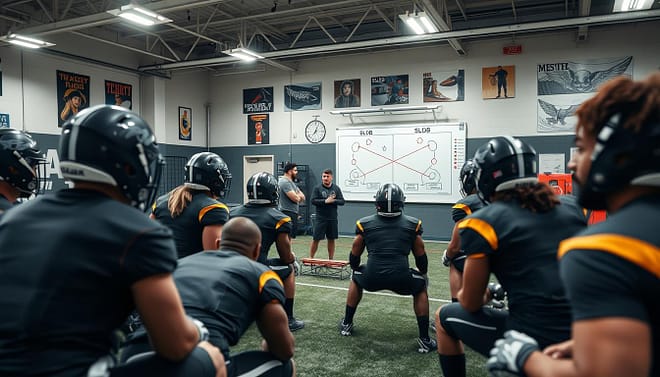
This part is for the often-forgotten third of the game. Think of BLOB (baseline out-of-bounds) plays for basketball fans and SLOB (sideline out-of-bounds) strategies for calm under pressure. Special teams are where role players shine, leading with pride. The gunner on punt coverage is like the CEO of his 40-yard sprint.
Turning special teams into a place for leaders can change everything. It’s not just about tackles; it’s about teamwork, communication, and effort that makes coaches happy. In a “special teams standards card” session, players set goals for each unit. It’s a key time for teaching discipline and detail.
Do you have a set of ATO (after timeout) plays that players can do without thinking? Or is your sideline a place of endless debate? The answers to these questions show your culture standards. If players can’t run 40 yards and hit someone, how can they do a complex zone blitz?
Scouting System Film Nights Reports Matchups and Shot Charts
Scouting is more than watching game footage. It’s a deep dive into game intelligence. To make your scout team better, we need to change how we scout. We should have interactive film nights that spark discussions.
Picture a film night where players break down plays. They analyze not just what happened but why. This is how they see the game like a coach. Here’s how to set it up:
- Interactive Discussions: Get players to share their thoughts during film nights. What do they see? What do they predict?
- Shot Charts: Use shot charts to see patterns. Your players will learn to guess plays before they happen.
- Matchup Reports: Go beyond just watching. Detail how players do against different defenses. What are their tells? How do they handle pressure?
Adding these elements turns your scout team into a secret team. Think of the scout team quarterback as a double agent, copying the opposing QB’s moves. This prepares them for the game and deepens their game understanding.
Also, try a “Blind Square” exercise. It challenges your defensive team to plan with little info, like a real game. If your scouting report can’t handle the first challenge, it’s just a waste of money.
The main goal is to build a scouting system that informs and empowers. Your scout team won’t just be there; they’ll be key players ready for any challenge. This isn’t just getting ready; it’s a chance to grow.

Game Day Routines Nutrition Hydration Sleep and Travel Standards
Welcome to game day, a 48-hour event filled with high stakes. It’s not just about the game; it’s about the rituals leading up to it. From the pre-game meal on Friday to the recovery smoothie on Saturday, every detail is important.
Nutrition is key. A good pre-game meal isn’t just any food. It’s about the right mix of carbs, proteins, and fats. Think whole grains, lean meats, and lots of veggies. You wouldn’t put low-grade fuel in a Ferrari, so why do it to your body?
Hydration is also vital. I’ve seen top teams fail because they didn’t hydrate well. It’s not just about drinking when you’re thirsty. Start hydrating two days before the game to stay consistent.
Sleep is non-negotiable for peak performance. A team that banned screens after 10 p.m. saw a 15% drop in injuries. Quality sleep is essential. Make sure players get enough rest to dominate the game.
Travel standards are a big test of culture. Do your players treat the bus like a study hall or a nightclub? Create a “game day rhythm” with mindfulness sessions and yoga to calm nerves before the game.
To build camaraderie, try games like “Never Have I Ever” for football experiences. For example, “Never have I ever fumbled on the one-yard line.” It’s a fun way to share laughs and bond on long bus rides.
Game day should be a ritual, not just a routine. Rituals have meaning; routines are just habits. When you’re down by four with two minutes left, it’s the meaning that will drive you forward, not just a bottle of Gatorade.
Parent and Booster Alignment Communications and Calendar
Parents and boosters are key to a sports season’s success. Their support can make all the difference. We must align their communication with our team’s goals.
Think of your captains as the team’s diplomats. They lead on the field and connect with parents. Training them for Q&A sessions can improve our communication with supporters. The “Playing with Status” exercise helps them handle conversations with influential parents.
Creating a communications calendar is essential. It’s not just about weekly emails. It’s about a strategic plan that treats parents as important stakeholders. We’ll schedule events like pre-season town halls and mid-season updates.
By giving parents roles, like managing the pre-game meal, we can build alliances. This is critical. Poor communication can lead to embarrassing moments, like a parent yelling at a coach.
Lastly, we’ll use the “Leadership Pizza” self-assessment for boosters. It helps them evaluate their support. Are they helping or just watching? This can greatly impact our team’s culture.
Midseason Recalibration Postseason Peak Plan and Mental Skills
This is the moment to check our progress and adjust our goals. Midseason is more than a checkpoint; it’s a wake-up call. Whether you’re leading at 5-0 or struggling at 2-3, it’s time to refine our practice design. This adjustment is not about fixing mistakes; it’s about improving what works and adapting to competition changes.
Players will do a midseason audit using the Leadership Pizza framework. They’ll rate their mental skills—focus, resilience, and communication—on a scale of 1-10. Many think they’re mentally tough until they face reality after a turnover. This self-assessment promotes honesty and growth, key for a resilient team.
Then, we focus on the postseason peak plan. Here, practice design becomes a strategic science. We plan our practices from the state championship date, including tapering, intensity spikes, and mental skills sessions. These sessions are tactical, preparing players for high-pressure situations.
We’ll also use the “Heard, Seen, Respected” activity. This creates team circles where players can share their needs for psychological safety before big games. A quarterback afraid to throw an interception is already at a disadvantage. By building trust, we empower our players to perform without fear.
To simulate playoff game pressure, we’ll do “pressure inoculation” drills. Imagine practice with rigged scores, biased refs, and loud crowds. This prepares players for the real playoff game, making it feel like a relief, not a burden. Our goal is to be the most adaptable team, not just the most talented.
| Skill | Midseason Rating | Postseason Focus |
|---|---|---|
| Focus | 1-10 Scale | Enhance concentration drills |
| Resilience | 1-10 Scale | Introduce recovery strategies |
| Communication | 1-10 Scale | Team-building exercises |
In conclusion, midseason recalibration is key for success. By focusing on practice design and mental skills, we prepare for the championship journey. Remember, talent wins games; adaptability wins championships.
Self Assessment Rubric Whiteboard Templates and Season Debrief
The season may be over, but learning never stops. A good debrief is key for growth. It’s like digging into your team’s performance, not blaming anyone.
Using a self-assessment rubric helps understand your team’s dynamics. Everyone should share their thoughts. It’s about learning, not punishing. Did the scout team feel ready? Their feedback is essential.
Try the “Tower of Power” activity to see your journey. Build a tower with blocks for important moments. Maybe it was a perfect goal-line stand or a failed two-minute drill. Then, let’s rebuild and learn from it.
We’ll rate everything, from practice design to culture standards. Honest feedback shows what needs work. If special teams struggled, we must face that. This isn’t just a review; it’s a plan for improvement.
In the end, the season debrief is a guide for future success. By learning from wins and losses, we get stronger. Remember, the journey continues into the next chapter.