
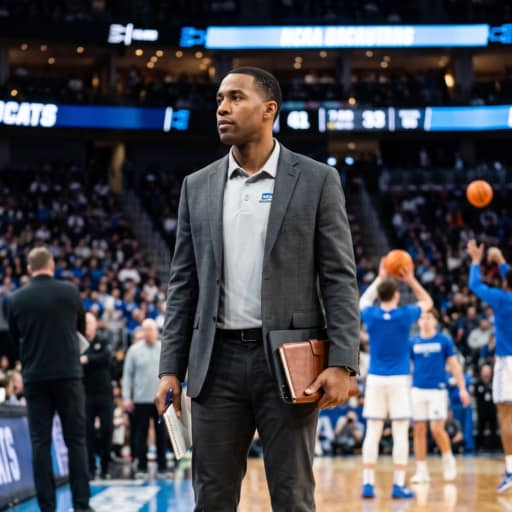
The UIL Shot Clock debate has become one of the clearest tests of what Texans want high school basketball to be: a faster version of the college game, or a sport that still leaves room for small-town patience, half-court toughness, and old coaching nerve.
As of September 2, 2026, the issue was no longer just gym talk after a district game. On June 10, 2026, the University Interscholastic League Legislative Council voted to direct staff to develop an implementation plan and conduct a superintendent survey on adding a basketball shot clock, with formal consideration scheduled for October 2026 UIL meeting results. That vote did not settle the matter. It moved the conversation from theory into planning.
That matters because Texas basketball has never been one thing. A 6A playoff game in the Metroplex does not feel like a 1A Tuesday night gym where half the town knows the scorekeeper. The same rule can sharpen one program and strain another. That tension has been part of the sport since its early Texas basketball roots, when every new rule had to prove it fit the people playing the game.
The Vote That Moved The Debate Forward
A Proposal With A Long Runway
The UIL’s 2026 action gave schools time to think, budget, and argue in public. The proposal is scheduled to receive formal consideration in October 2026. According to the Fort Worth Star-Telegram, UIL planning pointed toward a phased full implementation starting with the 2028-2029 school year, with early limits possibly aimed at 5A and 6A programs Star-Telegram report.
That timeline is meaningful. Texas is not Rhode Island or North Dakota. The state has massive suburban athletic departments, rural schools with lean staffs, and border programs that travel long miles for district games. A rule that sounds simple in a rules clinic becomes a budget line, a training topic, and a varsity identity question once it reaches every scorer’s table.
The 35-Second Trial Period
For the 2026-2027 school year, effective August 1, 2026, the rule-change structure allowed optional use of a 35-second shot clock in varsity tournaments and showcases across all conferences, but only when both coaches agreed before the game. That pilot gave coaches a limited setting to test pace, substitutions, and end-of-quarter thinking without immediately forcing every district gym to operate the same way.
From a coach’s seat, that trial setup is valuable. You can learn how your guards react after a dead ball with 18 seconds showing. You can see if your post entry eats too much clock. You can find out whether your table crew is calm under pressure. No clinic board can teach that as well as a live possession with parents hollering behind the bench.
How The UIL Shot Clock Changes Strategy
Possessions Become Teaching Moments
The UIL Shot Clock would put a number on every possession, and numbers change behavior. Without a shot clock, a team protecting a lead can hold the ball for long stretches, especially late in playoff games. That stalling tactic has always been legal, and sometimes brilliant. A disciplined underdog can shorten a game, frustrate a deeper roster, and force a favorite to defend for minutes without reaching.
With a clock, the same underdog has to create a shot. Not a heave. Not panic. A real shot. That shifts practice plans. Coaches would spend more time on early offense, secondary break reads, sideline out-of-bounds actions, and quick-hitting sets that produce clean looks before the count gets uncomfortable.
UIL Shot Clock Pressure In Late Possessions
The UIL Shot Clock would also change the last minute of close games. Instead of milking possession until a foul or turnover, teams would need to balance clock use with shot quality. A guard who can handle pressure and still get paint touch at 10 seconds becomes even more valuable. A wing who understands spacing on the second side of the floor becomes more than a shooter; he or she becomes a pressure-release valve.
Defensively, the rule would reward teams that can guard without fouling for a full possession. It would also reward coaches who know when to switch, trap, or sit back. A soft press that burns eight seconds before the offense crosses half court suddenly has teeth. A zone that forces three passes before the ball reaches the elbow can turn a calm possession into a rushed jumper.
A UIL Shot Clock does not remove strategy. It removes delay as a primary strategy. That is a big distinction. The best Texas coaches would still manage tempo. They would just have to do it through spacing, ball movement, and defensive pressure rather than possession denial alone.
Why Small Schools See A Different Problem
Depth And Fatigue Are Not The Same Everywhere
Large-school supporters often see the shot clock as a way to improve pace and prepare athletes for college-style basketball. That argument has weight, especially in 5A and 6A gyms with deep benches, multiple ball handlers, and athletes who play year-round. Survey data cited by UIL and media showed 62% of surveyed Texas coaches favored implementation, with stronger support among 5A and 6A coaches.
But in 1A, 2A, and 3A gyms, the concern sounds different. Smaller programs may not have ten varsity-ready players. They may have one true point guard, one reliable scorer, and a post player who also anchors the volleyball team in the fall. A faster pace can wear down players who already carry heavy minutes. It can also punish teams whose best chance is to defend, rebound, and choose the right shot after 50 seconds of patience.
Cost Is A Basketball Issue Too
The cultural question is not just style. It is access. Shot clock hardware costs money. So does installation. So does training someone to run it right every night. If the operator misses a reset in a tight district game, the argument will not stay at the table. It will land on the bench, in the stands, and maybe at the next school board meeting.
That is why smaller schools have raised concerns about cost and manpower. Texas basketball pride is built on the belief that a rural gym deserves the same respect as a suburban arena. If the rule arrives before the support structure, the gap between large and small programs could feel wider.
Training The Table Is Part Of Coaching The Game

Officials, Operators, And Reset Rules
Shot clock basketball asks more from everyone in the building. Officials need consistent mechanics. Table crews need clear reset rules. Coaches need to teach players what counts as a good late-clock shot and what counts as a bailout. The cleanest version of the rule depends on people who are trained before the ball is tossed.
That training is not a side detail. In Texas, the scorer’s table is often run by loyal school employees, community volunteers, or staff members who already handle multiple jobs on game night. Asking them to add a shot clock means giving them time, instruction, and backup. A rule should never assume every gym has the same number of hands available.
- Offenses would need faster entries, cleaner spacing, and guards who can organize the first action quickly.
- Defenses could use pressure to shorten possessions and force late-clock decisions.
- Coaches would likely adjust conditioning, rotations, and timeout use to handle the faster rhythm.
- Administrators would need to plan for equipment, staffing, and consistent table training.
The Cultural Pull Toward The College Game
The high school game may begin to look more like college and professional basketball, both of which use shot clocks. Some coaches welcome that. They believe it rewards skill development, quicker reads, and better offensive structure. For players with college ambitions, the adjustment may feel natural.
Still, Texas high school basketball has its own voice. The slow-down game, for all its critics, has given undersized teams a fighting chance. It has forced favorites to stay disciplined. It has made patience a weapon. Removing that tool changes more than pace; it changes how some communities understand a smart game plan.
What The UIL Shot Clock Means For Texas Gyms
The UIL Shot Clock conversation is really about balance. Texas can modernize the sport without forgetting the schools that built it one packed gym at a time. The rule could encourage better spacing, cleaner late-clock execution, and more possessions for talented players. It could also add costs and training demands that hit smaller schools harder.
Coaches will adapt because coaches always do. They will teach their guards to attack sooner. They will build late-clock packages. They will condition players for longer defensive stands and quicker turnarounds. The question is whether every school gets the runway and support to adapt fairly.
If the UIL Shot Clock moves from pilot use to full implementation beginning in 2028-2029, the smartest programs will treat it as more than a device above the backboard. They will treat it as a new layer of Texas basketball culture: part strategy, part budget, part community trust. The clock may count down from 35, but the real measure will be whether the rule strengthens the game in Dallas, Dimmitt, Duncanville, and every gym in between.