

Remember when the final score wasn’t the most important number on the board?
There was a time when “who you played” was a big deal. It wasn’t just a line in a playoff bracket. It was about teams coming together and breaking down tough barriers.
The structure of the game is interesting. Schools are grouped by size and changed every two years. The biggest schools even have their own divisions. The aim is to keep things fair.
This setup also helps with integration. It brings different groups together in a competitive setting. The court became a place where equality was tested.
Let’s look at those key games. We’ll use the sport’s structure to understand them. How did the game’s rules help or hinder the push for unity?
This is like a big change in society, but with sports. It shows us a Texas-sized mirror of ourselves.
Gender equity first girls championship games and female participation milestones
1975 was a big year, not just for “Jaws” at the movies. In Texas, girls basketball made its debut. The UIL’s move was a big step forward.
For years, girls had shown their skills on playgrounds and in gym classes. The UIL’s approval was like opening a floodgate. The first state tournament was a big deal.
Girls basketball programs quickly rose to the top. The talent was immense, and the drive to win was strong. Those early title games marked a new era.
The UIL made sure boys and girls had equal chances. They used the same formats and venues. This showed that girls’ basketball was just as important.
Years later, the crowds for girls’ games are huge. The Alamodome treats everyone equally. Communities celebrate girls’ wins just as much as boys’.
This change from a new sport to a beloved tradition is clear. The table below shows how far we’ve come.
| Era | Key Milestone | Cultural Impact | Crowd/TV Metric |
|---|---|---|---|
| Pioneering (1975-1985) | First UIL-sanctioned state championship games | Legitimized the sport; shifted “girls” from auxiliary to primary. | Growing local fanbase, limited broadcast. |
| Establishment (1986-2000) | Multiple dynasties emerge (e.g., Canyon, Duncanville girls) | Proved sustained excellence; created female sports icons in Texas. | Crowds begin to rival boys’ regional finals. |
| Modern Powerhouse (2001-Present) | Title games routinely sell out major NBA-sized arenas. | Female athletes are marquee draws; community investment peaks. | Full statewide TV/streaming coverage; social media frenzy. |
| The Data Point | Identical UIL tournament structure for all genders. | Mandated equity accelerated acceptance and resource allocation. | Creates a direct, fair comparison of fan engagement. |
The real story is that female athletes didn’t just want a seat at the table. They built a bigger, louder arena. The title games show the excitement and energy.
Every record-breaking crowd for girls’ games was a challenge to old biases. Every highlight reel became a recruitment tool. The participation was guaranteed in 1975. The dominance was earned over time.
Now, communities expect to win in girls’ basketball. They celebrate championships with the same fervor as boys’. This is the ultimate milestone. When excellence is expected, you’ve achieved more than equity. You’ve changed the game.
Facility evolution first modern gymnasiums and arena basketball introduction
The most important moment in Texas high school basketball wasn’t a buzzer-beater. It was when the UIL State Tournament moved to the Alamodome in 2003. This change wasn’t just a new address. It was the sport stepping up to the big leagues.
Before the Alamodome, games were played in small gyms. These places were loud and felt like home. The Alamodome, built for football, was transformed into a unique basketball venue. It used curtains to create a space that felt both big and cozy.
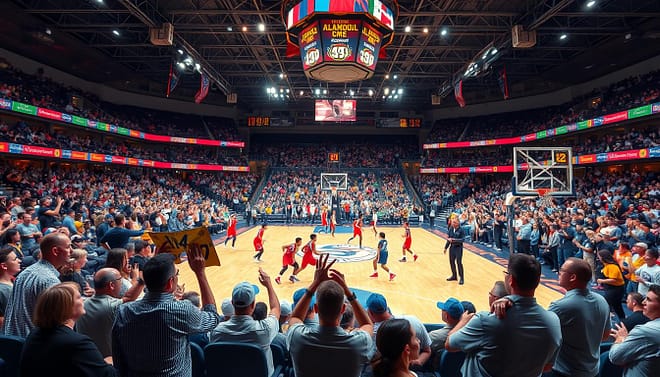
This new setup changed everything. Fans were close enough to hear coaches. The upper seats offered a view like from above. This made games feel like a big show.
The video boards were a big part of this change. They showed replays, stats, and live shots. Every play became a big moment on a huge screen.
This change added pressure to the game. In small gyms, it was about your town. But in the Alamodome, it was about your legacy. The atmosphere became electric, making every game a big event.
| Aspect of the Game | The Old Gym Experience | The Alamodome Era |
|---|---|---|
| Atmosphere | Intense, intimate, locally-focused. The crowd was on top of you. | Grand, theatrical, statewide event. A curated spectacle with controlled sightlines. |
| Scale & Crowd | Hundreds, maybe a few thousand, of mostly local supporters. | Tens of thousands, creating a roar that mimics a professional or college environment. |
| Technology & Presentation | A scoreboard, a buzzer, and maybe a PA system. The story was told live. | Giant video boards provide instant replay, stats, and live video, creating a layered narrative. |
| Player Perception & Pressure | Playing for community pride and a trophy. Pressure was personal and familiar. | Playing for legacy on a broadcast stage. Pressure is magnified, historic, and media-driven. |
This change in venues was a game-changer. It showed everyone that high school basketball was important. It was ready for a big stage. The Alamodome turned games into shows, making them unforgettable. This change made the game more than just a sport; it became a major event.
Television coverage first broadcast games and media milestone moments
Before TikTok, a Texas high school basketball game first flickered on TV. This signal brought a new reality. Suddenly, a local event became a spectacle for the whole state.
The TV camera changed the story of these historic games. A player’s heroics in Lubbock or El Paso were now statewide news.
Before TV, your game-winning shot was just a memory. TV made it a shared moment. Athletes became celebrities before they graduated.
The spotlight added pressure to the game. How many clutch free throws were made under the gaze of thousands?
This shift from local to TV created a new world. Print media built slow, detailed stories. These stories arrived a day later, to be savored.
Today, digital media brings instant fame. A championship photo can spread fast. Social media makes legends in real-time, with everyone contributing.
Let’s look at how media has changed. The table below shows the evolution of Texas high school basketball’s biggest moments.
| Media Era | Technology & Format | Reach & Speed | Myth-Making Impact |
|---|---|---|---|
| Print Dominion | Newspapers, physical photographs | Local to regional; 24-hour delay | Authoritative, curated narrative. The legend was written, not witnessed. |
| Broadcast Revolution | Terrestrial TV, grainy live broadcasts | Statewide; near real-time | Created shared, visual experience. Athletes became household names overnight. |
| Digital & Social Wave | Live streaming, social platforms (X, Instagram) | Global; instantaneous | Democratic, chaotic, and viral. The audience co-authors the story as it happens. |
Live streaming and TV coverage made games more professional. It showed they were premium content. This changed funding and recruitment.
This media shift has increased pressure and glory. It has also made fame more accessible. A stunning play can now go viral, unlike before.
The media has changed how we experience games. We watch legends being made live, with everyone contributing.
The next time you watch a historic game on your phone, think of the first broadcast. It aimed to make moments into myths. Today, we have faster tools and a bigger audience.
Rules evolution significant rule changes that impacted Texas basketball
The most impactful rule change in Texas basketball history wasn’t debated in a boardroom. It was born in a rural schoolhouse with an empty bench. The sports world often talks about the three-point line. But Texas’s smallest schools faced a bigger problem: not enough players.
They found a solution in six-player basketball. This rule change is a big deal for Class 1A schools. It’s a way to adapt to a reality where schools are small.
With fewer students than a suburban school’s varsity roster, fielding a traditional team is hard. Six-player rules changed the game. They made it possible for the game to exist in these schools.
The changes are big. The court is often smaller. Every player must play both offense and defense. This makes the game faster and more fluid.
This rule change did more than just keep gym lights on. It kept community identity and competitive fire alive. For these towns, the path to their own title games was redefined. The championship trophy for a six-player state tournament carries the same pride.
The table below shows how this Texan adaptation changes the game. It creates a unique competitive landscape.
| Feature | Traditional Five-Player Basketball | Texas Class 1A Six-Player Basketball | Impact on Game & Community |
|---|---|---|---|
| Team Size | 5 players on the court | 6 players on the court | Maximizes participation in small schools; everyone plays. |
| Court Size | Standard full court (94 ft) | Often a reduced-size court | Increases game pace and scoring opportunities. |
| Player Roles | Specialized positions (guard, forward, center) | Universal roles; all play offense & defense | Develops more versatile athletes and simplifies strategy. |
| Primary Driver | Competitive optimization | Existential necessity | Transforms a logistical problem into a unique sporting tradition. |
| Championship Goal | State title games in standard divisions | Dedicated six-player state title games | Provides an authentic, scaled championship pursuit for rural schools. |
Let’s not call it a lesser version. Call it a purer one. Six-player basketball strips the sport down to its essentials: competition, community, and the will to win. The next time you hear about a Texas high school title game, remember the first victory was getting enough players to rewrite the rules.
Coaching milestones first female coaches and minority coaching breakthroughs
The biggest changes in Texas basketball often came from quiet hiring decisions. The coach is like a queen, guiding the team with patience and resilience. Their moments of breakthrough are stories of overcoming obstacles.
Women who first led teams in male-dominated sports didn’t just bring new strategies. They brought a different kind of authority. It was a barrier breaking act of cultural jujitsu.
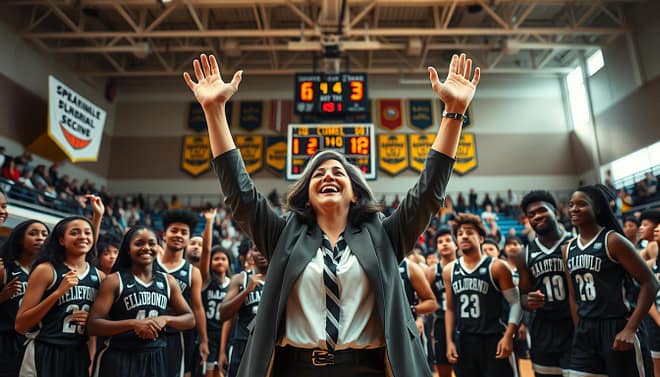
Seeing these women on the sidelines sent a powerful message to girls everywhere. They showed that women could not only play but also master the game. This shift helped build inclusive leadership in programs.
Minority coaches also made a big impact. They built winning teams and institutions in communities that needed them. Seeing a coach who shared their background was transformative for many.
These pioneers understood the local challenges and hopes. Their success was a victory for the community. This connection fueled the coaching continuity that defines legendary programs.
Dynasties aren’t just about talent. They’re built on consistent philosophy and trust. A study on youth development systems shows that stability is key. These coaches provided that stability, becoming cultural pillars.
Texas’s basketball traditions vary as much as its landscape. The Rio Grande Valley and the Panhandle have different styles. The breakthroughs listed below were more than personal wins. They were declarations of identity for each region.
| Coach | School / Region | Breakthrough Era | Legacy Impact |
|---|---|---|---|
| Coach Leta Andrews | Granbury / North Texas | 1960s-1970s | Became the winningest high school basketball coach in U.S. history, male or female, shattering the gender ceiling. |
| Coach Robert Hughes | Dunbar High, Fort Worth | 1970s | Built a national powerhouse in a predominantly Black community, earning over 1,300 wins and becoming a symbol of excellence and representation. |
| Coach Sonya Smith | Houston-area programs | Late 1990s | Among the first to lead major 6A programs in a major metro area, normalizing female leadership at the highest competitive level. |
| Coach Paul Valdez | El Paso region | 1980s-1990s | Forged a dynasty in a border community, integrating local culture into his program’s identity and creating a pipeline for Latino athletes. |
The table is more than a list of names. It’s a map of cultural change. Each entry shows how Texas’s basketball identity grew. Hughes and Andrews didn’t just win games. They changed what it meant to be a coach.
These coaches were more than just strategists. They were mentors and community leaders. Players learned to see themselves as future architects, not just players.
The lasting impact of a transformative coach is more than a game’s score. It’s a culture that continues to inspire. This is the true meaning of a barrier breaking career.
Academic integration combining athletics with academic excellence standards
The real change in Texas basketball wasn’t just about mixing players. It was about combining sports with studying. This mix changed the game in a big way.
The “I” in UIL is key. “University Interscholastic League” is more than a name. It’s a belief in well-rounded students. This was the original goal.
When this goal met reality, things got tough. Coaches had to check students’ grades as much as their skills. A good student-athlete was as important as a good athlete.
This challenge led to a new kind of teamwork. The “dumb jock” idea started to fade. Players were valued for their brains as well as their bodies. Winning games became part of a bigger plan for life.
The table below shows how big this change was. It changed Texas high school basketball forever.
| Aspect | Pre-Integration Era | Post-Integration Standard |
|---|---|---|
| Player Identity | Primarily “athlete”; academic performance often secondary. | Student-athlete; identity requires balance and academic eligibility. |
| Team Roster Management | Focus on assembling the most talented players available. | Strategic integration of talent with academic standing; study halls as key practice. |
| Public Perception | Often reinforced the “dumb jock” cultural trope. | Celebrates the well-rounded individual; athletes as scholars. |
| Long-term Legacy | Measured almost exclusively in wins, titles, and trophies. | Also measured in college scholarships, graduation rates, and career success beyond sports. |
This wasn’t just a rule change. It was a cultural shift. Recruiting became about more than just talent. Coaches became mentors for life skills.
The real story is the synergy. Practice habits help with studying. Teamwork on the court helps with group projects. The drive to win helps with graduation. This is the complete integration the UIL’s name always promised.
The legacy of Texas basketball? It’s not just about winning games. It’s about building a life. The real victory is in the successful integration of athletic drive into a blueprint for life. It’s in the former player who becomes an engineer, a teacher, or a leader. The final score that matters most isn’t on the board. It’s in the life built after the last buzzer sounds.
Safety improvements medical coverage and player safety milestone implementations
The most important help in Texas basketball isn’t a fancy pass. It’s the athletic trainer rushing onto the court with a spine board. We’ve moved from old ways to new ones, focusing on a player’s long-term health.
At first, medical coverage was just a parent with a first-aid kit. But the game grew bigger, and so did the need for better care. The UIL started to protect kids’ health, making it clear that their safety comes first.
Three big changes happened. First, we started having certified athletic trainers at big games. They had the power to make medical decisions, not just coaches. Second, we created strict concussion protocols. Texas used to guess if someone was okay, but now we test and follow rules to make sure players are safe.
Third, we made Emergency Action Plans (EAP). These plans help everyone know what to do in an emergency. They turn chaos into a clear plan, making sure help arrives fast and right.
The change from then to now is huge. Let’s look at how care has improved:
- Then: A twisted ankle got a questionable diagnosis and maybe some ice.
- Now: It gets a detailed check-up, maybe imaging, and a rehab plan before returning.
- Then: Dehydration was fixed with a cup of water and a pat on the back.
- Now: We use special plans for fluids and electrolytes to keep players safe.
- Then: A head injury was seen as a sign of toughness, not a reason to stop playing.
- Now: It means a player must stop and get checked out, no matter the game’s score.
The real change wasn’t new rules or gear. It was a shift in how we value player safety. Now, we know that a player’s health is more important than winning. The old ways are gone, and we focus on keeping players safe.
Technology integration first use of video analysis and modern training methods
The breakthrough moment for Texas basketball analytics wasn’t in a spreadsheet; it was in a VHS cassette. Coaching has moved from a gut feeling to a data-driven science. This change started with a simple click.
Coaches became film critics overnight. They used dry-erase markers on TVs to mark up footage. Players saw their mistakes on tape, making them more critical of their play.
This technology shift paid off. Instinct was now backed by evidence. The game’s pace slowed down for coaches, who focused on patterns.
The move from VHS to digital was a revolution. Tapes gave way to DVDs and then cloud platforms. Today, coaches use tablets to review games instantly. This change is fundamental to how the game is taught and learned.
Modern training uses digital tools like motion sensors and wearable tech. These tools analyze every detail of a player’s performance. Training became precise and relentless.
This technology changed how we experience and remember the game. The Alamodome’s video boards show replays and stats instantly. A game-winning shot is replayed for all to see.
Digital systems now automate record-keeping. Achievements, like scoring milestones, are logged instantly. There’s no need for physical records anymore. Stats and history are updated online in real-time.
This creates a permanent digital legacy for Texas basketball. Every game and player is part of a vast, accessible archive. The sport’s story is now in data, video, and digital trophies. Technology has made the game’s history richer.
Recognition milestones UIL acknowledgments and national attention achievements
The trophy case is a beautiful lie. It makes us think there’s an end to the story. But Texas basketball’s real tale is vast and digital. That trophy holds a UIL patch, a moment in time. Now, that moment gets replayed on ESPN and lives on in the cloud.
Recognition has grown from simple gestures to a big deal. The UIL’s seals and patches are now valuable. Schools compete for top-10 rankings and All-American spots. This fame machine shapes everything, from recruiting to play styles.
What makes a game historic today? It’s not just the score anymore. It’s about scouts, national broadcasts, and viral clips. The tournament showcases top talent, leading straight to the NBA and WNBA. This chase for recognition drives the sport.
The trophy case holds sentimental value. But the digital legacy is strategic. Texas high school basketball has learned to share its passion with the world. Every buzzer-beater is now vying for eternal fame, not just in a gym, but on a national stage. This is the sport’s final, fascinating evolution.