

For decades, the state of Texas has been synonymous with gridiron glory, establishing a national reputation built almost entirely on football. However, a seismic shift has been occurring across the sports landscape of the Lone Star State. Basketball has rapidly ascended from a secondary athletic pursuit to a dominant cultural force, driven by the historic successes and current reinventions of its three NBA franchises. The Dallas Mavericks, Houston Rockets, and San Antonio Spurs are no longer just regional attractions; they are the epicenters of global basketball innovation. As the league evolves, these three organizations find themselves uniquely positioned to dictate the trajectory of professional basketball for the next decade, simultaneously elevating the Texas basketball community at every level.
This ongoing basketball renaissance is not merely a coincidence of geography or draft lottery luck. It is the result of aggressive front-office management, visionary coaching hires, and a commitment to acquiring generational international and domestic talent. From the tactical brilliance deployed in Dallas to the defensive overhaul in Houston and the unprecedented physical marvel residing in San Antonio, Texas has become the ultimate laboratory for modern NBA team-building. Understanding how these distinct franchises are operating provides a masterclass in adapting to the relentless pace of today’s professional game.
Dallas Mavericks: Maximizing a Generational Backcourt
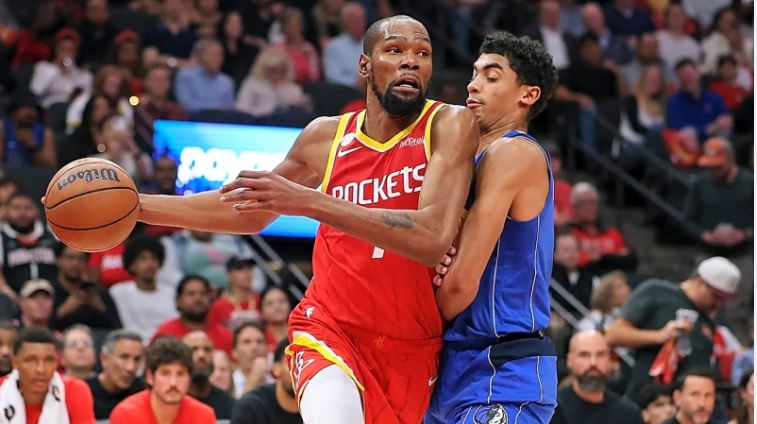
The Dallas Mavericks operate under a unique set of expectations, driven largely by the presence of Luka Dončić, a player whose trajectory suggests he will finish his career among the all-time greats. The Mavericks’ strategy over the past few seasons has been a high-wire act of roster optimization, frantically searching for the right combination of secondary playmaking, defensive versatility, and floor spacing to complement their franchise cornerstone. The acquisition and integration of Kyrie Irving signaled a massive paradigm shift in Dallas. Rather than surrounding Dončić exclusively with traditional three-and-D wings, the front office leaned heavily into overwhelming offensive firepower.
This dual-engine backcourt presents an unsolvable puzzle for opposing defenses. When Dončić navigates pick-and-rolls with his signature methodical pace, Irving serves as the ultimate pressure-release valve, capable of attacking scrambling rotations with elite isolation scoring. Yet, the true ceiling of the Mavericks is dictated by their supporting cast. The emergence of athletic rim-runners and versatile defenders in the frontcourt has transformed Dallas from a purely offensive juggernaut into a resilient playoff contender. Head coach Jason Kidd has implemented a defensive system that relies on active hands, timely double-teams, and sheer effort to mask any individual limitations on the perimeter.
Moving forward, the Mavericks’ organizational imperative is consistency and health. The Western Conference offers no reprieve, demanding that Dallas maintain a top-tier offensive rating while steadily improving their rebounding and transition defense. If the role players continue to hit open corner threes and protect the paint, the Mavericks are built not just for regular-season success, but for sustained deep playoff runs, keeping the national spotlight firmly fixed on the American Airlines Center.
San Antonio Spurs: The Victor Wembanyama Revolution
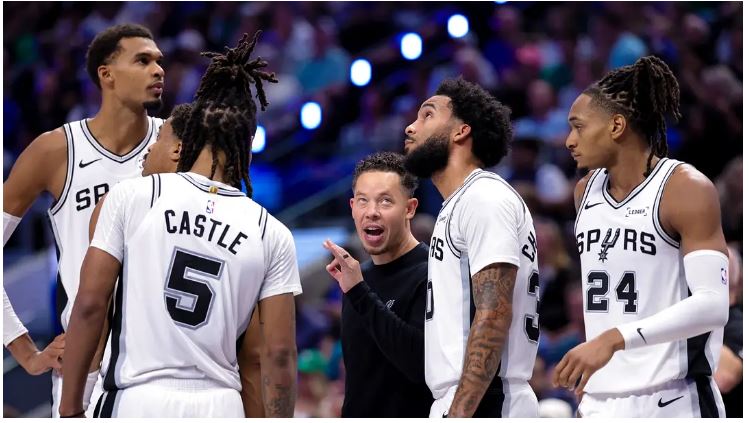
Down Interstate 35, the San Antonio Spurs are authoring an entirely different, yet equally compelling, narrative. For two decades, the Spurs were the gold standard of NBA consistency, built on the foundational brilliance of Tim Duncan and the strategic genius of Gregg Popovich. After a necessary period of rebuilding and asset accumulation, the franchise has fundamentally altered the geometry of the basketball court with the arrival of Victor Wembanyama. The French phenom is not merely a franchise cornerstone; he is a categorical anomaly who forces every opponent to reconsider their offensive and defensive game plans.
Wembanyama’s impact on the Spurs has been immediate and terrifying for the rest of the league. Defensively, his unprecedented wingspan and elite mobility allow him to erase mistakes at the rim while simultaneously contesting perimeter jump shots. Offensive players driving into the paint against San Antonio routinely alter their shot mechanics or abandon possessions entirely simply because Wembanyama is in the vicinity. On the offensive end, the Spurs are meticulously expanding his game. Rather than confining him to the post, Popovich and his staff are encouraging Wembanyama to initiate offense, run off screens, and shoot over defenders from well beyond the three-point arc.
The organizational challenge for San Antonio now lies in the timeline. With a talent this transcendent, the pressure to accelerate the rebuild is immense. However, the Spurs’ front office, historically known for its patience, is systematically evaluating their young core to determine who fits the Wembanyama timeline. They are actively seeking lead guards capable of delivering entry passes with precision and rugged forwards willing to handle the physical interior defense, allowing Wembanyama to roam as a free safety. The Spurs are methodically constructing the next great NBA dynasty, one calculated transaction at a time.
Houston Rockets: Athleticism, Culture, and the Phase Two Rebuild
In the southern tier of the state, the Houston Rockets have aggressively transitioned into what general manager Rafael Stone refers to as “Phase Two” of their extensive rebuild. After several seasons of stockpiling high draft picks and enduring the growing pains of a remarkably young roster, the franchise prioritized cultural accountability and defensive intensity with the hiring of head coach Ime Udoka. The mandate in Houston has shifted rapidly from talent acquisition to winning basketball games, heavily investing in veteran leadership to guide their ascending young stars.
The on-court product in Houston is characterized by relentless athleticism and physical defensive pressure. The development of Alperen Şengün has been the defining revelation of this new era. Şengün’s elite passing vision, post footwork, and offensive rebounding provide the Rockets with a reliable half-court hub. Surrounding him is a perimeter rotation overflowing with explosive talent. Jalen Green’s dynamic scoring ability, combined with the two-way versatility of Jabari Smith Jr. and Amen Thompson, gives Houston a terrifying transition attack. When the Rockets secure a defensive stop, they run the floor with a ferocity that frequently overwhelms older, slower opponents.
The Rockets’ trajectory is entirely dependent on their ability to consistently execute in the half-court during high-pressure situations. Udoka has demanded a commitment to switching defensively and fighting through screens, establishing a gritty identity that resonates with the city of Houston. As their young core gains valuable crunch-time experience and their veteran acquisitions stabilize the locker room, the Rockets are rapidly transforming from a rebuilding project into a legitimate, formidable presence in the Western Conference playoff picture.
The Ripple Effect on Grassroots Hoops
The simultaneous ascension of these three NBA franchises has generated a profound ripple effect across the broader basketball ecosystem within the state. High school and collegiate programs are reaping the benefits of this renewed excitement. Texas has consistently produced elite high school recruits, but the current volume of NBA-caliber talent emerging from the Dallas-Fort Worth metroplex, the Greater Houston area, and Central Texas is staggering. Young athletes are growing up watching dynamic, innovative basketball in their own backyards, directly influencing the skill sets they prioritize in their own development.
Collegiate powerhouses within the state are also capitalizing on this momentum. Programs are aggressively utilizing the transfer portal and Name, Image, and Likeness (NIL) opportunities to keep elite domestic talent in-state while also recruiting heavily on the international market. The strategic innovations seen in Dallas, San Antonio, and Houston trickle down, elevating the tactical sophistication of high school and AAU coaching across the region. The result is a self-sustaining pipeline of basketball excellence that ensures Texas will remain a central hub for the sport’s evolution for the foreseeable future.
Looking Ahead at the Lone Star State’s Hoops Trajectory
As the NBA landscape continues to shift toward positionless basketball, elite shot-making, and defensive versatility, the Texas franchises are not merely keeping pace; they are actively dictating the terms of engagement. The Mavericks have demonstrated the power of overwhelming offensive talent. The Spurs are redefining the physical limits of the sport through a generational prospect. The Rockets are proving that aggressive defensive cultures can rapidly accelerate a rebuilding timeline.
The coming seasons will undoubtedly feature intense divisional rivalries, dramatic playoff series, and fascinating roster maneuvers as these three front offices compete for supremacy. For fans, analysts, and aspiring players, this era represents an unprecedented opportunity to witness basketball history unfold in real-time. The state of Texas has officially traded its football-exclusive identity for a more dynamic, multi-sport reality, firmly establishing itself as the premier destination for professional basketball innovation and excellence.