
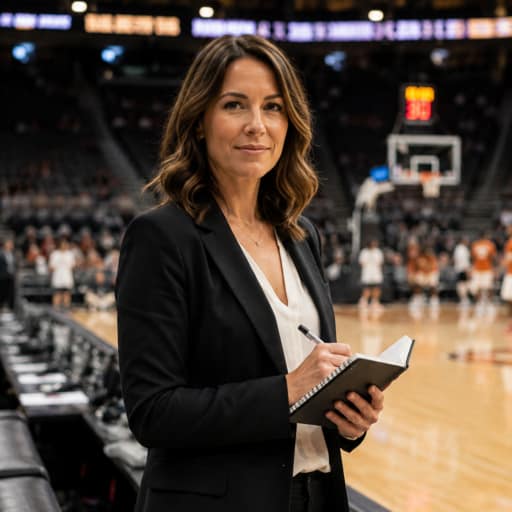
The Texas basketball community has always been bigger than a box score. It lives in school gyms where grandparents remember old tournament trips, in college service groups teaching younger kids how to pass and share space, and in towns where the game became a meeting place long before social media gave every highlight a second life.
Reflecting on historical practices in Texas basketball means honoring both the big milestones and the everyday work. The first boys UIL state basketball tournament was held in 1921 at Gregory Gym in Austin, with El Paso High School beating San Antonio High School 25-11. UIL girls basketball state championships began in the 1950-51 school year, well before Title IX. Those facts matter because they remind us that access, structure, and community belief did not arrive all at once. They were built season by season.
How Texas Basketball Community Traditions Took Shape
Texas Basketball Community Roots In School Gyms
Before major arenas framed championship week, the local gym was the capital of Texas basketball life. A gym could be small, hot, and packed shoulder to shoulder, but it held a town together on Tuesday and Friday nights. Parents ran concession stands. Coaches taught defensive slides and punctuality in the same practice. Players learned that wearing a school uniform meant representing a place, not just a roster.
The Texas basketball community also grew through hard changes. UIL membership was officially opened to all schools regardless of race on June 9, 1965. The Prairie View Interscholastic League, which had governed athletic and academic contests for many African-American high schools in Texas, began merging into the UIL in 1967-68 and disbanded in 1970. That shift did not erase the pride built in PVIL programs. It carried many coaches, athletes, families, and traditions into a wider competitive structure.
For readers who love the long view of the game, the early Texas story connects naturally with basketball’s early Texas growth, when the sport was still trying to find its footing beside football, ranching culture, and local school identity.
Rules That Reflected Community Needs
One of the clearest examples of historical practice shaping culture came in girls basketball. Until 1978, UIL girls basketball used a six-player half-court format in which only forwards could shoot. The switch to standard five-on-five full-court basketball in 1978 changed training habits, team construction, and how girls were evaluated as complete players.
That format change was not just a technical adjustment. It asked communities to see girls as full-court athletes, with stamina, ball-handling, defense, and transition play all part of the evaluation. It also placed more responsibility on coaches to teach the full game at earlier ages. In Texas, where school pride can run deep, that mattered. A rulebook decision reached into practice plans, youth instruction, family expectations, and the way young players imagined their futures.
What The Texas Basketball Community Can Learn From Participation
Girls Basketball Needs Fresh Local Energy
The participation numbers deserve a serious look. Between the 1999-2000 and 2024-25 school years, Texas girls high school basketball participation fell from 70,427 players at 1,175 schools to 44,953 players at 1,373 schools, a decline of roughly 36%, according to Associated Press participation reporting. That is a sharp signal, especially in a state with so many schools offering programs.
Those numbers do not diminish the athletes still competing. If anything, they raise the stakes for local leaders. Athletic directors, youth coaches, school boards, and parents have to ask whether the first touch points are welcoming enough. Are younger girls getting gym time? Are middle school programs connected to varsity coaches? Are former players being invited back as mentors? Are travel costs, transportation, and schedule demands pushing some families away?
The Texas basketball community has answered challenges before. It did so through sanctioning girls championships, changing formats, integrating school competition, and building championship stages that gave athletes memories worth carrying for life. Participation is not only a statewide number. It is a neighborhood question. It starts with whether a fourth grader sees the gym as a place for her, too.
Championship Dates Still Carry Local Meaning
The UIL Girls Basketball State Championships were scheduled for March 4-6, 2027, at the Alamodome in San Antonio. As of September 26, 2026, those finals were still ahead. For families, that kind of date is not just a calendar item. It shapes winter goals, booster club planning, hotel conversations, practice intensity, and the dreams of athletes trying to earn one more week together.
San Antonio has long served as a gathering point for high school basketball families, and the Alamodome stage turns local identity into a statewide meeting. A team from a small town can bring a caravan. A metro program can bring a student section. A player who started in a school gym can run onto a floor that feels much larger than home, yet still hear voices she knows.
Mentoring And Service Keep The Game Personal
College Programs Can Build More Than Fans
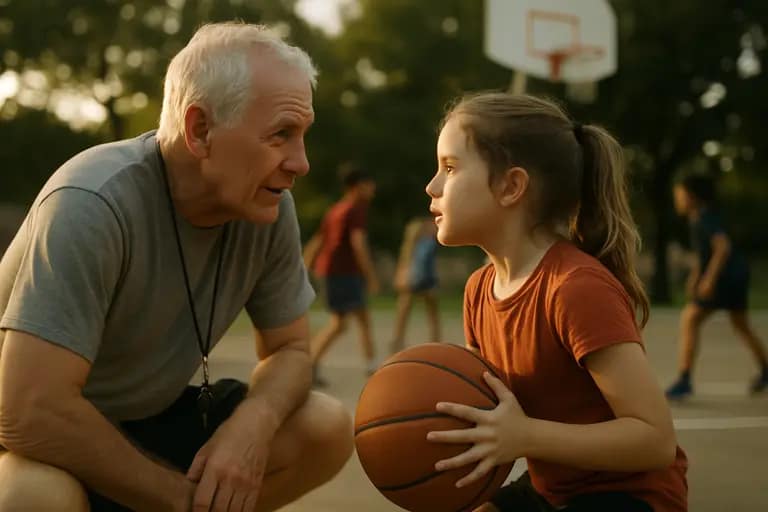
Community engagement in Texas basketball is not limited to varsity teams or state tournaments. Since 2023, the University of Texas Cowboys, a men’s student service organization, have partnered with UT Elementary, serving Pre-K through fifth grade, to mentor fourth and fifth grade boys through weekly interaction that has included games such as basketball, relay races, and recess play, according to UT News on the mentoring program.
That kind of work sounds simple until you picture it. A college student shows up every week. A child learns that older people keep promises. A playground game turns into a lesson about patience, teamwork, losing with grace, and trying again. Basketball is often the easiest doorway because the rules are clear: pass, cut, rebound, help your teammate.
For the Texas basketball community, mentorship keeps the sport from becoming only a recruiting conversation. Not every child will play varsity ball. Not every varsity player will sign with a college. But every gym can teach habits that travel well beyond the scoreboard: listening, sharing space, accepting coaching, and caring about someone else’s effort.
Healing Work Reaches Beyond The Court
The San Antonio Spurs’ 2022-23 community work in Uvalde also belongs in this reflection. As part of that season, the Spurs moved their annual open practice to Uvalde High School, held youth basketball clinics, hosted a community fair, committed more than 700 volunteer staff hours, donated sports equipment, and raised more than US$1 million for community uplift and healing following the Robb Elementary tragedy. That effort had a basketball frame, but its meaning was human first.
On June 4, 2026, H-E-B donated US$500,000 to Spurs Give to fund new youth basketball courts across underserved Texas communities, including San Antonio, Austin, Brownsville, and Corpus Christi, under the Spurs Play initiative. Court projects like that are sports infrastructure, yes, but they are also invitations. A safe court tells kids they have somewhere to go, somewhere to compete, and somewhere to belong.
Why Texas Basketball Community Memory Matters
Historical memory keeps Texas basketball honest. It reminds us that access expanded because people pushed for it. It reminds us that girls basketball has deep roots but still needs renewed participation support. It reminds us that integration changed competitive pathways while preserving the legacies of programs that built greatness under unequal systems. It reminds us that mentoring and healing work are not side stories. They are part of the game’s civic heartbeat.
The Texas basketball community should keep telling these stories because they help coaches and families make better choices now. A coach designing a youth clinic is connected to the first girls championship. A player running full court is connected to the 1978 format change. A college mentor playing recess basketball is connected to the same belief that has carried Texas gyms for generations: the game can teach people how to stand with each other.
That is why reflecting on old practices is not nostalgia for its own sake. It is scouting film for the culture. The past shows what worked, what excluded people, what brought communities together, and what still needs care. Texas basketball is at its best when the gym door feels open, the local story is remembered, and the next young player is welcomed onto the court.