

On December 3–5, 2026, the SWTX College Tournament is scheduled to return to La Forge Hall Gymnasium on the Uvalde Campus of Southwest Texas College, and that matters well beyond the bracket. As of November 3, 2026, the event is still ahead, with roster, photo, and payment details still part of the prep work for participating schools. The college lists the tournament as the 66th annual Southwest Texas College High School Basketball Tournament on its official tournament page.
SWTX College Tournament Returns To Uvalde
There is a certain feel to a small-school tournament in December. The gym fills early. Coaches carry folders and scout sheets. Players walk in with that mix of nerves and pride that only comes from wearing a school name across the chest. In Uvalde, that scene has staying power because this event has reached its 66th annual edition, giving the region a familiar early-season basketball marker.
SWTX College Tournament Dates And Venue
The schedule window is clear: December 3–5, 2026, at La Forge Hall Gymnasium, located on the Southwest Texas College Uvalde Campus at 2401 Garner Field Road in Uvalde. The tournament is hosted through the SWTX Physical Education Department, with Landra Fowler listed by the college as tournament director through SWTX Athletics. Those details matter because a well-run event gives coaches a predictable setting for game planning, travel planning, and player evaluation.
For schools outside the big metro spotlight, a college gym can feel like a larger stage without stripping away the local flavor. La Forge Hall is not some distant arena that disconnects teams from their communities. It is close enough for families from nearby districts to make the trip, yet formal enough to give players a taste of tournament pressure.
A Three-Game Floor For Every Team
The tournament format guarantees each high school team three games, according to Southwest Texas College. For coaches, that is the appeal of the SWTX College Tournament: one trip, three tests, and enough possessions to learn something real. A single early-season game can be distorted by foul trouble, travel legs, or one hot shooting quarter. Three games give staffs a better read on rotation depth, defensive communication, rebounding habits, and whether young guards can settle a team after a rough stretch.
Administrative deadlines are part of the same basketball story. Rosters and photos are due by Monday, November 23, 2026, at 12:00 pm noon, and tournament fees are listed at $200 per team or $400 per school, with payment required before first-round games. Those details may sound routine, but they help smaller athletic departments keep the event organized before buses roll toward Uvalde.
Why The Field Fits Rural Texas Hoops
The listed participating schools give this tournament its identity. Southwest Texas College names Brackett HS, D’Hanis HS, Knippa HS, La Pryor HS, Leakey HS, Nueces Canyon HS, Sabinal HS, and Utopia HS among the notable schools in both boys’ and girls’ divisions. That field speaks to a corner of Texas where distances are real, enrollments are often modest, and basketball can be one of the clearest ways a school carries its town into competition.
Small Schools Get A Shared Stage
For rural programs, exposure is not always about college recruiters in the bleachers. Sometimes it is about athletes seeing unfamiliar jerseys, adjusting to a neutral floor, and learning that their game travels. A guard from a low-population district may spend most nights facing opponents who already know every tendency. In Uvalde, that player can see new defensive pressure, different pace, and coaches who prepare in a tournament rhythm.
The same broader value shows up across Texas fall and winter basketball, where affordable, organized events give families and teams a clear development path; our coverage of the TXBA fall tournament showed how those weekend structures can reinforce local hoops pride. Uvalde’s event has its own personality, rooted in rural schools and the long pull of Southwest Texas basketball.
What Coaches Can Learn Before District Play
The source material does not include local quotes or player development metrics, so any development read should stay tied to the confirmed format. Still, the basketball logic is sound. Three tournament games before district play can help coaches identify who handles ball pressure, who talks on defense, who boxes out when tired, and which lineups can survive without the leading scorer on the floor.
That matters in Class 1A, 2A, and other smaller-school settings where one absence or one foul-heavy night can reshape a rotation. A December tournament can become a classroom. Coaches can test zone looks, late-clock actions, press breaks, and bench combinations without the same district standings weight that comes later. Players learn, too. They feel how quick a tournament game can swing after two turnovers, a missed assignment, or a missed front end at the line.
Youth Development Value Beyond The Bracket
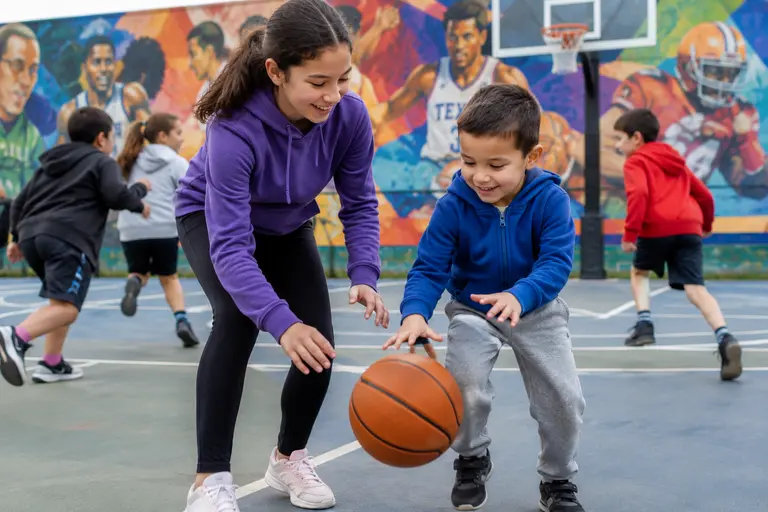
The scoreboard will matter. It always does in Texas gyms. But the developmental value of the SWTX College Tournament reaches past wins and losses because tournament settings ask young players to reset fast. There is not much time to dwell on a bad shooting game when another opponent is waiting. That short memory is a skill, and it often separates steady teams from talented but fragile ones.
Early-Season Reps Under Tournament Pressure
Basketball growth is not just built in practice. It comes when a sophomore has to inbound against pressure, when a post player learns to defend without fouling, or when a senior point guard recognizes that a two-for-one is not the right call for his team. Tournament reps compress those lessons. Over three days, coaches can see whether players retain corrections from one game to the next.
For girls’ and boys’ teams alike, the shared structure also helps schools treat both divisions as central parts of the athletic calendar. The research confirms both boys’ and girls’ divisions include the listed schools. That is the right kind of stage for communities where sisters, brothers, cousins, and classmates often grow up in the same gyms, sharing the same bleachers and the same local expectations.
Community Access Around La Forge Hall
Southwest Texas College lists spectator passes at $8 for a single-day pass and $12 for the all-tournament pass on the same event information page. For families planning around work, school, and travel, that pricing gives a clear view of the weekend. It also keeps the event connected to the people who make rural basketball feel personal: parents, grandparents, teachers, former players, and younger kids watching from the baseline.
- Confirmed dates: December 3–5, 2026.
- Confirmed venue: La Forge Hall Gymnasium, Uvalde Campus.
- Confirmed format: three guaranteed games per team.
- Confirmed prep deadline: rosters and photos due November 23, 2026, by noon.
Those details create the frame. The real local meaning comes from what happens inside it: coaches teaching through pressure, players adapting to new matchups, and communities seeing their schools represented in a college setting.
What The SWTX College Tournament Means For Uvalde
The SWTX College Tournament sits in a useful place on the Texas hoops calendar. It is early enough to shape teams before district races tighten, but established enough to carry memory for families who have seen this event across generations. A 66th annual tournament is not just another date on a schedule. It is a recurring basketball checkpoint for Southwest Texas.
A Local Event With Long Memory
For Uvalde, hosting this event keeps Southwest Texas College tied to the region’s school communities. For the athletes, it gives three days of competition in a setting that feels bigger than a normal weeknight but still close to home. For coaches, it offers film, teachable possessions, and a clearer sense of who can be trusted in late-game moments.
If the SWTX College Tournament does its job on December 3–5, 2026, the lasting value will not be limited to a champion’s photo. It will show up later, when a young team handles district pressure better, when a bench player becomes part of the rotation, or when a small-town athlete realizes that their game belongs on a wider floor.