
The Games of Texas gave Bryan and College Station a four-day look at what grassroots sport still means in this state: families in bleachers, coaches checking heat sheets and schedules, athletes carrying town pride, and local businesses feeling the weight of tournament travel. From July 30 through August 2, 2026, the Summer Games took place in Bryan-College Station, according to the TAAF summer event page. For a Texas basketball coach and historian, the lesson was clear even without a summer basketball bracket: the culture that builds good teams is the same culture that fills a multi-sport festival.
Games of Texas Recap Through A Basketball Lens
The numbers from the 2026 event were not small-town filler. They were statewide markers. College Station reported more than 7,584 athletes across 10 sports and an estimated $8.1 million economic impact for the Bryan-College Station area, with travel from athletes, coaches, families, and supporters driving much of that activity in the College Station recap. That matters because amateur sport in Texas has never lived only on the scoreboard. It lives in hotel lobbies, team meals, parent carpools, and local gyms where kids first learn how to compete.
What The Games of Texas Revealed About Grassroots Talent
Track and field carried the largest participation mark in the 2026 recap, with 5,029 athletes, 108 local participants, 719 heats over four days, and 239 heats on Saturday. Swimming added 1,637 participants. Those facts are not basketball stats, and we should not dress them up as if they are. But they do show a statewide appetite for organized amateur competition, the same appetite that drives summer league hoops, school feeder programs, recreation leagues, and select basketball events from the Valley to the Panhandle.
As a coach, I see the connection in habits. A sprinter learns how to handle a crowded schedule. A swimmer learns how to reset after one race and prepare for another. A young guard in a Texas gym needs the same emotional rhythm: warm up, compete, recover, listen, adjust, and compete again. The Games of Texas gave that rhythm a public stage for thousands of athletes, and Texas basketball people should pay attention to how well that structure served families and communities.
Why Bryan-College Station Fit The Moment
Bryan-College Station has hosted the Summer Games nine times including 2026, with prior host years listed in the research as 1988, 1994, 2000, 2014, 2015, 2018, 2019, and 2025. That kind of repeat hosting does not happen by accident. It points to venue readiness, local volunteer muscle, city coordination, and a community that understands tournament traffic. Basketball families know the same truth. A good event is not just a court and a clock. It is parking, signage, trainers, schedule control, hospitality, and enough local pride to make visiting teams feel the event has weight.
Where Basketball Fits The Summer Sports Story
The honest basketball angle starts with a boundary: basketball was not listed among the 10 sports for the 2026 Summer Games in the research provided. That means no one should claim a 2026 summer basketball champion, all-tournament team, scoring leader, or breakout prospect from this event without separate verified records. Texas basketball has enough real stories. It does not need inflated ones.
A Showcase Mindset Without A Summer Bracket
Still, the showcase mindset applies. The Texas Amateur Athletic Federation, founded in 1925, oversees the Games and promotes amateur athletics across the state. Its model gives younger and amateur athletes a state-level competitive experience that many families might not otherwise reach. That has direct meaning for hoops communities. Many Texas basketball players grow through multi-sport backgrounds, local parks departments, school gyms, and community leagues before anyone talks about rankings or recruiting. A festival built for amateur athletes reinforces the idea that development starts close to home.
That same summer-circuit muscle appears in our own coverage of Round Rock youth basketball growth, where pacing, local teams, and community support shaped the event’s value. The through line is not complicated: Texas towns build players by giving them places to compete. Sometimes that place is a polished tournament court. Sometimes it is a municipal track, a natatorium, or a field complex. The best communities understand that all of those spaces feed the same competitive spirit.
Wheelchair Basketball And The Wider Texas Standard
The research notes state that wheelchair basketball has been part of winter editions, while the 2026 summer record centered on other sports. That distinction matters. Wheelchair basketball belongs in the broader Texas conversation because it widens who gets seen as an athlete, who gets coached seriously, and who gets community support. For basketball people, that is not a side note. It is part of the state’s duty to make competition visible for more athletes, not fewer.
Community Impact Beyond The Medal Stand
The Games of Texas created a local sports economy moment for Bryan-College Station after the final events ended on August 2, 2026. An $8.1 million impact estimate means restaurants, hotels, gas stations, event workers, and venue crews all felt the tournament footprint. In basketball terms, that is the same reason a strong regional tournament can matter to a town even after the last buzzer. Sport brings people in. Community work keeps them organized. Local identity sends them home with a story.
Families As The Backbone Of Amateur Sport
Every coach in Texas knows the athlete is never traveling alone in spirit. There is usually a parent who packed snacks, a grandparent who found shade, a sibling waiting out a long warmup, or a coach carrying extra water. The 2026 Summer Games drew families from across Texas, and that matters culturally. The event turned individual competition into shared civic memory. A young athlete may remember a personal record or a tough loss. A family remembers the whole weekend: the drive, the heat, the meal after, and the feeling that their town had a place in a statewide gathering.
That is where Texas basketball and amateur festivals meet. The first layer is competition. The deeper layer is belonging. Kids learn that their effort can carry a school name, a city name, or a family name into a larger arena. Coaches learn which athletes can handle pressure away from home. Communities learn that investment in youth sport returns more than trophies.
What Texas Coaches Can Carry Back To The Gym
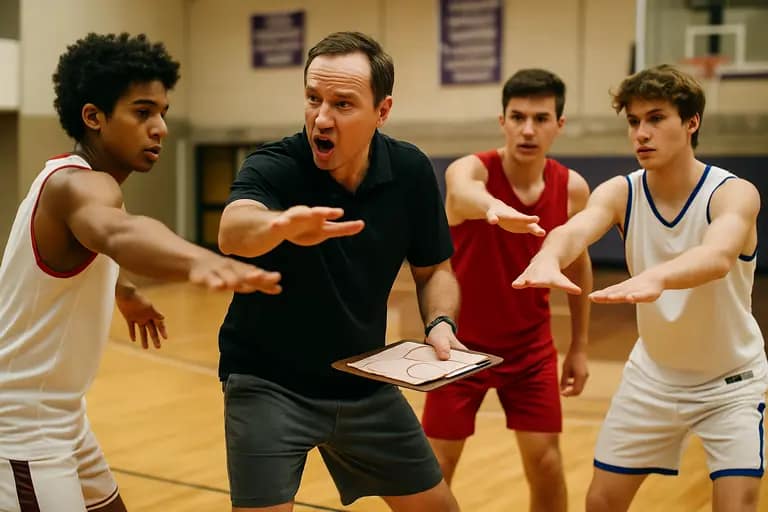
For coaches, the 2026 Bryan-College Station event offered reminders that apply inside any Texas basketball program. Organization is part of development. Multi-day competition tests attention, recovery, nutrition, and emotional control. Athletes who can handle long waits, schedule changes, and crowded venues often grow faster because they learn how to compete without perfect conditions.
Development Is Bigger Than One Sport
Basketball people can get territorial. We love the gym, the sound of shoes on hardwood, and the chess match of late-clock possessions. But the state’s player pipeline gets stronger when athletes learn from more than one setting. Track speed, swimming discipline, tennis footwork, and team-event pressure can all shape a better competitor. The 2026 Summer Games showed thousands of athletes getting that kind of test.
There is also a historical point worth holding. Texas basketball grew because schools, towns, recreation departments, and volunteers kept giving kids a place to play. The same civic structure supports the Summer Games. TAAF’s long-running role in amateur sport connects today’s youth events to a much older Texas habit: organize the competition, invite the towns, let the kids measure themselves, and let families carry the memory home.
Why The Games of Texas Matter To Texas Basketball
The safest way to read the 2026 event is not as a basketball tournament, but as a mirror for what basketball should keep protecting. The Games of Texas showed that Texas families still respond to well-run amateur competition, that host cities can gain real economic benefit, and that young athletes need public stages before they ever reach college recruiting boards or packed playoff gyms.
For Texas basketball, the lesson is local. Build better events. Respect verified results. Support inclusive competition. Treat parents and volunteers as part of the team. If the Games of Texas can bring more than 7,500 athletes to Bryan-College Station for four days, then every basketball community in the state can ask a simple question: are we giving our own young players the structure, pride, and care they need to grow?