

NCAA eligibility Texas disputes stopped being a back-office compliance issue in 2026. They reached county courts, appellate panels, athletic departments, and the gyms where Texas families follow college hoops with the same loyalty they bring to Friday night high school ball. For local basketball people, the core question is not abstract: who gets to suit up, who loses a year, and how do coaches build trust when a roster can change because of a temporary court order?
As of November 5, 2026, the biggest eligibility arguments had already moved through several Texas courtrooms. Some rulings gave athletes short-term access to the floor or field. Others pulled back earlier orders. That split matters because basketball programs live on timing. A guard cleared in late August can change rotation math before fall workouts. A forward left waiting on a ruling may miss the rhythm that turns offseason work into game confidence.
Why NCAA Eligibility Texas Became A Court Issue
NCAA Eligibility Texas And The Five-Year Model
The NCAA approved a new eligibility standard in June 2026 that allowed student-athletes to compete in five seasons over five years through an age-based model. Since that approval, nearly 200 lawsuits were filed across the United States, involving around 850 plaintiffs who challenged how the model was applied, according to AP reporting on eligibility lawsuits. That number tells us this was not a one-school fight or a one-sport complaint. It became a national pressure point with Texas standing near the center of the action.
The new structure created a fairness debate. Athletes who had exhausted eligibility under the prior four-seasons-in-five-years model argued that they were being treated differently from athletes classified as eligible under the newer age-based standard. Coaches and compliance staffs then had to read court orders as carefully as practice reports. In basketball terms, that is like changing the shot clock while a possession is already in motion.
Why Texas Courts Mattered To College Rosters
On August 27, 2026, a Texas judge issued a temporary restraining order that blocked the SEC’s newly adopted rule barring professional athletes from returning to college play. The court ruled that players who would have been eligible under the NCAA’s five-year model had to remain eligible at least temporarily, as reported by The Washington Post on the Texas ruling. For Texas basketball followers, that ruling carried weight beyond one courtroom because SEC programs recruit from the same high school, junior college, and transfer pools that fuel the state’s hoops identity.
That is why NCAA eligibility Texas became a phrase coaches could not ignore. A player’s path might include high school ball in Dallas, a junior college stop, a transfer year, and a late eligibility petition. Each step can affect how a university counts seasons. In a state where basketball talent often rises through several levels before finding the right college fit, those details are not technical footnotes. They are part of player development.
Texas Basketball Cases Put Faces On The Rules
Junior College Time And Local Opportunity
In McLennan County on August 11, 2026, a judge granted a temporary injunction for Baylor’s Hosea Wheeler and North Texas’s Kenton Allen to regain eligibility. Their argument, based on the research record, was that the NCAA wrongly counted time spent at junior colleges against their eligibility clocks. That point hits home in Texas because junior college basketball is not a side road here. It is often a second chance, a growth year, or the bridge between being overlooked and being ready.
When a player leaves a junior college for Baylor, North Texas, or another Texas program, the move can bring family members back into the gym and reconnect hometown supporters with a college team. The legal question about clocks and seasons may sound dry, but the community effect is plain. If a court order gives a player access to one more year, a neighborhood sees a familiar name on the floor again. If the order is denied or reversed, the same community sees a career shortened by rule interpretation.
Rylan Griffen And The Fifth-Season Question
On August 27, 2026, Rylan Griffen, identified in the research as a former guard at Texas A&M, was granted a temporary restraining order in Dallas County court that would allow him a fifth season under the new eligibility rules. He was part of a wider group of 42 athletes challenging exclusion under the new standard. For Aggie basketball fans and for coaches across the state, that case showed how one ruling could affect not just a player, but a full roster plan.
Basketball is a continuity sport. A fifth-year guard can steady late-game possessions, teach younger teammates where to be in a press break, and set the tone in practice. If that guard is available because of a court order, a coach’s rotation changes. If the order later shifts, the team has to adjust again. The human side is even bigger. Athletes train for months while lawyers argue over language that decides whether the work can be used in a real game.
The Eastland Court of Appeals also entered the larger Texas eligibility picture. On August 31, 2026, that court reversed a lower court’s injunction in National Collegiate Athletic Association v. Hicks III, a case tied to the NCAA’s five-year rule and athlete Freddy Hicks’ eligibility for the 2025-26 season. The research record shows why Texas became a key venue: trial-court wins did not always survive appeal, and athletes faced uncertainty even after an initial victory.
What The Legal Fight Means For Texas Programs
Roster Building Under Temporary Orders
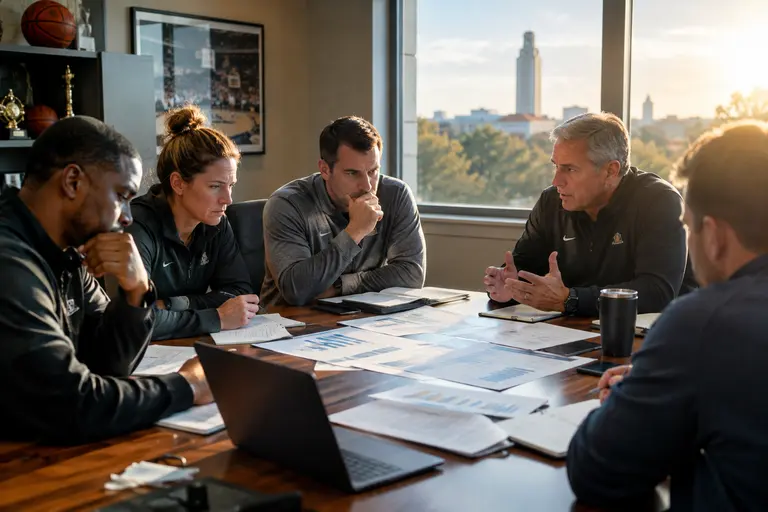
Temporary orders are not the same as permanent eligibility. That distinction shaped every Texas staff meeting tied to these cases. A coach can welcome a player back to workouts after a ruling, but still has to plan for the chance that the legal status may change. That puts pressure on roster depth, scholarship planning, and player roles. It also tests communication. Players need clear answers, families need honest updates, and coaches need to avoid promises the court system has not secured.
In Texas, basketball programs also recruit from a deep and competitive high school base. Eligibility lawsuits at the college level can ripple backward into recruiting conversations with seniors, transfers, and junior college prospects. A high school coach advising a player may ask how a university handles compliance questions. A parent may ask whether a school has supported athletes in eligibility disputes. Those questions now sit beside the usual talk about playing time, academics, and strength training. For broader context on the state’s talent base, our coverage of Texas high school basketball prospects shows how local development and college opportunity remain linked.
Competitive Balance And Trust
The phrase NCAA eligibility Texas also points to competitive balance. If one player receives a temporary order in one county while another similar athlete does not, coaches across conferences will question consistency. Fans may focus on wins and losses, but players feel the deeper issue. They want to know whether the rulebook treats them the same way as the player across the state.
That trust is central to community basketball. Texas gyms are built on relationships: high school coaches calling college assistants, families driving long distances for games, former players returning to mentor younger ones. If eligibility decisions feel unpredictable, that trust takes a hit. If courts force clearer standards, athletes and programs may gain a cleaner path, even if the process has been tense.
- For athletes: eligibility rulings can decide whether years of training lead to another college season.
- For coaches: court timing can change depth charts, practice roles, and leadership plans.
- For families: legal uncertainty can affect travel, academics, and emotional investment.
- For Texas communities: one more season can keep a local player connected to fans who followed him before college.
What NCAA Eligibility Texas Means For Local Hoops
Community Stakes Beyond The Court
NCAA eligibility Texas is not only about policy. It is about the people who pack small gyms, follow box scores from another city, and still remember when a college player was a teenager running summer runs back home. The 2026 cases showed that legal rulings can become part of a player’s story just like a buzzer-beater, a transfer, or a breakthrough season.
The NCAA eligibility Texas fight also reminded us that Texas basketball has many routes. Some players move through junior colleges. Some transfer. Some face rule changes after they have already planned their careers under older standards. A fair system has to account for that without turning every roster spot into a lawsuit.
For now, the lesson for local hoops is discipline. Coaches need deeper planning. Athletic departments need sharper communication. Fans need patience with athletes caught between changing rules and court calendars. Most of all, players deserve rules that are clear before they give years of their bodies, academics, and family time to the game. Texas basketball has always prized toughness, but toughness should not mean guessing whether a season counts until a judge says so.