

The legacy of basketball rivalries in Texas is written in packed gyms, hoarse student sections, family rides across town, and alumni who still remember the shot that beat the school down the road. Rivalry night is not just a date on a district schedule. It is a roll call for a community.
That was easy to see in Laredo on January 16, 2026, when Alexander hosted United in a district rivalry game that sold out Alexander’s gym and drew students, families, and alumni in force, according to LMT Online’s Laredo rivalry coverage. The box score mattered, sure. In Texas high school basketball, the scoreboard always has a voice. But the bigger story was the crowd itself: multiple generations gathered around a local game that gave them a shared place to stand.
That is what makes these matchups so powerful. A rivalry gives a school district a calendar marker, a gym a pulse, and young athletes a stage that feels larger than the bleachers around them. It can sharpen a program, teach poise, and remind a town why school sports still carry such weight.
Why Basketball Rivalries Fill The Gym
Basketball Rivalries As A Civic Roll Call
At their best, basketball rivalries turn a school gym into a civic meeting place. The crowd is not made up only of current students. It includes former players, parents who once wore the same colors, teachers, local business owners, and younger kids who are just learning which side of the rivalry their family claims.
In Laredo, the Alexander-United game on January 16, 2026, showed that dynamic clearly. A sold-out gym says something plain: people arranged their night around a high school basketball game because the matchup carried meaning beyond district standings. It gave the city a shared sports language.
For Texas, basketball rivalries often sit at the center of local identity because basketball is accessible. A gym is close, loud, and familiar. Families can see the bench, hear the sneakers, and recognize the names on the roster. That closeness lets a rivalry become personal without needing to become ugly.
What Laredo Showed On January 16, 2026
The Laredo example matters because it puts a Texas face on a wider school-sports truth. Rivalry games reward more than talent. They reward emotional control, preparation, and the ability to play through noise. Coaches talk all season about discipline, but rivalry night tests whether players can keep spacing, defend without reaching, and make the extra pass while the gym is roaring.
Those are player-development moments. A sophomore who learns to handle a trap in that environment grows up fast. A senior who leads a huddle after a bad run leaves behind an example for younger teammates. A coach who keeps a team settled in a full gym builds trust that can carry into later district games.
The value reaches the stands, too. Students learn how to support classmates. Families see their school represented by teenagers who practiced through ordinary afternoons for one extraordinary night. Alumni reconnect with a campus they may not have visited in years. That is not nostalgia for its own sake. It is a living connection between the program and the people around it.
When A Rivalry Ends, Identity Has To Shift
A Pawtucket Lesson For Texas Schools
Texas communities can learn from rivalry stories outside the state as well. On February 9, 2026, Shea and Tolman played their final boys basketball rivalry game in Pawtucket, Rhode Island, before the schools’ programs were set to consolidate in fall 2026-27. Tolman won 57-46, but the larger meaning was the end of a long local series and one last chance for the community to gather around it, as reported by Yahoo Sports on the Shea-Tolman finale.
That kind of night should resonate in Texas, where school names, mascots, gyms, and neighborhood boundaries often carry deep feeling. When a rivalry ends, the community does not simply lose two games on the schedule. It loses a familiar reference point. Former students lose a recurring reason to come back. Younger athletes inherit a new identity before they have had time to understand the old one.
The Shea-Tolman example also shows that winning histories do not line up neatly. The research notes that Shea had state Division II titles in the mid-1990s and in 2022, while Tolman’s last basketball state championship was in 1964. Different trophy cases can feed different kinds of pride. One side may carry recent success. The other may carry older memory. A rivalry makes room for both.
Winning Matters, But Memory Lasts Longer
Texas coaches know the tension well. Every rivalry game demands a plan: transition defense, rebounding assignments, late-clock offense, and composure at the free throw line. But after the final horn, the game enters local memory in a way an ordinary Tuesday matchup may not.
That memory can shape a program’s standards. Players hear about past teams. They learn which games matter to the town. They see the alumni in the stands and understand that their jersey connects them to more than one season. For more on how gyms, mentors, and local care shape the state’s game, our piece on Texas basketball community lessons fits this same thread.
Still, memory needs guidance. Rivalry should never excuse disrespect. The best programs teach athletes that intensity and sportsmanship can share the same floor. A student section can be loud without being cruel. A team can celebrate without humiliating an opponent. That line matters because young athletes copy what adults tolerate.
How Coaches And Students Carry The Rivalry
Player Development Under Local Pressure
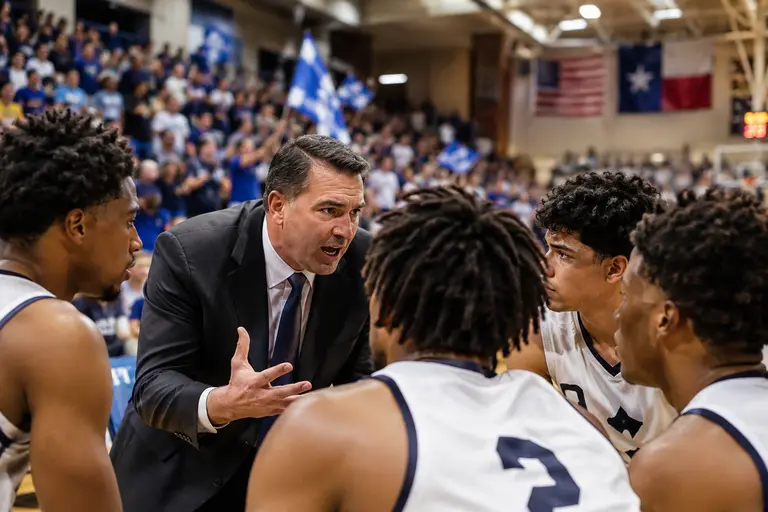
In a rivalry setting, coaching is part tactics and part emotional steering. The scouting report matters, but so does the timeout after the first big run. Coaches have to prepare players for a game that may feel faster than it is. They remind guards to value the ball, posts to finish through contact, and everyone to sprint back after a missed shot.
That pressure can help build complete players. District games with heavy crowds create conditions that resemble playoff basketball: noise, nerves, momentum swings, and a feeling that every possession carries extra weight. A player who succeeds there gains confidence. A player who struggles there gains film worth studying and habits worth fixing.
For smaller or border communities, rivalry games can also strengthen the youth pipeline. Middle school players watch varsity athletes up close. Elementary students pick out role models. Parents see the standard required to compete. The game becomes a lesson plan for the next group.
Student Sections Set The Tone
Student sections are often the heartbeat of rivalry night. They bring color, rhythm, and noise. They also carry responsibility. Their behavior tells visitors what kind of community the home school wants to be.
In Texas, where school pride can be fierce, the healthiest rivalries are the ones where adults set clear expectations early. Administrators, coaches, band directors, cheer sponsors, and student leaders all have a hand in shaping the night. Good planning does not reduce passion. It channels it.
That matters because rivalry games are public classrooms. A gym full of students learns what leadership looks like, how to win with grace, and how to sit with a loss. Those lessons last longer than a single district result.
What Basketball Rivalries Mean For Texas Towns
The Local Standard Worth Protecting
Basketball rivalries do not need national attention to matter. In fact, their power often comes from being local. The people in the bleachers know the families. They know the roads between schools. They know which players grew up together and which coaches have traded adjustments for years.
That local knowledge gives the game weight. A rivalry can support school spirit, keep alumni tied to a campus, and give athletes a meaningful stage. It can also reveal whether a community values respect as much as victory. The healthiest Texas rivalries protect both.
So when a gym sells out, as Alexander’s did for United on January 16, 2026, the story is not only that people came to watch basketball. The story is that a community still believes a high school game can gather its past, present, and future under one roof. That belief is worth coaching, cheering, and guarding with care.