
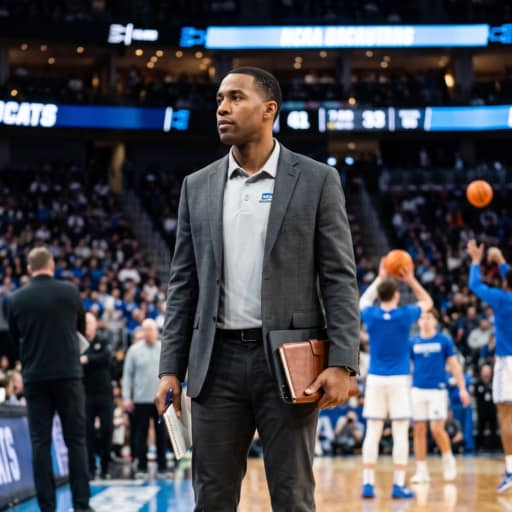
The future of UIL venues is not just a facilities question. It is a basketball question, a family travel question, a coaching question, and, in Texas, a community identity question. The state tournament has long carried the sound of whole towns moving together, from pep bands and grandparents to assistant coaches keeping scouting notes folded in their pockets. Any change in where those games are played changes how Texas remembers them.
As of October 10, 2026, the center of the conversation still sits in San Antonio. The UIL has contracted with the Alamodome to host the State Basketball Championships through 2028, while UIL officials also said they remain open to reviewing alternative sites for championship events as part of regular venue review work FOX 4 reported. That combination matters: stability for the next few March runs, but not a locked door after that.
For coaches, players, and families, the question is not whether one building is good or bad. The question is whether Texas high school basketball can keep a state-stage feel while easing travel strain, protecting tournament flow, and giving every classification a championship setting worthy of the work it took to get there.
Why UIL Venues Are Being Reconsidered
UIL Venues And The Alamodome Clock
The Alamodome agreement through 2028 gives schools a clear target for the next two completed championship cycles after the 2026 date on the calendar. That matters for hotel planning, district travel budgets, booster clubs, charter buses, and the families who start saving long before a team cuts down a regional net.
Still, Texas basketball has never stood still. The court has moved with the state. Small-town gyms gave way to larger regional sites. State championship weekends became statewide gatherings. The Alamodome became part of that memory bank because it could hold the noise, the nerves, and the parade of classifications that make the tournament feel like Texas in one building.
But every venue carries tradeoffs. A dome can offer scale and a big-event feel, yet it also asks organizers to solve sightlines, sound, court intimacy, parking patterns, and arena flow. Smaller arenas may feel tighter and louder, but they may not offer the same room for multiple fan bases, media needs, team movement, and championship operations. That is the heart of the debate around UIL venues: Texas wants the biggest stage without losing the closeness that makes high school basketball different from college or pro ball.
What The 2027 Semifinal Sites Signal
The 2026–27 basketball season brought another change in structure: pre-determined state semifinal sites scheduled for February 27, 2027, with the State Championships set for March 4–6, 2027, at the Alamodome. The listed semifinal venues in the research include major high school and college facilities such as Wilkerson-Greines Activity Center in Fort Worth, Delmar Fieldhouse in Houston, W.G. Thomas Coliseum in Haltom City, and the Berry Center in Cypress.
That shift tells me the UIL is thinking about more than the final weekend. It is thinking about the road into San Antonio. Predetermined semifinal sites can help families plan earlier, help coaches prepare travel routines, and give host communities a bigger stake in the postseason. It can also create new questions: which teams travel farthest, which regions gain the best access, and how neutral a site feels when a community arrives with a short drive while another rides half a day.
This is where venue policy becomes basketball policy. A long trip can affect rest, meal timing, shootaround rhythm, and fan turnout. Any coach who has loaded a bus in the dark knows that logistics show up in legs. A state-level bracket may be decided by players, but the experience around those players is shaped by adults choosing buildings, dates, and routes.
How San Antonio’s Upgrades Affect The Debate
The Alamodome Investment Question
The Alamodome has not been treated like a building waiting on the sidelines. A completed renovation listed by the Texas Department of Licensing and Regulation included 18 new suites, renovations to 52 existing suites, updates to six Level-5 concession areas, and work on kitchens and restrooms, with a listed completion date of January 30, 2025, and an estimated cost of $16.88 million TDLR records show.
For basketball families, those details may sound like facility language until you spend three days at a tournament. Restrooms, concessions, concourses, and suite areas affect the whole rhythm of the event. When fans are moving between games, when bands are arriving, when teams are waiting on awards, and when younger siblings are trying to make it through a long day, building comfort matters.
There is also a coaching point here. A cleaner event flow keeps attention on the court. If teams feel organized from entry to warmup to postgame, the championship setting becomes less distracting. The best venues do not win games for anyone. They simply let the players decide them.
Downtown Pressure And Tournament Identity
San Antonio is also planning around a broader downtown sports and entertainment district in the research notes, including proposals tied to a new Spurs arena, Alamodome expansion or renovation, another Convention Center hotel, and connected infrastructure. That kind of planning can help major events, but it can also bring construction windows, traffic shifts, cost questions, and competing dates.
Texas high school basketball families do not experience a venue only from the seat. They experience the hotel block, the walk from parking, the food line after a semifinal, and the drive home after a loss that still hurts. A downtown district can improve the tournament trip if access is handled well. It can strain the trip if prices rise or routes become harder for families from the Panhandle, the Valley, East Texas, West Texas, and the border.
That is why the venue conversation cannot be left only to square footage and booking calendars. It has to include marching bands, student sections, grandparents with limited mobility, coaches hauling gear, and small-town businesses that feel the absence when half the community follows a team across the state.
What Coaches And Communities Need From State Sites
Competitive Fairness Starts Before Tipoff
Good tournament planning protects competitive balance before the ball is tossed. Coaches need predictable arrival times, reliable locker room access, reasonable warmup windows, and a court setup that does not make depth perception feel foreign. Players earn the right to be nervous because the game is big, not because the building is poorly arranged.
As Texas considers future UIL venues, the best checklist starts with the athlete. Can the site handle multiple teams cleanly? Can it support medical response and security? Can it give fans a clear view without swallowing the sound? Can it host girls and boys tournaments with the same respect? Those questions carry more weight than any ribbon-cutting photo.
There is also a player development angle. A state tournament stage should prepare athletes for the next level without making the high school game feel borrowed from someone else. Texas basketball is at its best when the event feels big, but the community remains close enough for a player to spot a youth coach in the stands.
Regional Access Is A Basketball Issue
Texas is too large for any site to feel close to everyone. That is why regional access will always sit at the center of this discussion. A single championship location creates tradition. Rotating or adding more major sites can spread the burden. Either model has a cost.
One statewide home builds memory. Families learn the hotels, exits, restaurants, and routines. Coaches know the building. Media crews know the workflow. The tournament gains a familiar sound. But a fixed location can ask certain regions to travel farther every time.
A rotation could bring championship basketball closer to more communities over time. Yet it could also weaken the shared sense that every road ends at the same place. If Texas ever shifts the model, the UIL will need to weigh convenience against tradition with care. I wrote about that larger arena question in the Alamodome venue debate, because this is not just a San Antonio story. It is a Texas basketball story.
- For players: the site should feel worthy of a season’s work.
- For coaches: the schedule and building flow should support preparation.
- For families: travel, parking, seating, and cost should be part of the review.
- For communities: the tournament should honor the towns that fill the stands.
What UIL Venues Mean For Texas Basketball Families
The future of UIL venues will be judged by more than contracts. It will be judged by whether a family from a small district can make the trip, whether a coach can keep a team settled, whether a senior’s last game feels properly staged, and whether the state tournament still sounds like Texas when the ball hits the floor.
Through 2028, the Alamodome remains the championship home. That gives the UIL time to study what works, what strains families, and what other sites can truly offer. The 2027 semifinal site plan gives Texas a live test of broader venue distribution before the final weekend in San Antonio. The Alamodome upgrades show that the current host is still being improved. The wider downtown plans show that the city is thinking bigger, even if bigger must always be measured against access and affordability for high school families.
As a coach and historian, I come back to one belief: buildings matter because memories need a place to live. A great venue does not replace the old gym, the summer workouts, the district road trips, or the assistant coach sweeping the floor after practice. It gathers all of that work under brighter lights. If Texas gets the next chapter right, the state tournament will keep its scale without losing its soul.