
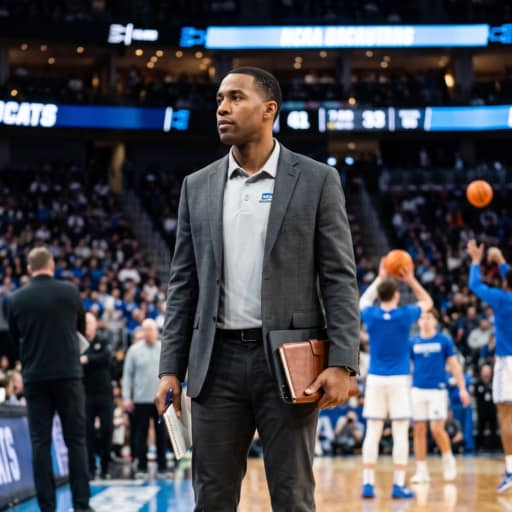
Texas Rising arrives at a telling moment for Texas men’s basketball: one day before its Sept. 29, 2026 premiere on Longhorn Network, and just months after a Sweet 16 season gave Austin a stronger emotional stake in the program’s next chapter. Texas Athletics announced the four-part docuseries on Sept. 22, 2026, describing an all-access look at Head Coach Sean Miller and the team from offseason preparation through non-conference play and into Southeastern Conference games, with the first episode set for Tuesday, Sept. 29, 2026 official announcement.
As a Texas basketball lifer, I see this as more than a content rollout. It is a chance to build a bridge between a program with high expectations and a community that wants to know who is wearing the uniform before the ball is tipped. In Austin, that matters. The Moody Center crowd is not short on noise, but noise becomes culture when people know the player’s story, the coach’s standards, and the daily work behind a winter night on the Forty Acres.
Why Texas Rising Starts With Trust
Good basketball storytelling starts the same place good coaching starts: trust. A team with 11 new faces, as noted in the announcement, needs more than a roster sheet to become familiar to local supporters. Names, numbers, hometowns, practice habits, and bench reactions all become part of how a fan base learns to care. A docuseries can shorten that process if it shows the work without turning players into slogans.
Texas Rising As A Locker-Room Bridge
The phrase “all-access” can be powerful, but only if the access feels earned. From a coaching view, the best parts of a season are often the quiet parts: a freshman learning the pace of a drill, an assistant repeating a defensive angle, a captain holding a teammate accountable after a missed assignment. That is where Texas Rising can matter for local fan engagement. It can help people see not just who scores, but who listens, who leads, and who keeps competing when practice gets hard.
Sean Miller’s first Texas season already gave the public something concrete. The 2025-26 Longhorns reached the Sweet 16, and the team averaged 82.8 points per game. Texas Athletics’ season materials described that as the program’s highest scoring average since 1994-95 and the first time Texas averaged at least 80 points since 2009-10. Those numbers explain why interest is already warm. The series now has to add personality to production.
Moody Center Demand And The Austin Basketball Habit
Attendance tells us the local base is not starting from zero. Texas men’s basketball averaged 10,810 paid attendees per home game in 2025-26. The seasons before that were close as well: 10,790 in 2024-25, 10,682 in 2023-24, and 10,965 in 2022-23, with 18 home dates listed for each season in the research materials. That is steady demand, not a fad.
Attendance Headroom Is Small
Because those crowds have already been strong, the impact may not show up as a huge jump in average attendance. It may show up in sharper forms of engagement: earlier student turnout, louder pregame energy, more family conversations about players, and stronger weekday interest when the opponent does not carry a national spotlight. In coaching terms, the margin is in the details.
- Program momentum: The Sweet 16 run gave local fans a recent winning reference point.
- Style of play: The 82.8 points per game average gave the team an identity casual fans could feel.
- Roster curiosity: Eleven new faces create a need for storytelling before roles settle on the floor.
- Home rhythm: Four straight seasons of strong paid attendance point to an established Austin basketball habit.
That last point is key. A series like this does not have to persuade Austin that basketball exists. It has to deepen the habit. There is a difference between showing up for a ranked matchup and feeling connected enough to care about a November rotation battle, a practice clip, or a young player finding confidence after a rough stretch.
Digital Reach, New Faces, And Local Storytelling
Texas Athletics already has a large digital megaphone. The 2024-25 annual report numbers in the research notes listed about 42,267 social media posts across Texas Athletics accounts, roughly 112 million engagements, around 1.99 billion impressions, and an average engagement rate of 4.21%. The main @TexasLonghorns Instagram account also grew from about 324,108 followers in 2022-23 to about 374,605 in 2023-24, while interactions rose from about 3.55 million to about 5.83 million.
New Players Need More Than A Graphic
Those figures do not guarantee a basketball-specific surge, but they show the delivery system is already in place. The question is whether the content feels local enough to stick. A polished clip can travel fast, but the Austin connection grows when people recognize the work behind it: early lifts, film sessions, players learning each other’s timing, and coaches trying to shape habits before SEC play tightens every possession.
For the 11 new faces, this matters. Roster change is normal in college basketball, but community memory can lag behind. A docuseries can help close that gap. It can make a new guard’s first Moody Center roar feel less like an introduction and more like the next step in a relationship that started during the preseason.
What Texas Rising Could Teach The Youth Pipeline

Texas basketball culture is built in layers. College arenas sit on top of high school gyms, church leagues, neighborhood courts, and youth tournaments where parents pack snacks and coaches keep teaching footwork long after the scoreboard goes dark. If the series handles practice and accountability with care, it can become useful for young players across Central Texas.
I do not mean it should turn into a clinic tape. I mean it can show the habits that serious players need: communication, conditioning, shot preparation, body language, and the humility to be coached. Those lessons reach beyond the Longhorns. They echo the same values we have written about in Texas basketball community history, where the game grows because mentors keep passing standards from one generation to the next.
That is the cultural piece I care about most. A boy in Pflugerville or a girl in Bastrop may not remember every score from the 2026-27 season. But they may remember seeing how college players respond to correction, how a coach frames effort, or how a team handles the long work before conference pressure hits. That kind of visibility can make the sport feel closer and more attainable.
Why Texas Rising Matters For Austin Hoops
The safest prediction is not that this series will create a sudden attendance spike. The stronger read is that it can make an already invested fan base more informed, more patient, and more connected. That has real value in a college town where expectations move fast and roster turnover can make continuity hard to feel.
For Texas men’s basketball, the local opportunity is clear. Use the camera to show standards, not just access. Let Austin see why roles are earned, why defense gets taught over and over, and why a team with new faces has to become a team before it can become a contender. If the series does that, the impact will be felt in smaller but meaningful ways: in student sections that know names earlier, in youth coaches borrowing teaching points, in families choosing a weeknight game because they feel connected to the people on the floor.
That is how basketball culture is built in Texas. Not only through banners, but through familiarity. Not only through scoring runs, but through shared understanding. The docuseries has a chance to turn a promising season into a community conversation, and for Austin hoops, that may be its most lasting win.