
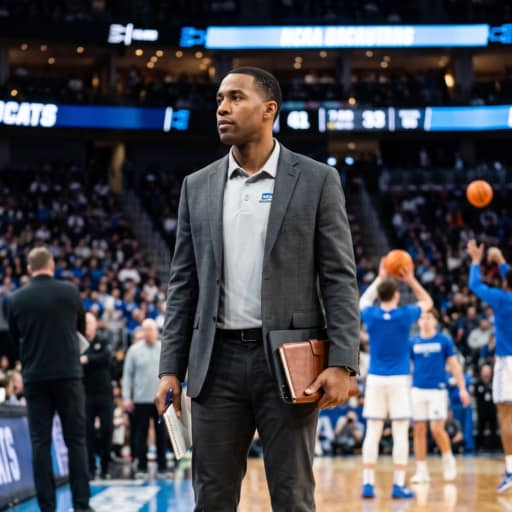
As of August 1, 2026, the UIL Heat Guidelines were no longer just a recommendation for Texas schools. Wet Bulb Globe Temperature monitoring became required for all outdoor athletic and marching band activities. For those of us who have spent years in Texas gyms, fieldhouses, bus lots, and summer workout windows, that date matters. It marked a cultural turn: athlete safety moved from a local habit to a statewide expectation.
Basketball people might be tempted to say heat rules belong to football. I do not buy that. Texas basketball programs live inside the same school athletic departments, share the same strength staff in many communities, and often build players through summer conditioning, outdoor movement, and cross-sport athletes. A guard trying to earn minutes in November may also be a receiver working through August heat. A marching band member at a Friday night game may sit next to the same student section that fills a gym in district play. Heat safety is not one sport’s issue. It is a school culture issue.
Why UIL Heat Guidelines Changed Practice Culture
UIL Heat Guidelines And The Coach’s Stopwatch
The biggest coaching shift is not a new drill. It is the clock. UIL research notes say WBGT readings must be taken within 15 minutes before practice begins and then every 30 minutes during the practice or workout period. That changes the rhythm of a day. A coach cannot simply say, “We have always gone at 4 p.m.” and treat the weather as background noise. The environment becomes part of the practice plan.
The UIL Heat Guidelines also give administrators a shared language. A reading is not a feeling. A WBGT number accounts for heat, humidity, sun angle, and wind. In Texas, where one town may feel dry and punishing while another feels like a wet towel, that matters. It helps a small-school coach, a band director, a trainer, and a superintendent speak from the same sheet of music.
Rapid Cooling Became Part Of The Plan
Starting with the 2025-2026 school year, UIL adjusted the required threshold for rapid cooling zones by tying them to the move from the green to yellow WBGT zones. The research notes specify rapid cooling zones when readings are at or above 79.7 degrees Fahrenheit in Class 2 schools or 82.0 degrees Fahrenheit in Class 3 schools. That detail may sound clinical, but on the ground it means a district must plan for an emergency before one happens.
I have seen enough Texas practices to know the old culture. Toughness used to mean staying quiet, keeping your line, and refusing to tap out. Better coaching now teaches a harder lesson: toughness also means honesty. A player who reports symptoms early may save a season, or a life. A coach who builds cooling, hydration, and monitoring into the day is not soft. That coach is prepared.
What The Numbers Say About Heat Risk
August Is Not Just Another Month
The national data explains why Texas took this step. A review of secondary school athlete deaths from exertional heat stroke found 67 deaths from the 1982-1983 school year through the 2021-2022 school year, with 94 percent occurring in football players, 57 percent occurring in August, and most occurring in the Southern United States national EHS review. Those numbers are not abstract in Texas. August is when school identity starts to crank back up: two-a-days, band rehearsals, strength sessions, parent meetings, and the first public hints of what a team might become.
The same review reported that nearly 99 percent of those deaths, 66 of 67, were male. That does not mean girls’ programs can ignore heat. It means the highest fatality pattern has been concentrated in the places where heat, equipment, body size, and practice culture often collide. A strong safety policy protects the whole campus while paying attention to where the historical risk has been most severe.
Practices Carry The Heaviest Load
Non-fatal heat illness data tells a similar story. For 2005-2009, the CDC estimated 9,237 time-loss heat illnesses each year among high school athletes in the United States, with football accounting for about 70.7 percent of them; the rate was 4.5 per 100,000 athlete-exposures in football compared with about 0.4 in other sports CDC heat illness report. The CDC also reported that about 66.3 percent of those non-fatal heat illnesses occurred in August and that they happened most often during practices, not games.
That last point should hit every coach in the chest. Games get the crowd, the anthem, the officials, and the lights. Practices get the repetition. Practices are where a coach’s values show up with nobody clapping. If heat illness happens most often in practice settings, then prevention has to live there too. The policy cannot be a binder in an office. It has to be present in the water break, the equipment decision, the conditioning plan, and the willingness to stop.
Why A Statewide Standard Matters In Texas
Small Towns And Big Districts Need The Same Baseline
Texas high school sports run on local pride. That is one of the things I love most about them. A Class 1A gym in the Panhandle and a packed suburban arena near Houston can both feel like the center of the basketball world for two hours. Yet local pride should not mean uneven safety. A statewide heat standard gives families a baseline expectation whether their child wears a football helmet, carries a tuba, runs cross country, or joins basketball conditioning.
The UIL research notes also separate practices from contests. Practice modification rules tied to WBGT levels apply to practices and workouts, while contests do not automatically fall under the same practice restrictions. Still, contests held under high WBGT conditions must have rapid cooling zones, and schools are strongly encouraged to adjust as conditions call for it. That distinction matters for game-day operations. It also puts responsibility back on local leaders to treat safety as active judgment, not box-checking.
Basketball Culture Has A Stake In Heat Safety
Texas basketball has always borrowed from the rest of the campus. Some of our best hoopers came through football, track, soccer, and band schedules before they became winter names in the local paper. Coaches know that player development is not limited to layup lines. It is shaped by sleep, strength, nutrition, class load, family transportation, and the way a school handles August heat.
For basketball communities, this policy should sharpen how we think about the full athlete. A freshman post player may spend fall learning footwork indoors, then head outside for school activities. A varsity guard may be chasing a scholarship while balancing another sport. The same adults who celebrate a charge taken in February should care about safe conditioning in August. The scoreboard culture and the safety culture cannot be rivals.
Why UIL Heat Guidelines Matter For Texas Athletes
The UIL Heat Guidelines matter because they ask Texas sports to honor ambition without gambling with children’s bodies. They do not remove competition. They frame it with responsibility. A district can still chase district titles, playoff runs, state medals, and the pride that comes from representing a town. What changes is the expectation that adults measure the risk in front of them.
That is the piece I keep coming back to as a coach and historian. Texas basketball history is full of tough players, proud families, and school communities that built identity around a team. The best parts of that tradition are worth protecting. Heat rules are not a threat to that identity. They are a promise that the young people carrying it will be treated as more than uniforms.
On September 3, 2026, with the August 1 WBGT requirement already in force, the standard is no longer theoretical. Coaches now have a clearer duty. Families have a clearer expectation. Athletes have a clearer signal that speaking up is part of competing well. That is how culture changes in Texas sports: not all at once, but through repeated choices that say winning matters, and the child matters more.