
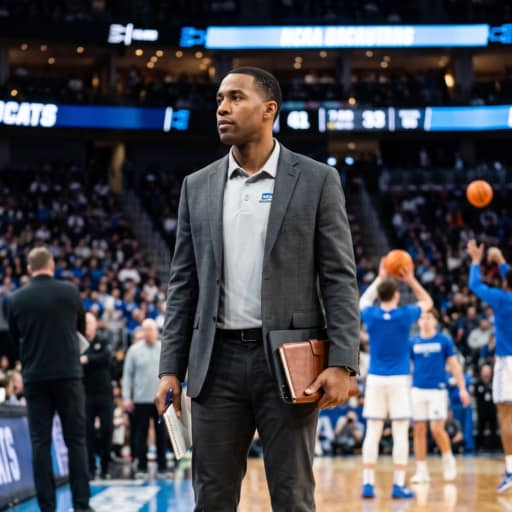
Westwood Panthers coaching turned March 2026 into a landmark month for Palestine basketball. On March 11, 2026, Westwood beat Aransas Pass 92-56 in a UIL 3A Division II state semifinal at the Merrell Center in Katy, reaching the first state championship game in school history, according to the semifinal report. That was not just a hot shooting night. It was the result of a clear coaching identity: pressure the ball, create stops, run with purpose, and ask every player to accept his part in the plan.
I have spent enough nights in Texas gyms to know the difference between a team that is merely talented and a team that has been taught. The Panthers had scoring, speed and nerve. They also had structure. Coach Kadrian Bryant’s group played like a team that understood why one possession could feed the next. A trap near half court could become a layup. A deflection could become a three. A defensive rebound could become a sprint down the middle lane.
That is where this run should sit in Texas basketball memory. Westwood did not come from a large metro power with decades of state tournament expectation. The Panthers carried Palestine pride into Katy and San Antonio, and they did it with a style that fit their roster, their coach and their community.
Westwood Panthers Coaching Set The Tone Early
Pressure As The First Teaching Point
Coach Bryant’s public message after the semifinal matched what showed on the floor. He emphasized defensive pressure as the way to ignite the offense and spoke about stacking stops. That sounds simple, but in March basketball, simple ideas win when players believe in them. Westwood’s semifinal performance showed a team trained to make defense active rather than passive.
In coaching terms, pressure is not just about running at people. It is about spacing, timing and trust. The first defender has to bother the ball without giving up a direct driving lane. The second defender has to see both man and help. The back line has to be ready for the long pass or the missed shot. When all five move together, pressure becomes more than energy. It becomes a system.
Against Aransas Pass, the Panthers’ scoring explosion grew out of that system. Kavian Bryant scored 29 points, Markel Morrow added 17, and Lathan Jr. scored 16 in the 92-56 win. Those numbers tell us Westwood had multiple scoring answers, but they also point back to how the game was being played. The Panthers were not waiting for the half-court offense to save them. They were forcing the game into motion.
Westwood Panthers Coaching And Role Trust
Westwood Panthers coaching also rested on role trust. Senior Cesar Evangelista spoke about players accepting their roles, whether that meant defense, offense or energy. That kind of buy-in rarely happens by accident. It is taught in practice, reinforced in film sessions and tested during tense playoff minutes.
Role clarity matters in high school basketball because most teams do not have five players who can all be the first option. A coach has to help each player understand his value without making the game feel smaller. On a team with a scorer like Kavian Bryant, the lesson becomes even more important. The rest of the roster cannot stand and watch. They have to screen, rebound, defend, pass ahead and keep the pace alive.
That Westwood Panthers coaching choice gave the Panthers a shared language. A defensive stop was not somebody else’s job. A sprint back was not optional. A possession that ended with the right shot, even if it missed, still fit the plan. That is the kind of culture small-town Texas teams carry proudly because every player’s family, teachers and neighbors can see the work behind it.
How Pressure Defense Fueled Palestine Pride
Tempo With A Purpose
Westwood entered the state title game with a 29-2 record and a No. 5 statewide ranking in 3A Division II. Records can flatter some teams, but this one matched the eye test. The Panthers played with pace, but their pace had a purpose. They wanted to turn defensive pressure into offense before the opponent could set its feet.
That is a brave way to coach in a state tournament setting. The safe choice is often to slow down, protect every possession and shrink the game. Bryant’s Panthers leaned into what they did best. They trusted their conditioning, their guards and their ability to score in bunches. In Texas high school gyms, that kind of style builds a bond with the crowd because it feels honest. It says, “This is who we are.”
As a coach, I respect that. The hardest thing in a championship run is not creating a plan; it is staying loyal to the right plan under pressure. Westwood’s semifinal showed how good the Panthers could be when defense, pace and scoring confidence lined up.
Why The Semifinal Mattered Beyond The Score
The 92-56 margin against Aransas Pass will always stand out, but the deeper lesson was in how Westwood made history. First state championship appearances carry emotional weight. Players can get tight. Coaches can overcorrect. Communities can feel the moment before the ball is even tipped.
The Panthers played through that weight by returning to their habits. Pressure the ball. Run the floor. Share the scoring load. Trust the bench and the seniors. That is why the semifinal should be remembered as more than a blowout. It was proof that a program from Palestine could bring its own basketball personality to the state stage and not blink.
The Title Game Lesson At The Alamodome
A One-Point Loss With Lasting Value
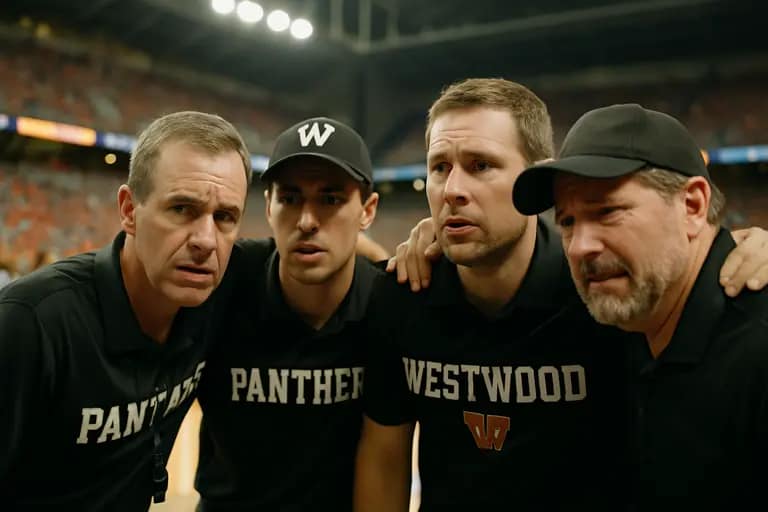
On March 13, 2026, Westwood lost the UIL 3A Division II state final to Paradise, 52-51, at the Alamodome in San Antonio. Kavian Bryant led Westwood with 26 points and made five three-pointers, while Kaden Bryant scored 12. Paradise’s Max Jordan was named MVP after scoring 29 points with 4 rebounds, 3 assists and 2 steals, and he made the go-ahead basket in the paint with 33 seconds left, per the state championship recap.
A one-point loss can haunt a locker room, but it can also teach a town how close greatness stood. From a coaching view, the title game gave Westwood a different kind of lesson than the semifinal. Paradise found enough paint production to tilt the game, finishing with a heavy 40-14 edge in paint points. Westwood had a major rebounding effort from senior Sebastian Lathan, who pulled down a game-high 15 rebounds, but the Panthers still had to fight through the physical demands of a championship opponent that could score inside.
This is where March basketball gets honest. The game does not always reward the cleaner story. It rewards the team that wins enough small spaces: the paint touch, the box-out angle, the late-clock cut, the final defensive stand. Westwood was one point away, and that closeness should not shrink the achievement. It should sharpen how the run is remembered.
Coaching In The Thin Margins
Westwood Panthers coaching reached its hardest test in those thin margins. The Panthers still had their star shot-making. They still had family-driven production from Kavian and Kaden Bryant. They still had Lathan battling on the glass. Yet the championship showed that every style has a counterweight. Fast teams still need half-court answers. Pressure teams still need to survive when the opponent gets inside the shell.
That does not mean Westwood’s approach failed. It means the final gave future Panthers a teaching reel. Coaches can point to that game and talk about finishing possessions, walling up in the lane, valuing every touch and staying connected after a breakdown. Those are not abstract lessons in Palestine anymore. They are tied to a real night at the Alamodome.
What Westwood Panthers Coaching Means In Texas
A Program Memory For Palestine
Westwood Panthers coaching now belongs to a bigger Texas basketball conversation. The 2026 run showed how a community program can rise when its identity is clear. It did not require mystery. It required daily standards: pressure defense, tempo, shared roles and the courage to play fast under the brightest lights Texas high school basketball offers.
For younger players in Palestine, that matters. They can walk into a gym and know the path has been marked. They saw a Westwood team reach the state final for the first time. They saw local names produce on a statewide stage. They saw a coach’s philosophy become something you could measure in stops, transition baskets, rebounds and belief.
Texas basketball history is built on nights like these. Not every history-making team gets the trophy. Some leave behind a new expectation. Westwood did that in March 2026. The Panthers proved their school could stand in the last game of the bracket, and they gave future teams a standard that will be repeated in summer workouts, junior high practices and neighborhood driveways.
That is the lasting power of this run. Westwood Panthers coaching did more than guide a team to San Antonio. It gave Palestine a basketball memory with teeth: defend first, run hard, know your role, and carry your town with pride.