Basketball is like a buddy-cop movie, needing the right pair. You can’t just mix two Mavericks and hope for magic. There must be a loose cannon and a straight man. This mix, or lineup chemistry, is key. It turns talented players into a single, strong team.
The Milwaukee Bucks are a great example. Giannis Antetokounmpo is the powerhouse, while Khris Middleton is the sharpshooter. Their clear roles make them unstoppable, like a perfect Old Fashioned. But when roles get mixed up, the game can turn into a mess, with the ball stuck and no space.
In college basketball, Buddy Hield and Isaiah Cousins of Oklahoma show how knowing each other’s strengths can make a team shine. Before getting into the details, think: Is your duo a hit movie or a streaming flop?
Backcourt Types: Scorer Plus Organizer, 3 and D Plus Driver
A backcourt duo is like a well-rehearsed band. Harmony and rhythm create a masterpiece on the court. The scorer plus organizer type is seen in Oklahoma’s Buddy Hield and Isaiah Cousins. Hield scores 22 points per game, while Cousins runs the offense like a conductor.
The 3-and-D plus driver type is shown by Duke’s Grayson Allen and Matt Jones. Allen attacks the rim like a superhero. Jones shoots from beyond the arc, showing the importance of spacing.
Spacing rules are key for these pairings to succeed. If your organizer can’t shoot, the lane gets crowded. If your driver can’t pass, the 3-and-D guy is just a decoy. The best backcourts see the court as a canvas, with spacing as the negative space.
| Backcourt Type | Key Players | Strengths | Challenges |
|---|---|---|---|
| Scorer Plus Organizer | Buddy Hield, Isaiah Cousins | High scoring, playmaking | Requires shooting from organizer |
| 3-and-D Plus Driver | Grayson Allen, Matt Jones | Versatile offense, defensive capability | Needs spacing to function |
Understanding these backcourt types is key to building a winning team. As we explore basketball strategies, remember the right mix leads to harmony on the court.
Frontcourt Types: Rim Runner Plus Spacer, Bruiser Plus Shot Blocker
Frontcourt combinations are like a well-tuned engine; if one part falters, the whole machine sputters. The right pairing can elevate a team from mediocre to formidable. Let’s dive into two archetypes: the rim runner plus spacer and the bruiser plus shot blocker.
The rim runner plus spacer duo is the modern power couple of basketball. One player, like Giannis Antetokounmpo, dives to the hoop with the grace of a falcon hunting its prey. The other, such as Khris Middleton, drifts to the three-point line, creating space like a ghost at a séance. This combination not only stretches defenses but also opens up lanes for driving and shooting.
Think of Joel Embiid and Dario Saric when Saric remembers to channel his inner sniper. These players are not just partners; they are essential pick and roll partners, executing plays that can leave defenses scrambling.
On the flip side, we have the bruiser plus shot blocker pairing, reminiscent of the old-school bouncer-and-bodyguard act. Take Dwight Howard, swatting shots like a pro, while Markieff Morris does the gritty work that rarely makes the highlight reel. This duo provides a solid foundation, but chemistry is key. If they can’t sync up, they risk becoming just two players exchanging awkward nods while the shot clock screams.
Ultimately, these frontcourt pairings are not just about individual talent; they are about how well players can work together. Whether it’s the modern flair of a rim runner and spacer or the traditional strength of a bruiser and shot blocker, the right chemistry can lead to a championship run.
Pick and Roll Menu: Spain, Chicago, Ghost Slips, and Short Roll Reads
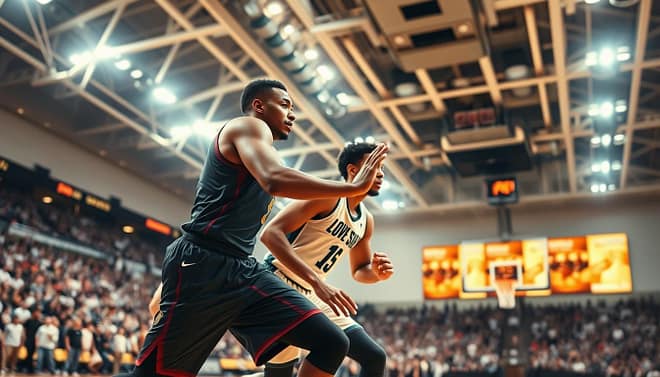
The pick-and-roll is more than a play; it’s a culinary art. Teams use it to outsmart opponents. Let’s explore the pick-and-roll actions: Spain, Chicago, Ghost Slips, and Short Roll Reads.
The “Spain” action involves a shooter setting a back-screen for the roller. It’s like a plot twist in a movie. The defense is surprised by a lob from an unexpected angle.
The “Chicago” action uses a down screen leading into a handoff. It tricks the defense into thinking they’re safe. Then, the guard quickly moves toward the rim.
Ghost Slips are when a screener fakes a screen and then disappears. It’s like a magician’s trick. The defense is left confused.
The Short Roll Read tests basketball IQ. The big man must decide quickly: shoot, pass, or drive. This decision can change the game.
To make these actions work, knowing the defensive pair fits is key. Great duos like Horford/Brown and Hield/Cousins pick the right play for the defense. Running Spain against a switch-everything defense is like serving paella to someone allergic to shellfish!
| Pick and Roll Variation | Description | Best Use Case |
|---|---|---|
| Spain | Back-screen for the roller | Against traditional defenses |
| Chicago | Down screen into a handoff | When defenders overcommit |
| Ghost Slips | Fake screen and disappear | Against aggressive defenses |
| Short Roll Reads | Big catches in the pocket | High-IQ decision-making |
Defensive Pairs: POA Guard Plus Rim Wall, Switch vs Drop Templates
A defensive duo is more than two players; it’s a well-oiled machine. The idea of lineup chemistry really comes alive in defense. Jaylen Brown and Al Horford, for example, showed perfect teamwork in the 2018 playoffs. They effectively stopped stars like Giannis, Embiid, and LeBron.
In basketball, we see the good cop/bad cop routine on the court. The POA guard pressures the ball handler, while the rim wall guards the paint. Brown’s full-court press and Horford’s defensive skills made them unstoppable. Their partnership needed more than skill; it needed to understand each other’s moves.
Should teams switch everything or stick to a drop scheme? Switching is like a co-op workspace, where everyone can switch roles. Dropping back is the traditional way, where the guard fights over screens and the big man stays home. But a slow big man in a drop scheme can be like a bad rom-com—painful to watch.
The best defensive pairs share a brain, not just a scheme. They anticipate each other’s moves before the offense even acts. This anticipation can turn a defensive play into a highlight reel moment. Let’s look at the differences in a table:
| Defensive Strategy | Advantages | Disadvantages |
|---|---|---|
| Switching | Versatile, adaptable to different matchups | Can lead to mismatches if not executed well |
| Drop Coverage | Maintains paint protection, simple for slower bigs | Vulnerable to perimeter shooting if guard struggles |
The connection between a POA guard and a rim wall is key for defense. Their ability to communicate and adjust quickly is what makes elite teams stand out. As we explore more combinations, remember that defense is where lineup chemistry is a must.
Testing Combos: Practice Games, On/Off Data, and Film Tags
Creating the perfect player combinations is more than just drawing on a chalkboard. It needs real-world testing. Practice games are where these combos either shine or fail. You can dream up great pairings, but only games show if they work.
The Raptors’ 2018 playoff decision to bench OG Anunoby and Pascal Siakam was puzzling. The data hinted at a hidden talent, but they missed it. This shows data can be brutally honest, revealing the truth about your favorite lineup.
On the other hand, Wichita State’s Ron Baker and Fred VanVleet found their chemistry again after VanVleet’s injury return. They needed game experience to get back in sync. This highlights the importance of testing combos with both the eye test and data.
Film tags are also key. They show if your spacing rules are being broken too often. If data shows your duo can’t share the floor without hurting the offense, it’s time to fix the spacing or split up.
Late Game Packages: Duo ATOs, Foul Management, and Timeout Usage
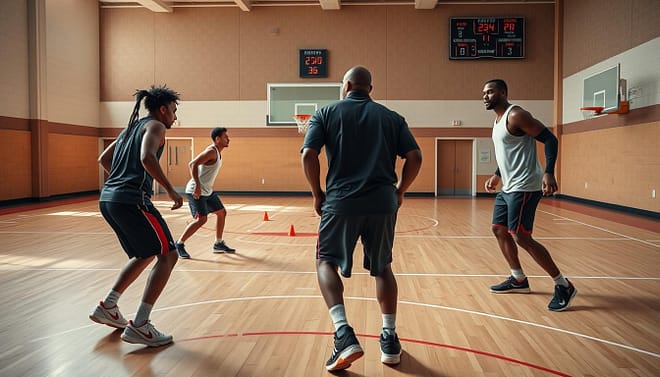
When the clock is ticking down, the game turns into a chess match. Your duo’s instincts are key. Late-game packages, like duo ATOs (after-timeout plays), are secret plays. They’re like family recipes, made to exploit the defense’s weaknesses and use your duo’s strengths.
In the final minutes, your pick and roll partners are the stars. Think of Hield and Cousins at Oklahoma or Horford and Brown in Boston. They have a sixth sense for clutch moments. They know when to slip the screen, pop out for a shot, or pass to the player who’s hot.
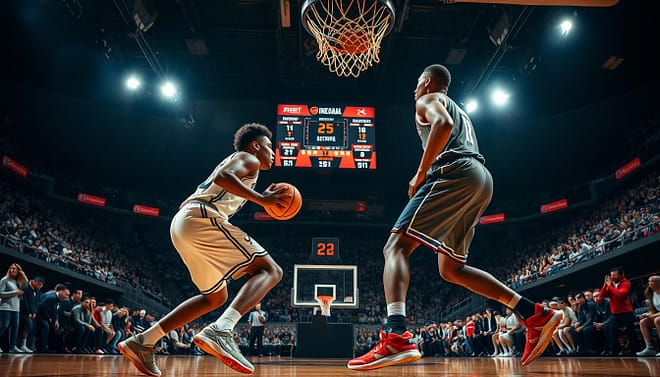
Foul management adds complexity. Do you trust your pick and roll partner to make free throws under pressure? Or do you hide them on defense, hoping the opponent won’t target them? This decision is as nerve-wracking as sharing a controversial opinion on social media.
Timeout usage is like the rhythm section of your late-game symphony. Using one too early can be regretful. The best coaches balance the clock and their team’s energy. They make sure they have the right plays ready when it counts.
In essence, late-game packages are more than plays; they’re a high-stakes trust fall. As the stakes rise, so does the need for trust between your duo. This trust, built through practice and shared experiences, decides the game.
Texas HS Examples from Recent Seasons and What Worked
In Texas high school basketball, recent seasons have been exciting. Teams have found defensive pair fits that boost their game. For example, a 2023 6A semifinalist had a “scorer plus organizer” backcourt. This duo reminded us of the Hield/Cousins and Horford/Brown teams.
Imagine a quick point guard who could organize a church potluck, paired with a shooting guard who scored like he was allergic to passing. This team wasn’t just about talent; it was about how well they worked together. Their frontcourt had a 6’8” rim runner catching lobs and a stretch-four spacing the floor.
What made them successful wasn’t just talent; it was the defensive pair fits. They could switch everything on the perimeter. The big man corrected mistakes like a forgiving teacher, making sure defensive lapses were fixed. Another team was a “bruiser plus shot blocker,” dominating in the paint and forcing turnovers.
The key lesson from Texas is clear: know your role, trust your partner, and have a system that works. Below is a table showing some successful pairings and their impacts:
| Team | Backcourt Duo | Frontcourt Pair | Defensive Strategy |
|---|---|---|---|
| 2023 6A Semifinalist | Scorer + Organizer | Rim Runner + Stretch Four | Switch Everything |
| Powerhouse Squad | Defensive Stoppers | Bruiser + Shot Blocker | Press + Trap |
| Contender Team | 3&D + Driver | Mobile Big + Floor Spacer | Drop Coverage |
In conclusion, Texas high school basketball is full of player combinations that show the power of teamwork. The right mix can lead to great success. This proves that whether you’re in the NBA or a local gym, the basics are the same.
Weekly Combo Drill Block with Scoring and Accountability
Imagine a weekly combo drill block where sweat and strategy meet. It’s not just another practice. It’s a chance to turn your players into a team. Start with drills like the Spain action and ghost slips.
Picture a manager tracking every make and miss like a Wall Street expert. This adds a fun twist to the practice.
But here’s the twist: add a scoring element. Losers run, while winners pick the pizza toppings. This makes the competition more exciting and teaches players to be accountable. Missing a short roll or a pocket pass? That’s a fine.
By making mistakes costly, you foster a culture of learning. Film every rep and mark the mistakes. When game night comes, your duo should play with perfect chemistry.
The more you drill, the better their instincts get. They’ll move around the court with ease.
Preseason Checklist for Coaches and Captains
Before the season starts, having a solid preseason checklist is key. It’s not about following rules for the sake of it. It’s about setting the stage for success. Start by defining each player’s main and secondary roles.
Who’s your top scorer? Who makes the plays? Knowing this helps your team work together smoothly.
Then, test your spacing rules in scrimmages. If your offense is slow, it’s time to change your game plan. Good spacing is vital for a strong offense. Too close, and the paint gets crowded, making it hard to score.
Also, check how your defensive pairs fit together. Can your point guard and rim protector switch on screens? If not, you might struggle on defense. Adjust your defense to match different opponents for the best results.
Start practicing late-game scenarios early. Don’t wait until you’re down by two points with seconds left. Practice these now to build confidence and skill under pressure. Your captains are key here; their support is critical.
Preseason is more than just getting in shape. It’s about building a strong team that can handle the season’s ups and downs. This checklist will prepare you for any challenge ahead.