

Texas Girls Coaches hired in 2026 gave us more than a transaction sheet. They gave us a clean look at what local basketball people value: trust, player growth, school identity, and a gym that can still feel like the center of town on a cold Tuesday night.
By September 19, 2026, the spring and summer hiring cycle had already told a clear story. Districts did not just chase sideline voices. They hired program setters. Some new leaders carried athletic department titles, some brought college experience, and some represented continuity inside a school system that already knew their habits. That matters in Texas girls basketball because the job is not only calling horns sets and zone adjustments. It is building a daily standard that reaches middle school gyms, summer workouts, parent meetings, and the way a town talks about its girls.
The best hires often feel local before they feel tactical. A coach earns the right to teach footwork by first earning the right to be trusted. That is why the 2026 moves at Godley and Frenship stood out. They showed two different paths toward the same goal: give girls a program that makes development feel steady, serious, and rooted in the school community.
Texas Girls Coaches And The 2026 Reset
The 2026 coaching cycle hit at a time when girls basketball programs across Texas were asking a hard question: how do you build something that lasts past one varsity class? The answer rarely sits in one speech. It sits in practice structure, staff alignment, offseason expectations, and whether younger players can see a path from seventh-grade ball to varsity minutes.
Texas Girls Coaches With Wider Reach
Texas Girls Coaches with expanded titles can shape more than a varsity roster. When a head coach also holds an assistant athletic director or coordinator role, the coach can have a stronger voice in scheduling, feeder communication, staff habits, and the basic rhythm of the program. That does not guarantee wins, and it should not be sold as a shortcut. It does give a program one more way to connect the daily details.
Godley ISD made that kind of move when it hired Taylor High as Head Girls Basketball Coach and Assistant Athletic Director on April 20, 2026, according to the Godley ISD announcement. The district’s release also noted his previous head coaching work at Spring Hill High in the Longview area and collegiate assistant stops including UC-Riverside, Grand Canyon, Texas Woman’s University, and Kansas.
Why Program Titles Matter
In Texas gyms, titles carry weight only if they help kids. A wider role can help a coach speak the same language to junior high coaches, varsity assistants, strength staff, and school leaders. It can also make the local basketball economy healthier. A good girls program fills gyms, gives concession volunteers a reason to show up, keeps families around campus, and helps small businesses feel the spillover on game nights without turning the athletes into a sales pitch.
That is the sports-first part we should not lose. The economy around a local program starts with belief. If the girls know the school has invested in their coaching, parents usually notice. If younger players see a varsity standard that feels reachable, they tend to stay connected. That is how development becomes cultural instead of seasonal.
What Godley And Frenship Hired For
Godley and Frenship did not make identical hires, but both decisions pointed toward program-building. One move brought in a coach with a documented turnaround marker at a previous school. The other leaned into continuity and long experience inside a district that already had winning habits around girls athletics.
Taylor High And The Long-View Build
High’s Godley assignment came with a player-development hook. At Spring Hill, he led the girls program to its first district championship in 15 years and guided the team to playoff berths, according to Godley ISD’s release. That fact matters because drought-breaking is different from front-running. A coach who has helped a program cross that line has likely dealt with confidence, community patience, and the slow work of teaching players how to expect better from themselves.
For Godley, the basketball question was not just what offense High would install. It was whether he could help build a gym culture where a freshman understands the standard before she ever checks into a varsity game. That starts with skill work, but it also touches attendance, communication, classroom accountability, and how older players treat younger ones. The scoreboard will always judge the varsity, but the program is usually built two or three years below it.
Chris Roberts And Frenship Continuity
Frenship ISD named Chris Roberts as girls basketball head coach and girls athletic coordinator on April 27, 2026, pending board approval in May, and the report noted his 20 years of coaching experience with eight years as a head coach in girls athletics FOX34 report. The same report said he had contributed to multiple district championships and playoff wins within Frenship, and that he replaced Trent Hilliard, who coached 35 years, including 12 as girls head coach and athletic coordinator.
That is a handoff with real community meaning. Replacing a longtime coach is not just filling a desk. It is asking players, families, and staff to keep faith while the voice changes. Roberts’ experience inside Frenship gave him a different starting point than an outside hire. He did not need to introduce himself to the building from scratch. He could begin with relationships already in place and adjust the program from within.
For more on how coaching moves shape trust across Texas girls programs, our related piece on UIL coaching changes tracks the same pressure points: retention, leadership, and community buy-in.
Development Starts Below Varsity
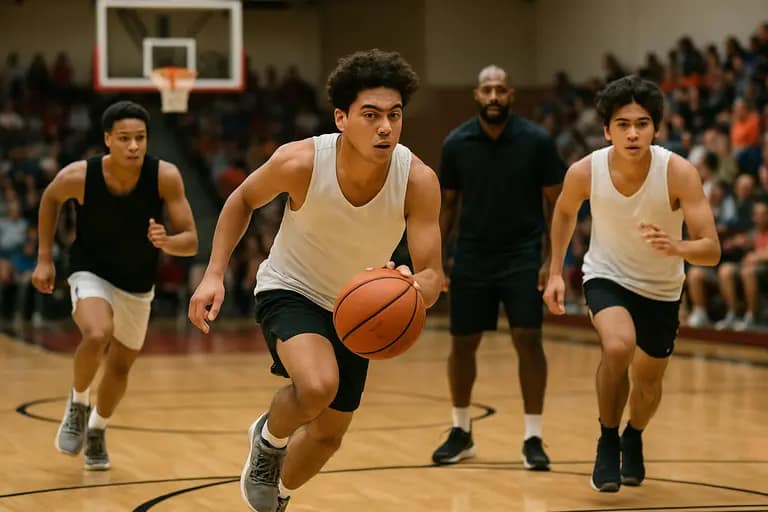
A varsity coach gets the public glare, but player development starts long before the first district game. The strongest Texas girls programs treat skill growth as a chain. Ball handling, shooting footwork, defensive talk, conditioning habits, and film language all need to connect from younger levels to varsity expectations.
Feeder Habits And Practice Standards
Texas Girls Coaches who lead well do not need every seventh grader running a varsity playbook. They need a shared vocabulary. If a middle school player learns how to sprint wide in transition, communicate on a switch, and take correction without shutting down, she arrives at high school with a foundation. That saves time. It also makes confidence less fragile.
That is where the coordinator-style hires can matter. A coach with influence across a girls athletic program can help line up offseason work, reduce mixed messages, and make sure development does not depend on one gifted class. The goal is not to make every campus identical. It is to let every level feel connected enough that a player is not starting over each year.
The Local Economy Around A Full Gym
Girls basketball also has a community footprint that deserves plain talk. A competitive program can bring grandparents, classmates, youth players, and local volunteers into the gym. That energy can support concessions, booster work, school spirit sales, and nearby stops before or after games. No one should pretend a coaching hire alone changes a town’s finances. Still, a trusted program can keep more community attention close to campus.
That matters in places where the school gym is one of the few gathering rooms shared by every generation. When a new coach builds a standard people believe in, the team becomes more than a schedule. It becomes a weekly meeting place. It gives young players a visible dream and gives former players a reason to come back.
Why Texas Girls Coaches Matter Beyond The Bench
Texas Girls Coaches matter because the best ones connect tactics to belonging. They teach the ball screen coverage, then teach the sophomore why her voice in practice matters. They manage substitutions, then manage expectations across a locker room full of different timelines. They answer to the scoreboard, but they build for the player who may become a coach, teacher, trainer, or community leader years after her final game.
The 2026 hires at Godley and Frenship showed two proven lanes. Godley looked to a coach with revival experience and a broader athletic department role. Frenship leaned on a coach with long experience and existing ties to district success. Both approaches respected the same Texas truth: development is personal before it is public.
That is why these moves deserve more than a line in an offseason notebook. A new coach can change the temperature in a gym. Not with promises, and not with slogans, but with daily work that players can feel. In Texas girls basketball, that is where pride starts: one practice, one family, one town, one team standard at a time.