
Sean Miller culture became the central story at the Moody Center after Texas introduced Sean Miller as the 27th head coach of the Longhorns men’s basketball program on March 24, 2025. The change was not only about a sideline voice. It was about how Texas would practice, communicate, defend, handle roster turnover, and ask Austin to feel ownership of the program again.
By September 15, 2026, the first full year of that shift could be studied with real evidence. Texas had already played through the 2025-26 season, reached the Sweet Sixteen, and moved into summer work before the 2026-27 season with a clearer idea of what Miller wanted from the building and the locker room. The Moody Center piece matters because Texas basketball is not housed in a quiet corner of campus. It sits inside a city with serious youth basketball energy, high school pride, and families who know what a connected team looks like.
Sean Miller Culture Starts With Daily Standards
How Sean Miller Culture Shows Up In Practice
Culture can sound soft until practice starts. Then it becomes spacing, talk, sprint habits, shot selection, and how players respond after a mistake. During summer practice before the 2026-27 season, Miller’s staff focused on communication, defensive scheme installation, and building ties between veterans and newcomers. On3 reported from Miller’s first Moody Center practice that freshmen Goosby, Spears, and Bo Ogden stood out for energy and effort during early drills Moody Center practice notes.
That detail matters to coaches across Texas because effort is the easiest trait to praise and the hardest to sustain. A freshman can run hard for five minutes. A program asks him to do it again after film, after weights, after a missed assignment, and after an upperclassman corrects him. The point of Sean Miller culture is that the standard cannot depend on class year or box-score status.
The Contract Raised The Local Stakes
The University of Texas System Board of Regents approved Miller’s six-year, $32 million guaranteed contract on May 8, 2025, with pay starting at $4.8 million for the 2025-26 season and increasing by $200,000 each year through 2030-31 AP contract report. That number placed weight on every part of the operation, from recruiting to the practice floor to the way the Moody Center sounds on a weeknight.
For Austin families and high school coaches who send players into college gyms, the contract was not just a business headline. It signaled that Texas expected a program with national standards and local roots. A well-paid coach at Texas cannot only win the press conference. He has to build habits that can be seen from the student section, the lower bowl, and the youth teams sitting together after their own Saturday games.
Roster Change And Player Development At Texas
Four Returners Set The Tone
Miller’s first season brought heavy roster change. On3 reported that only four players returned from the prior year, and just one had been a rotational player on the Texas team that reached the Sweet Sixteen. That kind of turnover forces a staff to teach fast without skipping trust. It also tests whether returning players can lead without carrying the largest scoring role.
In youth basketball, coaches often talk about “buy-in” after a loss. At the college level, buy-in has to happen before the first public result. Players are learning terminology, defensive calls, practice pace, lifting expectations, class routines, and arena pressure at the same time. For Texas, the 2025-26 team still averaged 82.8 points per game, shot 48.4% from the floor, and ranked 13th nationally in offensive efficiency per the research provided from Texas’ season review. Those numbers point to a staff that found offensive clarity even while building a new group.
Defense, Communication And Young Energy
The next teaching layer sat on the defensive end. Summer work before the 2026-27 season emphasized communication and scheme installation. That is where the Moody Center becomes more than a venue. A loud building can cover confusion for a possession, but it cannot replace five players talking early, pointing out actions, and finishing the play with a rebound.
For Texas youth coaches, Sean Miller culture offers a useful lesson: do not wait for a veteran roster to demand veteran habits. If freshmen are praised for energy, that praise should connect to team language. Sprinting back is not just hustle. Calling out a screen is not just noise. Touching the paint on a drive is not just offense. Each action tells teammates, “I am with you.”
For readers tracking Miller’s longer build in Austin, our related breakdown of Texas basketball’s SEC offseason identity connects the same theme to roster timing, scheduling, and program direction.
Moody Center Identity Beyond The Bench
The Corral And Austin’s Basketball Voice
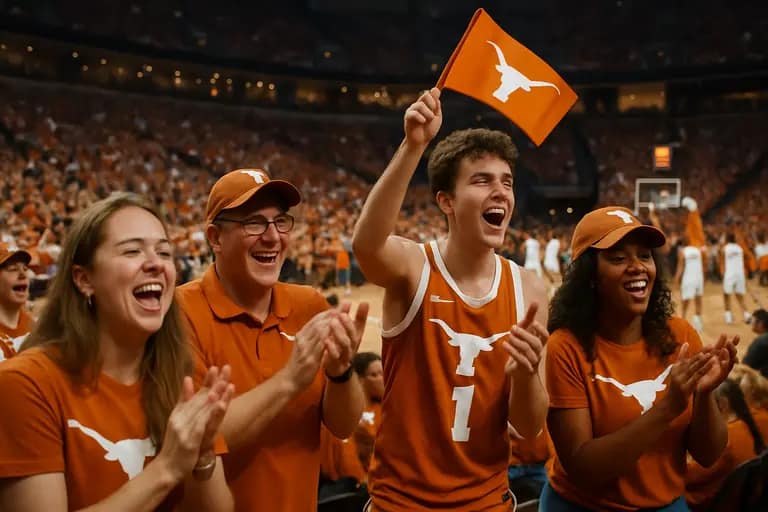
Miller’s public culture language has included an “ALL IN” idea built around values such as communication, respect, unity, passion, and joy, according to the research notes provided. He also pointed to the Moody Center atmosphere and the student section known as The Corral as part of the program’s game-day identity.
That is where Austin can shape the team without taking a shot. Student energy changes the rhythm of a building. Families who bring young players create a different kind of accountability. Former high school players in the stands know whether a team is connected or just talented. In Texas basketball communities, people can spot body language quickly. They know when a bench is engaged, when a huddle is sharp, and when a team is waiting for one player to rescue a possession.
What Local Coaches Can Borrow
The best college culture lessons are not always the expensive ones. A middle school coach in Pflugerville, a high school assistant in San Antonio, or an AAU coach in Dallas can borrow the same framework without a college budget.
- Name the standard: Players should know the words that define the team before the first scrimmage.
- Teach communication daily: Talking on defense has to be graded like shooting and conditioning.
- Connect old and new players: Roster change is easier when veterans are asked to teach, not just perform.
- Make the gym feel shared: Parents, students, and younger players help define whether a program feels connected.
If Sean Miller culture holds at Texas, it will be because those pieces stay visible when the schedule gets hard. Culture is easy in a clean practice clip. It becomes real during foul trouble, missed shots, travel weeks, and the first film session after a poor defensive night.
What The Moody Center Shift Means For Texas Basketball
A Culture Texas Coaches Can Study
Texas advanced in the 2026 NCAA Tournament as a No. 11 seed in the West region, beating NC State, BYU, and Gonzaga before losing to No. 2 Purdue. That run gave the first season under Miller a clear result to study, but the deeper coaching question is what carried over after the final buzzer. Did the roster learn how to practice? Did the staff create language that newcomers could absorb? Did the Moody Center feel like part of the team’s identity rather than a backdrop?
Those questions matter in Austin because the Longhorns sit at a meeting point of college expectations and Texas grassroots basketball. The state produces players who grow up in loud gyms, long summer weekends, and school communities that treat basketball as a family event. A Texas head coach has to recruit talent, but he also has to respect the way basketball is taught and loved here.
Sean Miller culture is not finished work. As of September 15, 2026, it is a body of evidence: a major contract, a first-season roster reset, improved offensive production, a Sweet Sixteen run, and a summer practice focus on communication and connection. For the Longhorns, the next step is not a slogan. It is whether daily standards keep showing up at the Moody Center when new players, old pressure, and Austin’s expectations meet on the same floor.